

&imwidth=800&imheight=600&format=webp&quality=medium "India, Russia express intent to use common tech in future space stations")
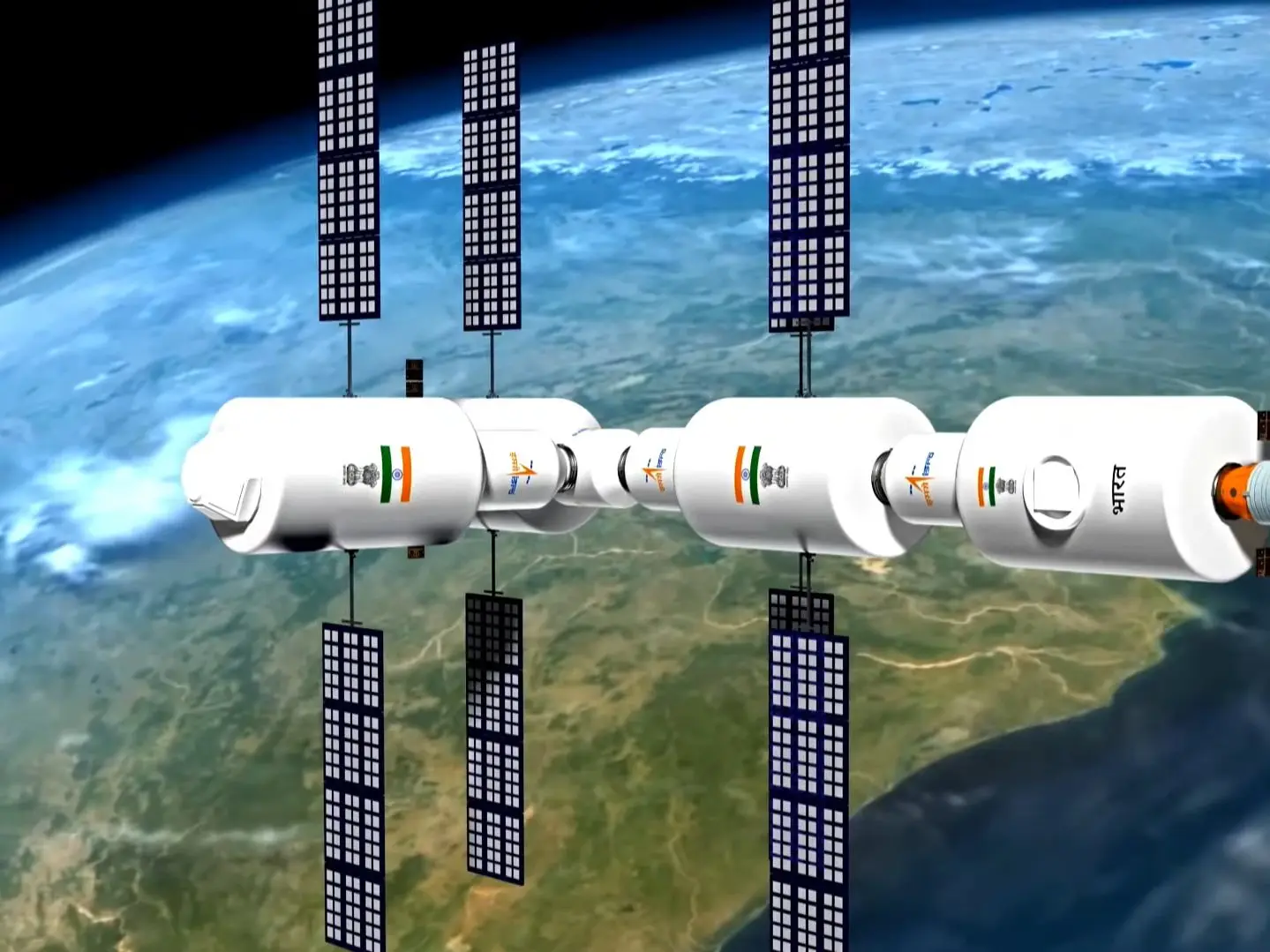
The Indian and Russian space agencies are working on building their respective sovereign space stations that can serve as labs circling the Earth. Given the decades-long strategic ties between the two nations, the Indian Space Agency ISRO has expressed interest in utilising Russia's rich experience and partnering with the country to develop the proposed crewed Bharatiya Antariksh Station(BAS) or Indian Space Station.
"For the preparation of the Indian Space Station(BAS), we are looking for good cooperation with Russia... to have common sub-systems for control, powering, communication, tracking," Director of ISRO's IPRC, J. Asir Packiaraj, said at the Russian Space Forum in Moscow. Russia (erstwhile Soviet Union) began operating their national space station in 1971, and has maintained a near-continuous human presence in space since then.
With the International Space Station(ISS) operated by space agencies of US, Russia, Europe, Japan, Canada, expected to be decommissioned by the end of this decade, and China having the only other crewed space station, domain experts at the Russian Space Forum were discussing the Post-ISS future and opportunities for cooperation.
The first Russian Space Forum is the central event of the nationwide Space Week, which is being held across Russia to commemorate the 65th anniversary of the first human spaceflight. Yuri Gagarin flew on the erstwhile Soviet Union's Vostok-1 mission on April 12th 1961.
Outlining the Indian space agency's vision, Packiaraj said that the country's proposed space station would be placed 450 km above the Earth, at an inclination of 51.6 degrees, which is the same inclination of the proposed Russian space station, known as the Russian Orbital Station(ROS). Inclination is the tilt or slant of the orbit, with respect to the Earth's equator. A satellite or space station orbiting exactly above the equator will have a 0-degree inclination, while a satellite going over the north and south pole will have a 90-degree inclination. Likewise, a space station in a 51.6 degree inclination will reach up to 51.6 degree North and 51.6 degree South latitude. Further, the Director of ISRO Propulsion Complex said that India is exploring partnerships with space agencies of spacefaring nations for building the BAS.
Trending Stories
&imwidth=180&imheight=135&format=webp&quality=medium)
Here’s who is eyeing the White House press secretary role after Katie Zacharia’s exit
&imwidth=180&imheight=135&format=webp&quality=medium)
Ankita Bhandari murder case: Parents meet CBI, seek impartial investigation
&imwidth=180&imheight=135&format=webp&quality=medium)
India’s naval priorities: Ex-Navy Chief calls for third aircraft carrier, more warships and submarines
&imwidth=180&imheight=135&format=webp&quality=medium)
Oregon school shooting: 16-year-old shooter identified, used shotgun bought by mother; Trump praises bystander who shot gunman as 'great hero'
&imwidth=180&imheight=135&format=webp&quality=medium)
Gravitas | Iran threatens to hit key bridges in 7 countries if US resumes strikes
&imwidth=180&imheight=135&format=webp&quality=medium)
China responds to Trump's Press Secretary Katie Zacharia after toilet remark: 'Visit China more often'
&imwidth=180&imheight=135&format=webp&quality=medium)
US midterms 2026: Dan Sullivan’s ‘gotcha’ attempt backfires against Mary Peltola in fiery Alaska Senate debate
&imwidth=180&imheight=135&format=webp&quality=medium)
Pakistan to head IMF, World Bank boards after 74 years amid persistent economic crisis
&imwidth=180&imheight=135&format=webp&quality=medium)
Selma Blair’s team responds to flight incident, says actress ‘did not intend to harm anyone’
&imwidth=180&imheight=135&format=webp&quality=medium)
One species, two lineages: Why Sri Lanka’s spectacled cobra differs genetically from Indian variant

US ends automatic work permit extensions; Indian workers lose 540-day safety net: What it means
&imwidth=180&imheight=135&format=webp&quality=medium)
Israel examines Russia's Shahed-type drones sent by Ukraine to combat Iran | Gravitas
&imwidth=180&imheight=135&format=webp&quality=medium)
US midterms 2026: Ken Paxton may have Elon Musk to thank if he wins the Texas Senate race. Here's why
&imwidth=180&imheight=135&format=webp&quality=medium)
IND-W vs ZIM-W, 1st T20I: Deepti Sharma, Niki Prasad shine as India beat Zimbabwe by four wickets
&imwidth=180&imheight=135&format=webp&quality=medium)
CJP's Tiranga march: People hit streets of Delhi again, reiterate call for Gyanesh Kumar's resignation
&imwidth=180&imheight=135&format=webp&quality=medium)
A secret code, a midnight escape and 300 deaths: The Russian officer who turned on Putin
&imwidth=180&imheight=135&format=webp&quality=medium)
Starlink says 'ready to connect India with high-speed internet' amid Reliance row
&imwidth=180&imheight=135&format=webp&quality=medium)
'Reason UN has lost credibility': Amid SIR protests India hits out at report alleging 'youth repression'
&imwidth=180&imheight=135&format=webp&quality=medium)
China tells Israel to stop West Bank settlements, calls Palestine issue ‘historic injustice’
&imwidth=180&imheight=135&format=webp&quality=medium)
Abhishek Sharma sets all-time record for most T20I sixes in a year
&imwidth=180&imheight=135&format=webp&quality=medium)
‘My president, I mean my husband’: Trump's new press secretary Katie Zacharia's first briefing goes off the rails in 14 minutes
&imwidth=180&imheight=135&format=webp&quality=medium)
Ukraine drone strike disrupts 22 Russian airports, over 200 flights
&imwidth=180&imheight=135&format=webp&quality=medium)
BCCI names India’s ODI squad for New Zealand tour, Gill and Iyer to share captaincy
&imwidth=180&imheight=135&format=webp&quality=medium)
US midterms 2026: Alexandria Ocasio-Cortez donates $1 million to Abdul El-Sayed’s as Michigan race heats up
&imwidth=180&imheight=135&format=webp&quality=medium)
Oil tanker carrying over 2M barrels of crude hits mine in Strait of Hormuz, catches fire, says Iran
&im=FitAndFill=(700,400)&imwidth=180&imheight=135&format=webp&quality=medium)
Who left the White House podium the fastest? Press secretaries with the shortest stints
&imwidth=180&imheight=135&format=webp&quality=medium)
Vijay Deverakonda and Rashmika Mandanna's Ranabaali X Review: Netizens call it history-rich but overstuffed
&im=FitAndFill=(700,400)&imwidth=180&imheight=135&format=webp&quality=medium)
New Friday OTT releases (October 16, 2026): DC, Sacrifice, Aasha- 6 new movies and TV shows coming on Netflix, Zee 5, Prime Video and more
&imwidth=180&imheight=135&format=webp&quality=medium)
Lizard people? Ex-US Army sniper claims soldier killed by 'reptilian beings' in battle near Area 51
&imwidth=180&imheight=135&format=webp&quality=medium)
Infiltration bid foiled in Kupwara’s Keran sector, search operation underway
&im=FitAndFill=(700,400)&imwidth=180&imheight=135&format=webp&quality=medium)
Inside Tesla's Roadster: 10 features of Elon Musk's 'flying car' that push the limits of electric vehicles | In Pics
&imwidth=180&imheight=135&format=webp&quality=medium)
US lawmaker Pramila Jaypal writes to Rubio, urges to raise handling of CJP protest with India
&imwidth=180&imheight=135&format=webp&quality=medium)
Trump invokes national interest to waive new Russia sanctions, tariffs; India gets relief from 100% tariff threat

Not Khan but Pal: Why did Imran Khan choose his mother's surname over his father's? Family tree explained
Referring to the benefits of having the future Indian and Russian space stations and proposed American private space stations operating at the same 51.6 degree inclination, veteran Russian astronaut and the Deputy Director General for Piloted Programs at Roscosmos, Sergey Krikalev, said that being in the same inclination would help crew-carrying capsules conveniently fly from one station to another.
He cited the example of the Soyuz T-15 mission, where the crew initially docked with the Mir space station, then undocked and flew to the ageing Salyut-7 space station, performed their duties aboard Salyut-7, returned back to Mir, and then flew home to Earth. This was also the only mission in history where the crew visited two separate space stations during the same mission. For a brief period in the mid-1980s, the Soviet Union had two operational space stations: Salyut-7 and Mir.
Having two space stations in the same inclination would also enable easy rescue in case of any emergency. When one station faces any kind of danger or major operational issues, the crew can undock their capsule from it and travel to the other station and dock there. Therefore, each station can serve as a lifeboat for the other. It also enables easy transfer of cargo and fuel from one station to another. Further, existing ground infrastructure and antennae can be used to track these stations and maintain contact.
Krikalev also highlighted the need for future space stations to have common technology and interface systems such as docking ports, communications systems, data transfer mechanisms, and electrical power systems, among others. He emphasised that such technological compatibility is crucial for cooperation.
Elaborating on how Russia intends to build its proposed ROS space station, Krikalev said that modules(parts) of the new station would be launched and docked to the International Space Station, and then they would be gradually undocked to become an independent entity. The ROS station is in its design and production phase, he added.
On the development of the ROS, Krikalev also said that it is crucial to transfer experience and technology from one generation of space station to another. He referred to how the lessons learned from Salyut space stations were applied in the Mir space station, and how the lessons from Mir were passed on to the Russian module of the ISS. On developing the future ROS, he said that continuous transfer of knowledge and experience is the way ahead, rather than starting from scratch.
While Russia works on its ROS, India has envisioned a five-module space station with a total mass of 54tons. Its initial configuration and system level finalization is underway, Packiaraj added. The Indian Government has allocated ₹1763crore (approx $176mn) for a period of four years (2025 to 2028), for the development and launch of the first module of the country's proposed five-module space station.
