India–New Zealand sign ‘historic’ FTA: $20 bn investment, trade and mobility to expand

&imwidth=600&imheight=450&format=webp&quality=medium "India–New Zealand sign ‘historic’ FTA: $20 bn investment, trade and mobility to expand")
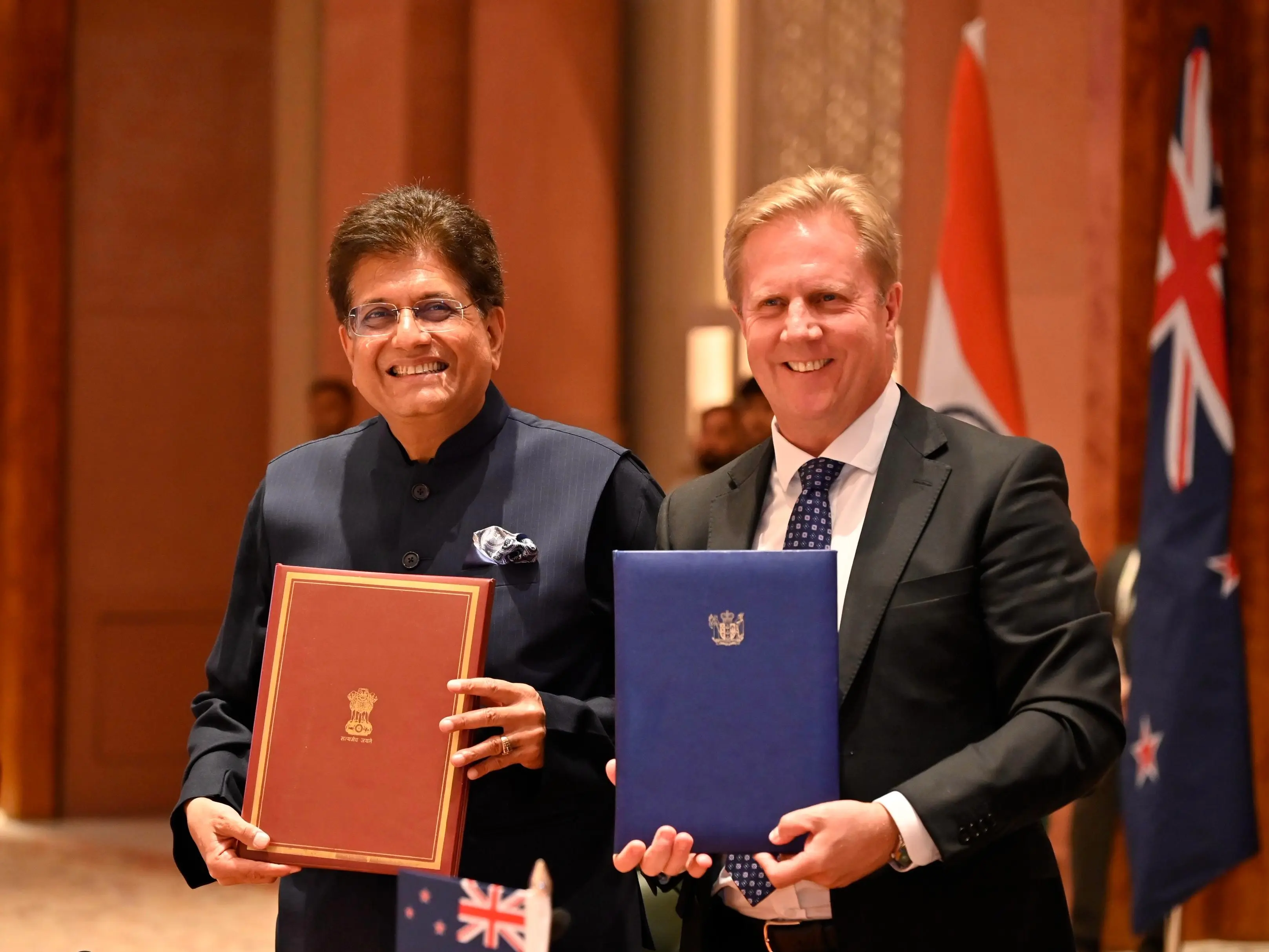
Union Commerce and Industry Minister Piyush Goyal and New Zealand Trade Minister Todd McClay at the India-New Zealand FTA signing ceremony in New Delhi, April 27, 2026. Photograph: (x@PiyushGoyal)
The agreement will require ratification by both countries before it can be implemented, with India expected to complete the process through executive approval, while New Zealand will require parliamentary clearance, which could take several months.
India and New Zealand on Monday (April 27) signed the long-awaited Free Trade Agreement (FTA), marking a significant step in strengthening bilateral economic ties. The pact is set to come into force later this year after ratification by New Zealand’s Parliament, while negotiations for the agreement had formally begun in March 2025 during the visit of New Zealand Prime Minister Christopher Luxon, who described it as a “once-in-a-generation” opportunity to expand trade, investment flows and labour mobility between the two countries.
Union Commerce and Industry Minister Piyush Goyal and New Zealand Trade Minister Todd McClay signed the agreement, which is being described as one of India’s fastest concluded bilateral trade deals. Under the pact, New Zealand has committed to invest around $20 billion in India over the next 15 years while easing trade barriers and simplifying regulatory standards.
FTA details: Duty-free access, trade boost and mobility provisions
The India–New Zealand Free Trade Agreement (FTA) provides significant market access for Indian exporters, granting 100 per cent duty-free access to as many as 8,284 export products once the pact comes into force. In the initial phase, nearly 70 per cent of Indian goods, including leather, handloom and handicrafts, will enter the New Zealand market without tariffs, improving competitiveness and expanding export opportunities.
On the other hand, New Zealand will eliminate or reduce tariffs on key exports to India, such as wool, wood, coal, wine and fruits, providing a boost to its agricultural and export sectors. However, India has kept several sensitive sectors, including dairy, onions, sugar, spices and edible oils, outside the agreement to safeguard domestic farmers and industry interests.
The agreement sets an ambitious target of doubling bilateral trade to around 5 billion dollars over the next five years, marking a sharp rise from current levels and signalling stronger economic engagement between the two countries.
Trending Stories
&imwidth=280&imheight=210&format=webp&quality=medium)
&imwidth=280&imheight=210&format=webp&quality=medium)
&imwidth=280&imheight=210&format=webp&quality=medium)
&imwidth=280&imheight=210&format=webp&quality=medium)
&imwidth=280&imheight=210&format=webp&quality=medium)
&im=FitAndFill=(700,400)&imwidth=280&imheight=210&format=webp&quality=medium)
&imwidth=280&imheight=210&format=webp&quality=medium)
&imwidth=280&imheight=210&format=webp&quality=medium)
&imwidth=280&imheight=210&format=webp&quality=medium)
&imwidth=280&imheight=210&format=webp&quality=medium)
&imwidth=280&imheight=210&format=webp&quality=medium)
&imwidth=280&imheight=210&format=webp&quality=medium)
&im=FitAndFill=(700,400)&imwidth=280&imheight=210&format=webp&quality=medium)
&imwidth=280&imheight=210&format=webp&quality=medium)
&imwidth=280&imheight=210&format=webp&quality=medium)
&imwidth=280&imheight=210&format=webp&quality=medium)
&imwidth=280&imheight=210&format=webp&quality=medium)
&im=FitAndFill=(700,400)&imwidth=280&imheight=210&format=webp&quality=medium)
&im=FitAndFill=(700,400)&imwidth=280&imheight=210&format=webp&quality=medium)
&imwidth=280&imheight=210&format=webp&quality=medium)
&imwidth=280&imheight=210&format=webp&quality=medium)
&imwidth=280&imheight=210&format=webp&quality=medium)
&imwidth=280&imheight=210&format=webp&quality=medium)
&imwidth=280&imheight=210&format=webp&quality=medium)
&im=FitAndFill=(700,400)&imwidth=280&imheight=210&format=webp&quality=medium)
&imwidth=280&imheight=210&format=webp&quality=medium)
&imwidth=280&imheight=210&format=webp&quality=medium)
&imwidth=280&imheight=210&format=webp&quality=medium)
&imwidth=280&imheight=210&format=webp&quality=medium)
&imwidth=280&imheight=210&format=webp&quality=medium)
&imwidth=280&imheight=210&format=webp&quality=medium)
&imwidth=280&imheight=210&format=webp&quality=medium)
&imwidth=280&imheight=210&format=webp&quality=medium)
&imwidth=280&imheight=210&format=webp&quality=medium)
In terms of investment, New Zealand has committed to invest up to $20 billion in India over a 15-year period, with expected inflows across sectors such as services, manufacturing and technology, which could strengthen infrastructure, innovation and job creation.
The FTA also focuses on labour mobility and employment opportunities. It includes visa provisions for up to 5,000 Indian professionals and 1,000 work and holiday visas annually, covering sectors such as IT, healthcare, construction and education.
Additionally, Indian students will benefit from expanded post-study work opportunities, making the agreement a key driver of skill development and global exposure.
PM Modi calls FTA a historic milestone for growth
Prime Minister Narendra Modi called the agreement a “historic milestone” in India’s journey towards deeper global engagement and shared prosperity. He said the pact reflects a strengthening economic partnership and shared values between the two democracies.
He underscored that the agreement will create "new opportunities for our farmers, artisans, youth, entrepreneurs, women and MSMEs, unlocking pathways for global market access and enterprise across sectors, from agriculture and manufacturing to technology, education and services."
The Prime Minister added that the Make in India initiative aligns with New Zealand’s $20 billion investment commitment, which will boost startups, innovation, and job creation while accelerating growth across sectors.