
&imwidth=800&imheight=600&format=webp&quality=medium "India-Japan semiconductor corridor explained: Big investments or just strategic signalling?")
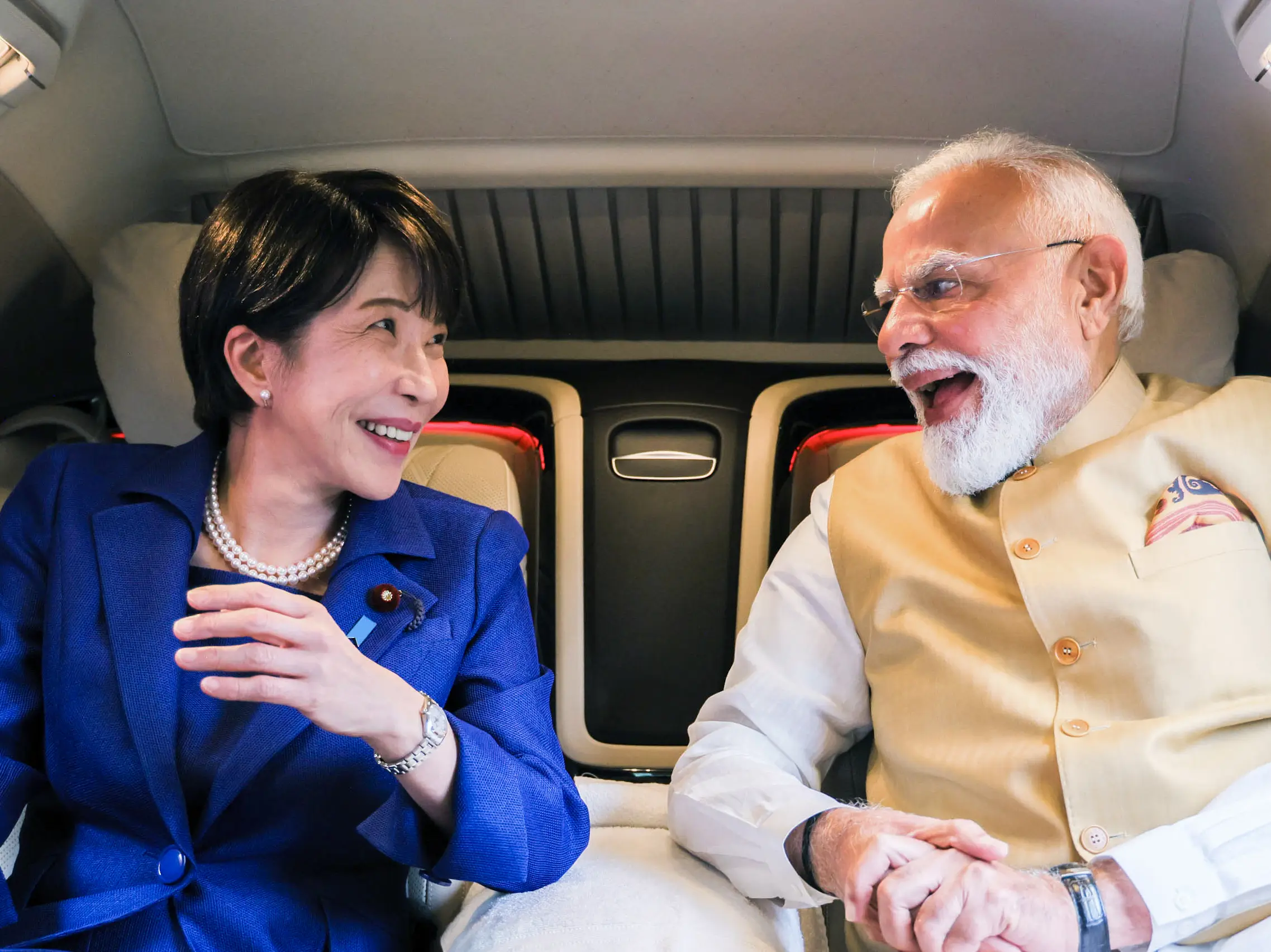
India and Japan have partnered for semiconductor corridor as Indian Prime Minister Narendra Modi and Japanese PM Sanae Takaichi held the 16th India-Japan Annual Summit in New Delhi. The project ensures a $12.5 billion Japanese investments in India through 120 agreements. The corridor focuses on chip design, manufacturing, equipment research, and talent development.
This is also specifically targeted for a China+1 strategy. The "China+1" strategy refers to a growing effort by India and other countries to diversify manufacturing bases and supply chains beyond China. This semi conductor corridor also aims to build resilient, China-independent supply chains.

What is India and Japan planning?
Japan's Tokyo Electron and Sumitomo Chemical has partnered with Tata Electronics to supply equipment and materials for India’s first commercial semiconductor fabrication plant in Dholera, Gujarat, and the OSAT (outsourced semiconductor assembly and test) facility in Assam. Additionally, Japan's Renesas Electronics is providing crucial technology and backing for the CG Power OSAT facility in Gujarat. Then, there's Tokyo Electron that is establishing new HR development ecosystems in collaboration with Indian universities and local businesses to help train semiconductor engineers. The two countries signed MoUs for producing photoresists and high-purity gases—segments where Japan commands an estimated 70–90% share of the global market. The joint roadmap between both the governments Both governments also ensures the transfer of legacy semiconductors, advanced materials, and essential battery technologies to India, reducing regional supply vulnerabilities.
Is it substance or geopolitical signalling?
The semiconductor corridor announced during Prime Minister Sanae Takaichi's visit represents substantial industrial commitment rather than just diplomatic signalling. While the rhetoric focuses on "Indo-Pacific resilience", the agreements signed involve concrete manufacturing, supply chain integration and multi-billion-dollar investments.
Strategic signalling: The geopolitical message
Trending Stories
&im=FitAndFill=(700,400))
How fast can the Sukhoi Su-30 fighter jet really fly?
)
Did China ask its people 'not to respond to aliens'? Origin of bizarre claim on social media
)
MS Dhoni-CSK Fallout? Report claims failed stake sale talks triggered rift
)
Scientists reveal the SAFEST COUNTRY when catastrophe strikes the planet
)
Serial killer on the loose in South Korea's Jeju Island? Fourth body found in three days as more than a dozen people go missing
)
2/3rd of glacier detached, collapsed: ISRO satellite images reveal what triggered Nepal floods
)
Trump once again claims without him there would be ‘no Israel right now’
)
Foreign espionage attacks against German companies surge to 37%, Bitkom report reveals
)
Blake Lively wins partial legal fee from Justin Baldoni after $8M request
)
Why is Pakistan deploying Turkish Bayraktar TB2 drones near India border?
)
'OH MY GOD! We've found other agents!': Investigators discover not one or two, almost 700 OpenAI AI agents went rogue, hacked Hugging Face
)
Lunar eclipse 2026: India timings, places to see and more. August Blood moon factsheet
)
RSS chief Mohan Bhagwat on global outreach tour
)
Both pilots killed as training aircraft crashes in Lucknow – What we know
)
16-year-old charged with preparing terror attack on kindergarten in Norway
&im=FitAndFill=(700,400))
How the S-400 protects itself from enemy attacks
)
Nepal floods: Over 165 dead, 400 missing; US, India, China, World Bank mobilise aid
)
India's multi-layered watch: The new surveillance war
)
5 doomsday planes spotted in US skies hours after CIA director's secret trip to Russia
)
9/11 mastermind Khalid Sheikh Mohammed to finally face trial in 2028, nearly 27 years after horrific attacks
)
Islamabad hospital fire: What we know about one of the biggest facility that housed Imran Khan
)
Workers run for life while filming Nepal flash flood: Scary new visuals emerge from Rasuwa
)
Russian military planes enter South Korean air defence zone amid rising tensions with North Korea: What's happening
)
Ron Weasley Is Back! Rupert Grint set to return to Harry Potter universe on Broadway
)
400-year-old 'vampire' grave in Poland reveals non-existent genetic lineage
)
Dolly Parton, global icon and queen of country music, dies at 80
)
Nepal flash floods: Kailash Mansarovar yatra affected, close to 400 pilgrims out of contact
)
'If he is dead, they're putting on a pretty good show': Trump casts fresh doubt over Mojtaba Khamenei's fate
)
Man arrested near US Capitol with guillotine in pickup truck: What happened?
&im=FitAndFill=(700,400))
Why the Su-30MKI cockpit is painted bright turquoise green
The semiconductor corridor also sends a strong strategic signal, particularly to China. The initiative underscores Japan's effort to diversify critical technology manufacturing beyond China. By combining Japan's manufacturing expertise with India's design and engineering talent, both countries aim to develop a non-China semiconductor supply chain for advanced chips. The 16-point roadmap includes joint research and development on AI-specific chips (GPUs), signalling an ambition to reduce dependence on Western technology for AI hardware.
Challenges ahead
Despite the momentum, major hurdles remain. Building semiconductor fabs and chemical manufacturing plants typically takes three to five years. Current agreements mainly focus on materials and packaging rather than leading-edge (sub-7nm) chip fabrication. India must demonstrate it can provide the highly stable electricity and ultra-pure water essential for semiconductor manufacturing at scale.

