Funicular cable snapped seconds before Lisbon crash that killed 16: Report

&imwidth=600&imheight=450&format=webp&quality=medium "Funicular cable snapped seconds before Lisbon crash that killed 16: Report")
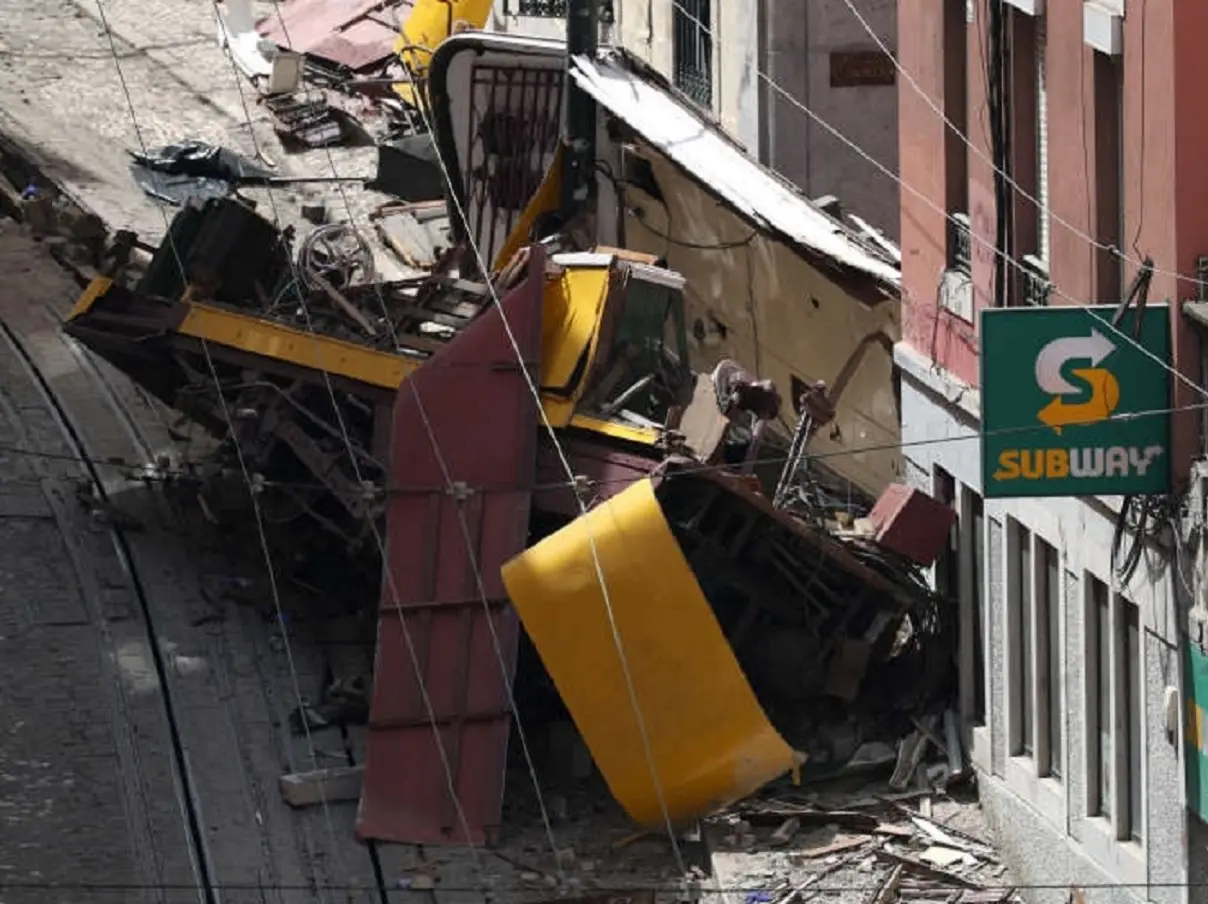
The crash of Gloria funicular railway car, a popular tourist attraction, in Lisbon.q Photograph: (AFP)
As per the initial findings, the accident happened in under 50 seconds, and the inspectors said the two cabins had travelled not more than about 6 metres (20 feet) when they suddenly lost the balancing force provided by the connecting cable.
The cable linking the two cabin cars had given way shortly before the deadly funicular crash in the Portuguese capital Lisbon that killed at least 16 people and injured 22 others, revealed the first investigative report released on Saturday. The report by Portugal’s Air and Rail Accident Investigations Bureau (GPIAAF) said that the cable had cleared a visual check a few hours before the derailment. “According to the evidence observed so far, the scheduled maintenance plan was up to date, and a scheduled visual inspection had been conducted on the morning of the accident, which detected no anomalies in the vehicles’ cable or braking systems,” says the report.
The Gloria funicular—a yellow railway car that travels up and down a steep slope in central Lisbon—veered off its tracks near Avenida da Liberdade and crashed into a building, leaving 16 people dead and 21 injured last Wednesday.
Other findings of the probe
Inspectors said the two cabins had travelled not more than about 6 metres (20 feet) when they suddenly lost the balancing force provided by the connecting cable. As per the initial findings, the accident happened in under 50 seconds.
After inspection of the wreckage at the scene, it was “immediately clear that the connecting cable had given way” at the point where it was attached to the cabin at the top of the hill, the report said. The yellow-and-white streetcar that crashed had been in use since 1914.
“Cabin No. 2 suddenly reversed, its movement halting approximately 10 metres beyond due to its partial excursion past the end of the track and the burial of the underside of the trambolho (trolley) at the end of the cable trench,” it added.
Trending Stories
&imwidth=280&imheight=210&format=webp&quality=medium)
&im=FitAndFill=(700,400)&imwidth=280&imheight=210&format=webp&quality=medium)
&im=FitAndFill=(700,400)&imwidth=280&imheight=210&format=webp&quality=medium)
&imwidth=280&imheight=210&format=webp&quality=medium)
&imwidth=280&imheight=210&format=webp&quality=medium)
&imwidth=280&imheight=210&format=webp&quality=medium)
&imwidth=280&imheight=210&format=webp&quality=medium)
&imwidth=280&imheight=210&format=webp&quality=medium)
&imwidth=280&imheight=210&format=webp&quality=medium)
&imwidth=280&imheight=210&format=webp&quality=medium)
&imwidth=280&imheight=210&format=webp&quality=medium)
&imwidth=280&imheight=210&format=webp&quality=medium)
&imwidth=280&imheight=210&format=webp&quality=medium)
&imwidth=280&imheight=210&format=webp&quality=medium)
&imwidth=280&imheight=210&format=webp&quality=medium)
&imwidth=280&imheight=210&format=webp&quality=medium)
&imwidth=280&imheight=210&format=webp&quality=medium)
&imwidth=280&imheight=210&format=webp&quality=medium)
&imwidth=280&imheight=210&format=webp&quality=medium)
&imwidth=280&imheight=210&format=webp&quality=medium)
&imwidth=280&imheight=210&format=webp&quality=medium)
&im=FitAndFill=(700,400)&imwidth=280&imheight=210&format=webp&quality=medium)
&imwidth=280&imheight=210&format=webp&quality=medium)
&imwidth=280&imheight=210&format=webp&quality=medium)
&imwidth=280&imheight=210&format=webp&quality=medium)
&imwidth=280&imheight=210&format=webp&quality=medium)
&imwidth=280&imheight=210&format=webp&quality=medium)
&imwidth=280&imheight=210&format=webp&quality=medium)
&imwidth=280&imheight=210&format=webp&quality=medium)
&imwidth=280&imheight=210&format=webp&quality=medium)
&imwidth=280&imheight=210&format=webp&quality=medium)
&imwidth=280&imheight=210&format=webp&quality=medium)
&imwidth=280&imheight=210&format=webp&quality=medium)
“Cabin No. 1, at the top of Calcada da Gloria, continued its downward movement, increasing its speed. The cabin's brakeman immediately applied the pneumatic brake and the hand brake to try to halt the movement. These actions had no effect in stopping or reducing the cabin’s speed, and it continued accelerating down the slope,” the report added.
WATCH: Japanese PM resigns: Japan PM Shigeru Ishiba steps down a day before crucial intra-party vote
Two separate investigations underway
Two separate investigations are being conducted to ascertain the cause of the accident: one is being carried out by the GPIAAF and another by the prosecutors’ office.
The GPIAAF underlined in its report that the two investigations are “completely independent and have distinct purposes.”
It added that a preliminary report will be published within 45 days.
A final report mentioning “the established facts, its analysis, conclusions regarding the causes of the accident, and, if applicable, safety recommendations” is likely to be published later.
The GPIAFF also said that if a final report isn’t possible within one year, an interim report will be published instead.