
&imwidth=800&imheight=600&format=webp&quality=medium "From Fattah-1 to Iron Dome: Unpacking the high-stakes missile confrontation between Iran and Israel")
On Wednesday, Iran claimed it had launched hypersonic missiles at Israel as part of a fresh round of overnight attacks. The country’s top leader, Ayatollah Ali Khamenei, urged Iranians to show “no mercy” toward Israel. Iran’s powerful military wing, the Revolutionary Guard Corps, said this was the 11th round of attacks under what they call “Operation Honest Promise 3.” They stated that the strike involved Fattah-1 hypersonic missiles and boldly claimed that Iranian forces now have full control of the airspace over Israeli-occupied areas.
This isn’t the first time Iran has fired hypersonic missiles at Israel. Back on October 1, 2024, during its Operation True Promise II, Iran had launched several Fattah-1 missiles targeting Jerusalem. However, this appears to be the first time these missiles have been used in the current round of fighting between the two countries.

What Is a Hypersonic Missile?
A hypersonic missile is a very advanced type of weapon that can travel at extremely high speeds, more than five times the speed of sound, while flying within the Earth's atmosphere. There are two main types: hypersonic glide vehicles and hypersonic cruise missiles. What makes them especially dangerous is their ability to change direction during flight, making it very difficult for air defence systems to detect or stop them in time.
Hypersonic missiles fly at speeds of Mach 5 or more, which means they travel at least five times faster than the speed of sound, around 3,800 miles (6,100 kilometers) per hour. However, as reported by CNN, many regular ballistic missiles also reach hypersonic speeds, especially when they are falling toward their targets. The key difference is that hypersonic missiles can maneuver while flying at these extreme speeds, making them harder to track or shoot down.
Trending Stories
&im=FitAndFill=(700,400))
How fast can the Sukhoi Su-30 fighter jet really fly?
)
Did China ask its people 'not to respond to aliens'? Origin of bizarre claim on social media
)
MS Dhoni-CSK Fallout? Report claims failed stake sale talks triggered rift
)
Scientists reveal the SAFEST COUNTRY when catastrophe strikes the planet
)
Serial killer on the loose in South Korea's Jeju Island? Fourth body found in three days as more than a dozen people go missing
)
2/3rd of glacier detached, collapsed: ISRO satellite images reveal what triggered Nepal floods
)
Trump once again claims without him there would be ‘no Israel right now’
)
Foreign espionage attacks against German companies surge to 37%, Bitkom report reveals
)
Blake Lively wins partial legal fee from Justin Baldoni after $8M request
)
Why is Pakistan deploying Turkish Bayraktar TB2 drones near India border?
)
'OH MY GOD! We've found other agents!': Investigators discover not one or two, almost 700 OpenAI AI agents went rogue, hacked Hugging Face
)
Lunar eclipse 2026: India timings, places to see and more. August Blood moon factsheet
)
RSS chief Mohan Bhagwat on global outreach tour
)
Both pilots killed as training aircraft crashes in Lucknow – What we know
)
16-year-old charged with preparing terror attack on kindergarten in Norway
&im=FitAndFill=(700,400))
How the S-400 protects itself from enemy attacks
)
Nepal floods: Over 165 dead, 400 missing; US, India, China, World Bank mobilise aid
)
India's multi-layered watch: The new surveillance war
)
5 doomsday planes spotted in US skies hours after CIA director's secret trip to Russia
)
9/11 mastermind Khalid Sheikh Mohammed to finally face trial in 2028, nearly 27 years after horrific attacks
)
Islamabad hospital fire: What we know about one of the biggest facility that housed Imran Khan
)
Workers run for life while filming Nepal flash flood: Scary new visuals emerge from Rasuwa
)
Russian military planes enter South Korean air defence zone amid rising tensions with North Korea: What's happening
)
Ron Weasley Is Back! Rupert Grint set to return to Harry Potter universe on Broadway
)
400-year-old 'vampire' grave in Poland reveals non-existent genetic lineage
)
Dolly Parton, global icon and queen of country music, dies at 80
)
Nepal flash floods: Kailash Mansarovar yatra affected, close to 400 pilgrims out of contact
)
'If he is dead, they're putting on a pretty good show': Trump casts fresh doubt over Mojtaba Khamenei's fate
)
Man arrested near US Capitol with guillotine in pickup truck: What happened?
&im=FitAndFill=(700,400))
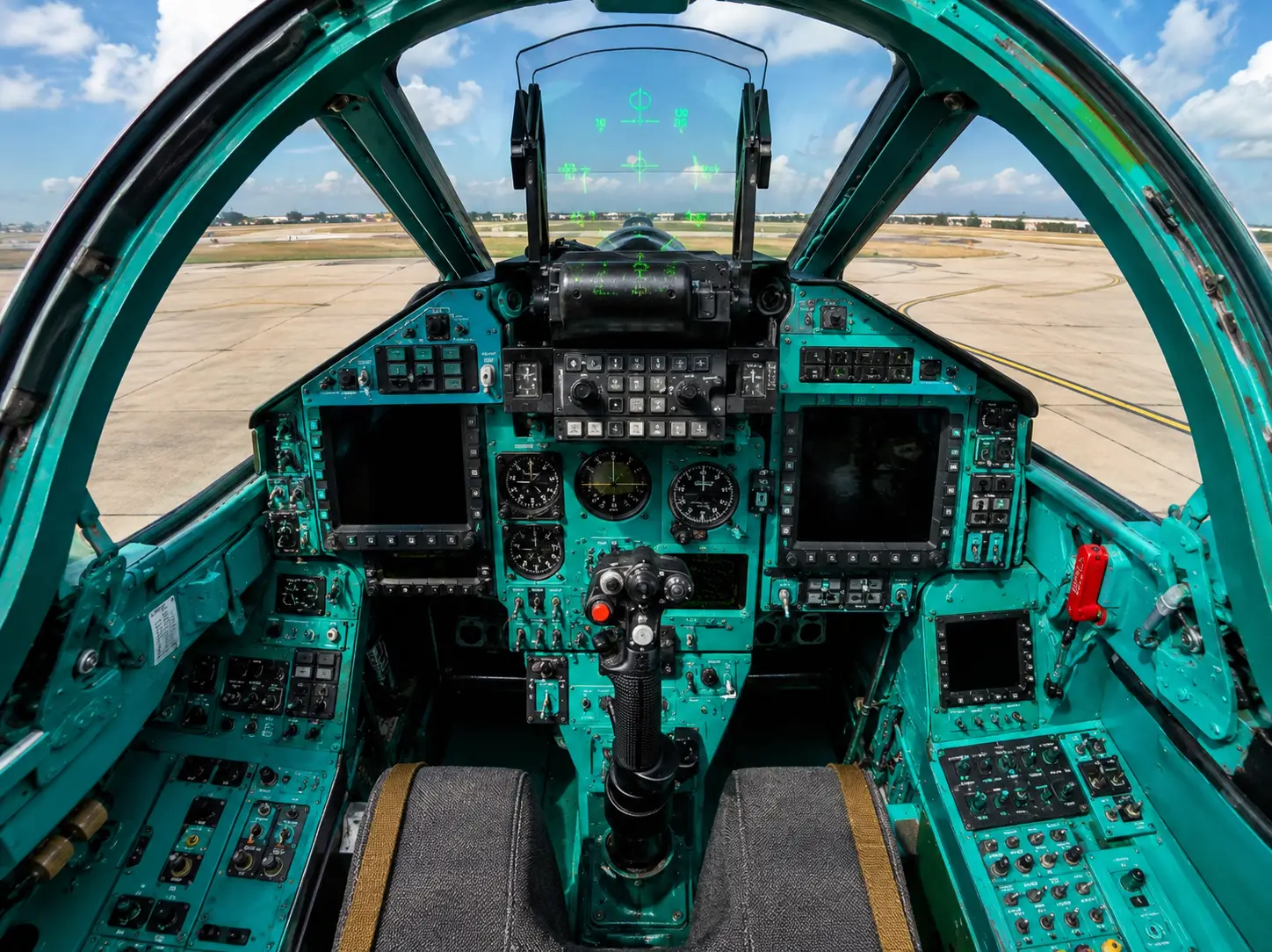
Why the Su-30MKI cockpit is painted bright turquoise green
How are hypersonic weapons different from ballistic missiles?
Ballistic missiles can also reach hypersonic speeds, that is, five times the speed of sound or more. However, they follow a fixed, arch-like path after being launched and can't change direction easily. In contrast, hypersonic weapons are specially designed to move at extremely high speeds and can change direction mid-flight, making them much harder to track and stop.
Israel’s Missile Defence and the Iron Dome – Explained
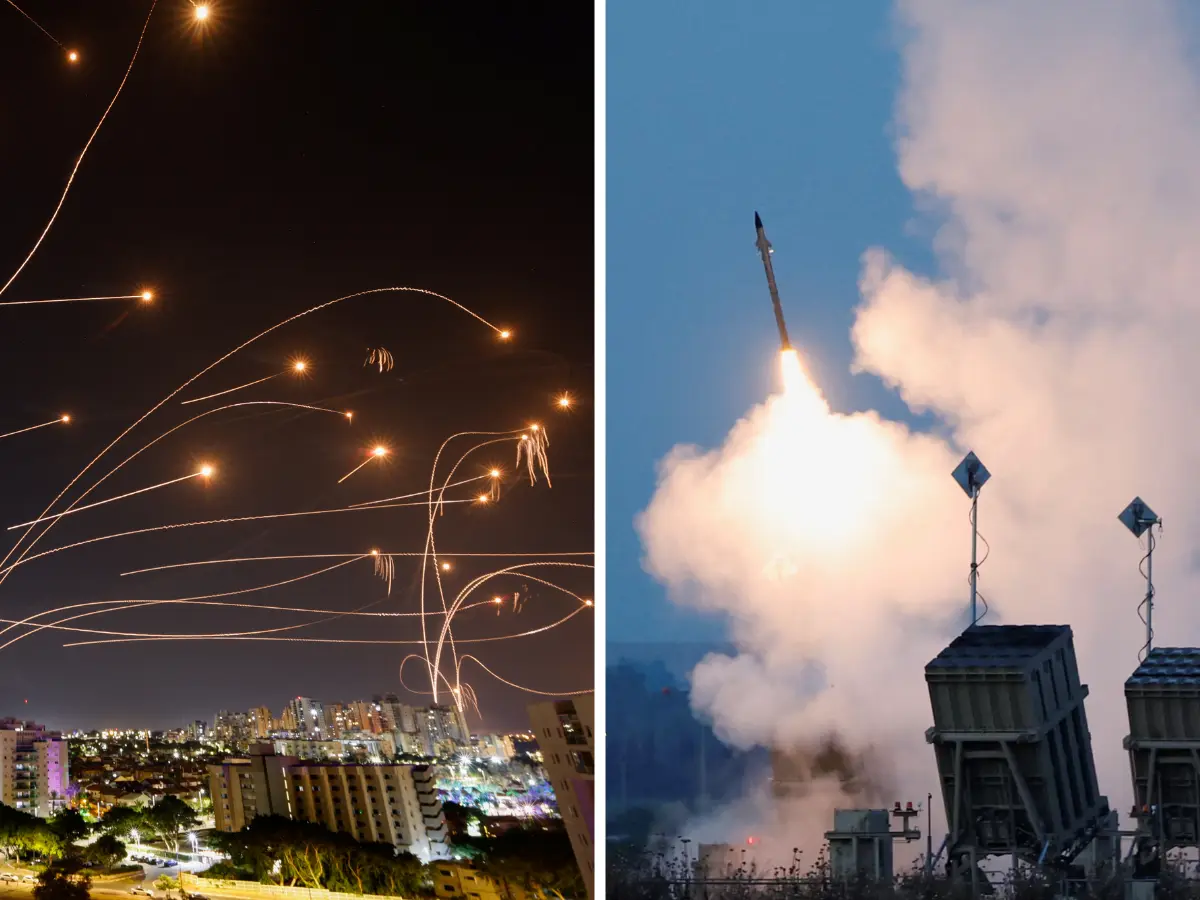
Israel is known for having one of the world’s most advanced and proven air defence systems. Many people refer to the entire system as the “Iron Dome,” but that’s only one part of it.
In reality, Israel’s air defence has multiple layers. Each layer is designed to stop threats coming from different distances, some from nearby, some from far away.
The Iron Dome is just the first layer. It is specially built to stop short-range rockets, mortars, and artillery shells, the kind that might be fired from close by.
Here’s how it works:
- Radar units detect rockets the moment they are launched.
- Then, command and control centres quickly figure out which rockets are dangerous and need to be stopped.
- Finally, interceptor missiles are launched to blow up the incoming threats in the air—before they can reach people or buildings.
- In simple terms, Iron Dome is like a protective shield that guards cities from small rockets and shells fired from a short distance.
Israel’s Ballistic Missile Defence
Besides the Iron Dome, Israel also uses other advanced defence systems to protect itself from long-range ballistic missiles—these are missiles that travel very fast and cover large distances.
These systems include:
- David’s Sling
- Arrow 2
- Arrow 3
Each of these is designed to destroy missiles coming from far away, depending on how high and fast they travel.
David’s Sling deals with medium- to long-range threats.
Arrow 2 and Arrow 3 target ballistic missiles at very high altitudes.
There are two main areas where these missiles can be intercepted:
Within the atmosphere – This means the missile is destroyed below 100 km from sea level, inside the Earth’s sky.
Outside the atmosphere (exoatmospheric) – This means the missile is intercepted above 100 km, in outer space, before it re-enters Earth's atmosphere.
Some recent videos from ongoing conflicts have shown missiles being blown up in space, proving how advanced and powerful Israel’s defence technology is.
The US Has Similar Missile Defence Systems
The United States also has powerful missile defence systems that are similar to Israel’s multi-layered setup.
The US Army uses the Patriot PAC-3 system, which works like Israel’s David’s Sling to stop medium-range threats.
It also uses THAAD (Terminal High Altitude Area Defense), which is similar to Israel’s Arrow 2, designed to shoot down missiles at high altitudes.
The US Navy uses a system called Aegis, which is installed on special warships. These ships carry missiles like:
SM-3, which is similar to Israel’s Arrow 3 and can shoot down missiles in space (outside Earth’s atmosphere).
SM-6, which works more like Arrow 2, hitting targets within the atmosphere.
In 2024, the US had already sent warships equipped with Aegis systems to help protect Israel from missile attacks. And now, it seems the US is once again moving similar ships and resources to the Middle East to support Israel if needed.
Can Missile Defences Work Forever?
Missile defence systems don’t last forever, they have limits.
Every country only has a certain number of interceptor missiles available to shoot down incoming threats. These interceptors can run out if too many missiles are launched at once.
The country launching the attack also has a limited number of missiles. But attackers have an advantage: defenders often need to use more than one interceptor per missile to make sure the threat is destroyed, just in case the first one misses.
Attackers also expect that some of their missiles may get destroyed or fail to work. So, they often launch a large number of missiles at the same time to overwhelm the defence system. Their goal is to make sure at least a few missiles get through and hit their targets.
In short, missile defences are powerful but not endless. If enough missiles are launched at once, even the best defence system can be pushed to its limit.
When it comes to ballistic missiles, the attacker usually has the upper hand.
These missiles can carry very powerful explosives, and sometimes even nuclear warheads. So even if just a few missiles manage to get past the defence system, they can still cause massive destruction.
That’s why, in these situations, stopping every single missile is so important, because even one or two getting through can lead to serious damage or loss of life.
About the Fattah-1 Hypersonic Missile – Explained Simply
The Fattah-1 is Iran’s first hypersonic missile, officially revealed in 2023, and was named by Iran’s Supreme Leader, Ayatollah Ali Khamenei.
This missile is designed to defeat even the most advanced defence systems like Israel’s Iron Dome and Arrow missiles. Iran’s Islamic Revolutionary Guard Corps (IRGC) has even called it the “Israel-striker” because of its intended purpose.
Here are some key features of the Fattah-1:
- It is about 12 metres long.
- It can strike targets up to 1,400 kilometres away, making it a medium-range missile.
- It uses solid fuel and is powered by a single-stage engine.
- It can carry a 200 kg explosive warhead, based on a report from Iran Watch.
What makes Fattah-1 different is its hypersonic glide vehicle (HGV) warhead. This allows the missile to fly at extremely high speeds, up to 17,900 km per hour, and still change direction mid-flight. This quick manoeuvring makes it very difficult for enemy defences to detect and shoot it down.
According to CNN, missile expert Fabian Hinz from the International Institute for Strategic Studies said the warhead is placed on a “manoeuvrable reentry vehicle.” That means when the missile is falling back toward Earth, it can slightly shift its path, making it harder for interceptors to catch.
