French elections: Far-right wins first round but Macron might have one last chance. Here's how


Photos of Emmanuel Macron (Left), Marine Le Pen (top right), and Jordan Bardella (bottom right).
The first round of French National Assembly on Sunday has raised the prospects of a far-right government for the first time since the World War era. But in France, the elections or government formation is not that simple. The mandatory second round for constituencies with unclear mandates could tilt the outcome even though slightly. That is the best hope for President Emmanuel Macron whose coalition came in third after the voting on Sunday (June 30).
Here are the current situation and the possible scenarios in future:
At the time of writing this, exit polls suggested far-right National Rally or RN led by Marine Le Pen won 34 per cent of votes while President Macron’s centrist alliance called Together fared third at 20.3 per cent. The Left-Green coalition New Popular Front or NFP is set to be better than Together, at 29 per cent.

Also read |France elections: High turnout seen as expats cast vote in snap polls; far-right eyes historic win
While the final numbers are not yet in, the far-right is confident of winning enough seats to form a government.
If 28-year-old Jordan Bardella, Le Pen's prodigyand RN leader, eventually becomes prime minister, that will lead to Macron becoming a lame-duck president for the rest of his term.
&imwidth=180&imheight=135&format=webp&quality=medium)
Rahul Gandhi's plea against Election Commission delayed as Supreme Court registry flags 14 ‘defects’
&im=FitAndFill=(700,400)&imwidth=180&imheight=135&format=webp&quality=medium)
Navratri 2026: 9 days, 9 forms of Goddess Durga and 9 colours- Check the complete list
&imwidth=180&imheight=135&format=webp&quality=medium)
Korean peninsula tensions escalate as North Korea launches multiple ballistic missiles, PACOM says 'no threat to US personnel'
&imwidth=180&imheight=135&format=webp&quality=medium)
Trump weighs firing Kimberly Guilfoyle as US ambassador to Greece amid misconduct allegations: Report
&imwidth=180&imheight=135&format=webp&quality=medium)
Anti-SIR protest in Mumbai: Protestors wear black masks & ribbons in Mumbai
&imwidth=180&imheight=135&format=webp&quality=medium)
UK PM Andy Birnham renews claims of Russian meddling in Brexit vote
&imwidth=180&imheight=135&format=webp&quality=medium)
BCCI rejects venue shift reports, India vs Sri Lanka 1st ODI to remain in Delhi
&imwidth=180&imheight=135&format=webp&quality=medium)
'Absolutely disgusting': Australia slams US plan to livestream Nidal Hasan's execution; Mike Johnson raises concerns, warns of terrorist propaganda
&imwidth=180&imheight=135&format=webp&quality=medium)
1,500 drones illuminate Mumbai sky as Cordelia Cruises unveils second ship, Cordelia Sky
&imwidth=180&imheight=135&format=webp&quality=medium)
Houthis warns US of 'painful response' if Washington joins Saudi war in Yemen as airlines suspend flights to Saudi Arabia
&imwidth=180&imheight=135&format=webp&quality=medium)
India Rejects Pakistan-China Boundary Commission, Tells Islamabad to Drop 'Theatrics' | GRAVITAS
&imwidth=180&imheight=135&format=webp&quality=medium)
Congress demands action against chief election commissioner
&imwidth=180&imheight=135&format=webp&quality=medium)
Apple HomeView smart home hub may launch soon with A18 chip, display and Siri controls: What to expect
&imwidth=180&imheight=135&format=webp&quality=medium)
'Turn approver, resign, we'll forgive you': Rahul Gandhi claims receiving messages from CEC Gyanesh Kumar
&imwidth=180&imheight=135&format=webp&quality=medium)
'I will not be silenced': Ilhan Omar alleges political intimidation after federal officers search her Washington home
&imwidth=180&imheight=135&format=webp&quality=medium)
Robotic surgery, advanced treatment: What is coming to this small Gujarat town?
&imwidth=180&imheight=135&format=webp&quality=medium)
Pakistan's government blames PTI for rise of terrorism in Khyber Pakhtunkhwa
&imwidth=180&imheight=135&format=webp&quality=medium)
‘This is just the start’: Maaya Rajeshwaran on historic ITF title, confidence boost and future goals
&im=FitAndFill=(700,400)&imwidth=180&imheight=135&format=webp&quality=medium)
How does a robot decide what to do next?
&imwidth=180&imheight=135&format=webp&quality=medium)
Trump says he 'may' meet North Korean leader Kim Jong Un during upcoming Asia trip
&imwidth=180&imheight=135&format=webp&quality=medium)
'Ouch!!! That must hurt': Kangana Ranaut hails Kamal Haasan's sharp reply to Elon Musk over Starlink row
&imwidth=180&imheight=135&format=webp&quality=medium)
Sidhu Moose Wala’s younger brother wins hearts by recreating late singer’s signature move at Toronto Hologram Show
&imwidth=180&imheight=135&format=webp&quality=medium)
Girl 'dead' for 8 hours wakes up at her own funeral, dad insists she wasn't breathing
&imwidth=180&imheight=135&format=webp&quality=medium)
UK school ditches technology, shifts from screen to pen and paper for learning
&imwidth=180&imheight=135&format=webp&quality=medium)
Opposition’s 10 demands in Supreme Court petition range from stay on SIR to audit of voter rolls
&imwidth=180&imheight=135&format=webp&quality=medium)
'I am thoroughly unamused': Judge slams Trump administration after 400 trees cut at Washington golf course
&imwidth=180&imheight=135&format=webp&quality=medium)
Portugal Federation confirms Cristiano Ronaldo’s return to national team despite suspension
&im=FitAndFill=(700,400)&imwidth=180&imheight=135&format=webp&quality=medium)
New OTT releases this week (October 12-18, 2026): Sacrifice, Koffee with Karan S9, Roadies Rebirth- 6 titles coming on Netflix, JioHotstar and more
&imwidth=180&imheight=135&format=webp&quality=medium)
India's Ajit Doval, Iran's Mohsen Rezaei hold talks amid escalating West Asia tensions, discuss 'issues of mutual interest'
&imwidth=180&imheight=135&format=webp&quality=medium)
'Almost certainly': UK Prime Minister Andy Burnham says Iran's IRGC behind RAF Fairford threat
&imwidth=180&imheight=135&format=webp&quality=medium)
Elon Musk pumps $276 million into Republican campaigns ahead of US midterm elections
How can Macron escape the rout? What are his chances?
There are two things happening. On the ground, left and centrist supporters have taken to the streets to protest against the far-right. The hope, it appears, is to show how dangerous it would be if a far-right government takes over andrally support for alternative outcomes.
This, they hope, would make more voters to turn up in the second round, and avert a tectonic shift of French politics towards the right.
Alliance-building and deal-making: Macron's last option?
Macron could forge electorial tie-ups with other parties to help cobble up an anti-far-right coalition.
Here's how the numbers stack up:
Out of the 577 seats, those where the leading candidate did not poll more than 50% of votes will have to go into second round on Sunday, as per the election rules of France. The two candidates who got the highest votes in such constituencies, plus anyone who got at least 12.5% of registered votes will go into the second round.
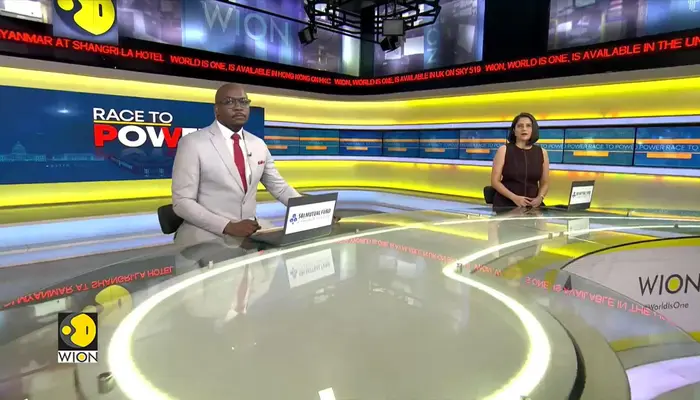
Also watch |France snap elections: Far-right takes lead in round 1, What's next? | Race To Power
In this year's election, the number of such seats are projected to be up to 80. The largest number of second round elections in the past was in 1997, which saw polling in 76 seats.
In the past elections, most of the second rounds were between two candidates, meaning two main parties or blocs. But this time, many of them are going to see triangular contests between the left, centrist and far-right parties.
As the RN has the largest vote share of the first round, they might have an edge in second round too.
But the centrists and leftists have an option: one of the fronts can drop their candidate in order for the other to win in tactical voting, so that a front can be formed against the far right.
This is where Macron's challenge lies: Can he convince the leftist to drop their candidates?
Even if that happens, will the voters change their voting pattern in favour of the candidate who, in the first round, was an opponent of their party candidate?
Who are the players and kingmakers?
The left-green NFP alliance includes four parties. They have agreed in principle to withdraw the NFP candidates from seats where RN is in first place or NFP candidate is third.
But will Macron return the favour in cases where his party/bloc candidates are third?
Macron thinks the NFP consists of 'extreme' left parties and is yet to be flexible on this. While the Prime Minister Gabriel Attal is in favour of third-placed candidates from Macron's coalition withdrawing from the race, neither the president nor the candidates have made firm commitments to this effect at the time of writing this.
While an Ipsos poll said 87% NFP voters are ready to vote for other candidates in order to keep out RN, only 62% of Togethercoalition voters are ready to do the same.
Odoxa's polls found that only 41% were willing to block RN. Those willing to block NPF are highest at 47% while 44% are ready to block Together from winning.
So in the coming days, Macron will have to negotiate his way through individual party leaders - including the ones he disparaged during campaign- and create 'deals' on individual constituencies.
It all depends on how much he, and the others like Leftist firebrand leadersJean-Luc Mélenchon in NFP- are willing to play ball.