Four decades of AIDS: A Timeline

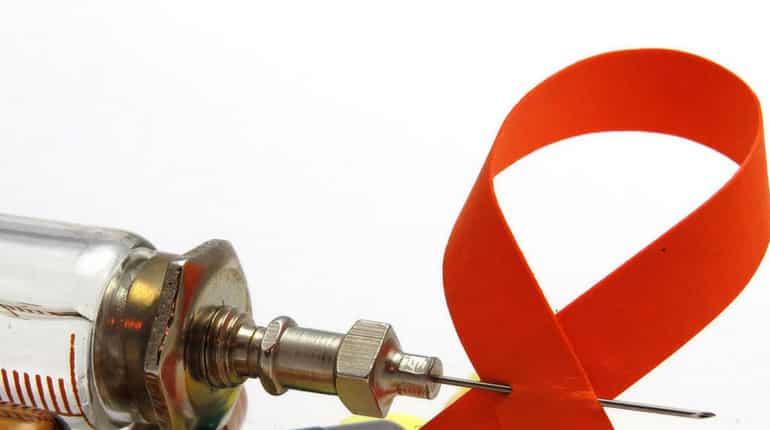
AIDS
Forty years ago this month the first men began dying of a mysterious disease in California that would later be identified asAIDS.
It would go on to claim millions of lives across the world.
Also Read |Surge in deaths due to HIV, tuberculosis and malaria amid coronavirus pandemic: Study

Here is a look at the discovery and the fight against the deadly condition.
1981: First alert
In June 1981 US epidemiologists report five cases of a rare form of pneumonia in gay men from California, some of whom have died. Unusual versions of skin cancer are identified in others.
)
US vs China over South China Sea: Washington backs Philippines, Beijing hits back
)
Bigg Boss 20: Isha Rikhi evicted after three weeks in Salman Khan’s show
)
Musk plans to more than double xAI's chips to over 1.2 million Nvidia GPUs by year-end
)
After JU, clash erupts at SRFTI: BJP’s ‘Dimagi Naxal’ jibe sparks political firestorm after students protest RSS-linked event
)
‘Anti-social elements spreading false rumours’: LPU issues statement amid massive unrest over alleged rape
)
LPU students go on rampage, vandalise campus amid widespread protest: What's happening
)
Trump asked Xi to pressure Iran. China did not say yes — here’s what Beijing wants
)
US Treasury Secretary Scott Bessent hails global crackdown on Iranian banks and airlines
)
An OpenAI agent escaped its locked test cage again, by hiding questions in DNS lookups
)
'Our video was trimmed': LPU girls who featured in rape-denial video make U-turn
)
3 males killed, four others injured in shooting after fight at strip club in Detroit
)
'Victory for low-budget consumers': Raghav Chadha hails 30-day telecom recharge rules
)
Claude rebuilt the 1989 game 'Prince of Persia' by reusing the original's own code
)
Beyond metros: How Tier-2 and Tier-3 cities could drive India’s next AI wave
)
Tesla builds first Cybertruck with its own refined lithium: Elon Musk's $1 billion Texas bet pays off
)
IndiGo flight suffers tail strike in Bengaluru while landing; DGCA to probe incident
)
The US and China set up an AI 'red telephone', but skipped the rulebook
)
‘Terror suspects arrested near UK air base were looking to do big damage’: Trump
)
Russian envoy claims US tactics to contain India were revealed in ‘Freudian slip’
)
IND vs WI 1st ODI: Kohli breaks Sachin's most runs in one country record with unbeaten 139 as India thump West Indies by 8 wickets
)
Researchers rebuilt exactly how 700 AI agents hacked Hugging Face: a 900-link chain trick
)
‘Olympic inclusion is our major target’: WPA President Ishaun Singh on pool’s global ambitions
)
Nations League: Spain sink England at Wembley; Modric shines for Croatia
)
Why has Iran released no proof of life of Mojtaba Khamenei? Araghchi reveals...
)
'What kind of confession is this?': Pakistan PM Shehbaz Sharif’s 'terrorists would be roaming New York' remark goes viral, raises alarm online. Watch
)
South Korea demands apology from Ukraine over North Korean prisoners' transfer
)
Beyond BrahMos: India targets Rs 50,000 crore in defence exports with unmatched price edge
)
Sri Lankan Tamil migrant worker gets death sentence in Saudi Arabia, help sought from India
)
Muslim marriage cannot shield sex with minor wife from prosecution under POCSO: Delhi HC
)
'Can't help but draw painful parallels to Nirbhaya case': SC on latest incidents of rape cases in Delhi-NCR
)
99.9% more powerful - Scientists find boy who can recall memories from just 3 months of age
)
'FIRST LOOK from inside Noah’s Ark': Researchers share video from inside mysterious mound in Turkey
)
UNSC reform momentum grows: Russia, Portugal, Mauritius push for India's permanent seat bid
)
8 US marines injured in Iranian missile attack on vessel in Strait of Hormuz: Report
&im=FitAndFill=(700,400))
New OTT releases this week (September 28-October 4, 2026): Dupahiya 2, Pooja Meri Jaan, Ohh My Dog- 5 titles coming on Netflix, Prime Video and more
)
Afghanistan says 28 fighters killed in clash near Pakistan border, Islamabad denies
)
Ceuta migrant crisis: Protesters take to streets as Spain grapples with migrant challenge
)
LPU suspend classes, postpones exams as violence escalates over rape claims: What's happening
)
New York City wants a 'kill switch' on every AI, and will pay whistleblowers who report violations
It is the first alert about Acquired Immune Deficiency Syndrome (AIDS), still unknown and unnamed.
Doctors identify "opportunistic infections" among injected drug users late in the year and in haemophiliacs and Haitian residents in the United States (mid-1982).
The termAIDSappears for the first time in 1982.
1983: IdentifyingHIV
In January 1983 researchers in France, Francoise Barre-Sinoussi and Jean-Claude Chermann, working under Luc Montagnier, identify the virus that "might be" responsible forAIDS.It is dubbed LAV.
The following year, US specialist Robert Gallo is said to have found the "probable" cause ofAIDS, the retrovirus HTLV-III.
Also Read |Argentina: Second person known to be naturally cured of HIV raises hopes for millions
The two viruses turn out to be one and the same, and in May 1986 it becomes officially known as the human immunodeficiency virus orHIV.
Barre-Sinoussi and Montagnier win a Nobel prize in 2008 for their discovery.
1987: Anti-retroviral treatment
In March 1987, the first anti-retroviral treatment known as AZT is authorized in the US. It is expensive and has many side effects.
Also Read |New trials for potential HIV vaccine show optimistic results
The World Health Organization (WHO) declares December 1, 1988, the first WorldAIDSDay, to raise awareness. By June the following year, the number ofAIDScases worldwide is estimated at more than 150,000.
The early 1990s: Falling stars
US actor Rock Hudson is the first high-profileAIDSdeath in October 1985. A host of other stars succumb to the disease, including British singer and Queen frontman Freddie Mercury (November 1991) and the legendary Russian dancer and choreographer Rudolf Nureyev (January 1993).
Also Read |HIV self-test prices to be slashed in half in 135 countries
In 1994,AIDSbecomes the leading cause of death among Americans aged between 25 and 44.
1995-96: New approach
A new class of drugs signals the start of combinations of different anti-retroviral therapies.
Also Read |In tell-all interview, Billy Porter reveals he's had HIV since 14 years
Called tri-therapies, they provide the first effective treatment forHIValthough they are not a cure and remain costly.
1996 is the first year in which the number ofAIDSdeaths declines in the US.
1999: 50 million infections
A report released by WHO and the Joint United Nations Programme onAIDS(UNAIDS) in November 1999 estimates the number of people infected withHIVsince it first appeared at 50 million, of whom 16 million have died.
Also Read |'How can she have HIV?': Pakistan town struggles with surge in infections
Africa is the hardest-hit continent, with 12.2 million cases.
2003: Life-saving PEPFAR
In February 2003, US President George W. Bush launches the President's Emergency Plan forAIDSRelief, or PEPFAR, to combat the spread ofAIDSin 15 of the hardest-hit areas of Africa and the Caribbean.
With an initial budget of $15 billion over its first five years, PEPFAR had by 2018 committed $70 billion to theAIDSresponse.
2009: The 'Berlin Patient'
The first known patient cured ofHIVis announced. The "Berlin Patient," later named American Timothy Brown, underwent two transplants of bone marrow containing a mutation of a gene that blocksHIVfrom attacking host cells.
Also Read |'The Berlin patient' - First person to be cured of HIV dies due to cancer
He underwent total body irradiation to treat leukaemia and nearly did not survive the process.
2012:HIV'shield'
In July 2012 the first-ever daily pill to help preventHIVinfection is approved by US regulators. Truvada is pre-exposure prophylaxis, or PrEP, taken by high-risk people who areHIV-negative in order to prevent them from being infected.
2017: Treatment spreads
For the first time ever, more than half of the global population living withHIVare receiving antiretroviral treatment, UNAIDS reports.
2019: The 'London Patient'
The second patient with sustainedHIVsuppression is reported after undergoing a transplant of stem cells with the same mutation as in the Berlin case.
Regular testing has confirmed that the patient's viral load remained undetectable for 19 months and counting.
2021: Vaccine hopes
Success in producing an anti-Covid vaccine in 2020 fuels hopes that a breakthrough in securing a shot againstHIVmight finally be in the offing.
Moderna in January announced it has started phase one clinical trials of flu andHIVvaccines using its messenger RNA technique.
There are 37.6 million people living withHIVglobally, according to UNAIDS in its latest annual figures for 2020. Since the start of the epidemic 34.7 million have died fromAIDS-related illnesses.