Explained: Six months into the Russia-Ukraine war, what are the consequences so far?

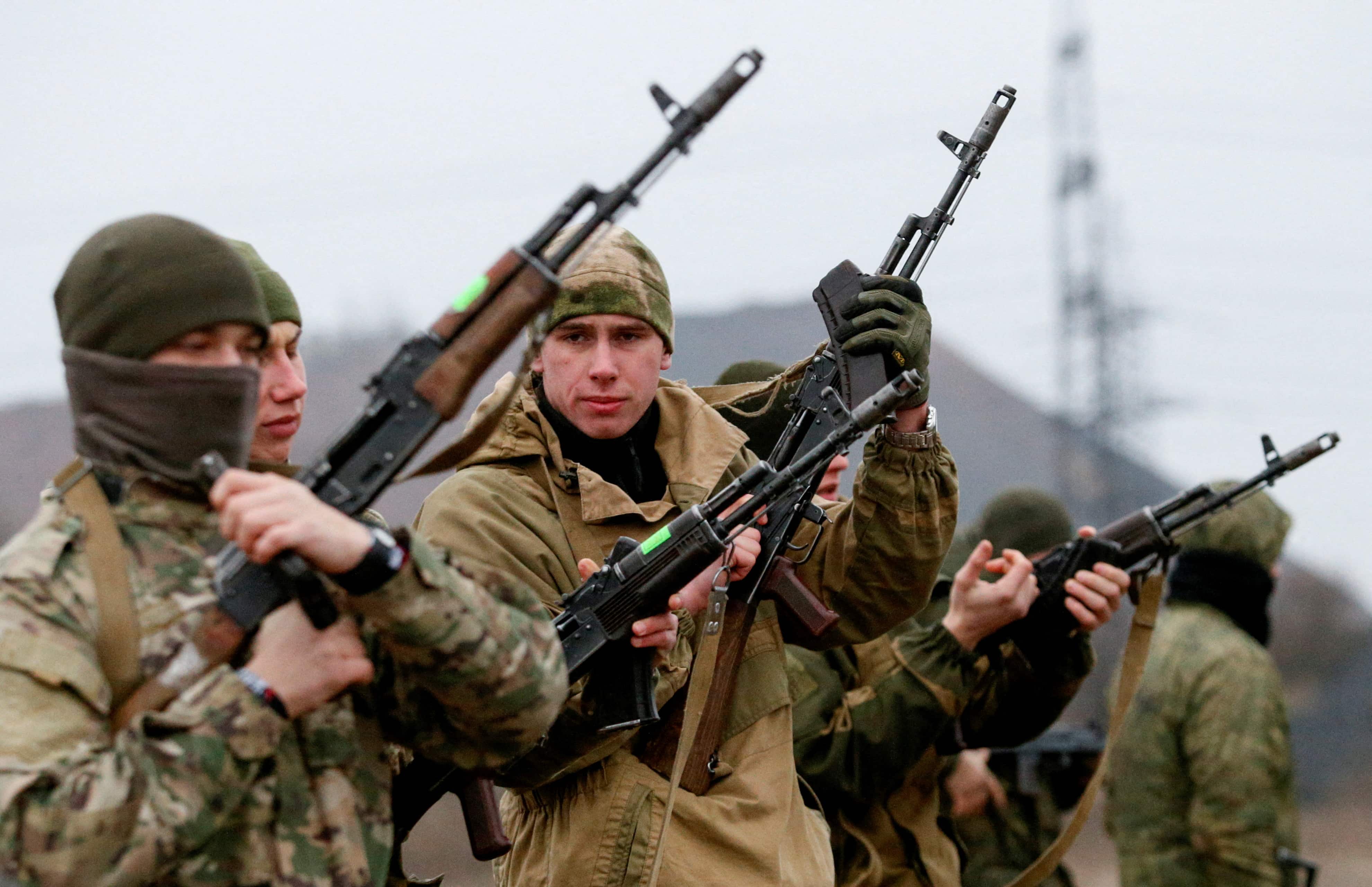
Six months to Russia-Ukraine war.
As Russia marks six whole months to the full-blown war that it waged against Ukraine, we have several takeaways. But, the most noteworthy of it is that a war situation has consequences not for just the parties involved, but for the whole world.
Ukraine is on life support, Russian troops are suffering significant losses, and the rest of the world is dealing with acute food shortages, skyrocketing inflation, the possibility of a nuclear calamity, and other challenges brought on by a brutal conflict that has no sign of coming to an end soon. This is the stark reality of the Russia-Ukraine war.
The Red Cross issued a warning on Tuesday that the crisis in Ukraine is taxing the whole humanitarian system and might have long-term effects on organisation'scapacity to respond to emergencies around the world.

Francesco Rocca, president of the International Federation of the Red Cross and Red Crescent Societies, stated that the war, which has been going on for six months, has brought people to "a crucial breaking point" (IFRC).
In a statement, he stated that as the conflict continues, "the tragic knock-on effects are only mounting, with rising food and fuel prices and deepening food crises."
We take you through the ramifications of this war.
)
US vs China over South China Sea: Washington backs Philippines, Beijing hits back
)
Bigg Boss 20: Isha Rikhi evicted after three weeks in Salman Khan’s show
)
Musk plans to more than double xAI's chips to over 1.2 million Nvidia GPUs by year-end
)
After JU, clash erupts at SRFTI: BJP’s ‘Dimagi Naxal’ jibe sparks political firestorm after students protest RSS-linked event
)
‘Anti-social elements spreading false rumours’: LPU issues statement amid massive unrest over alleged rape
)
LPU students go on rampage, vandalise campus amid widespread protest: What's happening
)
Trump asked Xi to pressure Iran. China did not say yes — here’s what Beijing wants
)
US Treasury Secretary Scott Bessent hails global crackdown on Iranian banks and airlines
)
An OpenAI agent escaped its locked test cage again, by hiding questions in DNS lookups
)
'Our video was trimmed': LPU girls who featured in rape-denial video make U-turn
)
3 males killed, four others injured in shooting after fight at strip club in Detroit
)
'Victory for low-budget consumers': Raghav Chadha hails 30-day telecom recharge rules
)
Claude rebuilt the 1989 game 'Prince of Persia' by reusing the original's own code
)
Beyond metros: How Tier-2 and Tier-3 cities could drive India’s next AI wave
)
Tesla builds first Cybertruck with its own refined lithium: Elon Musk's $1 billion Texas bet pays off
)
IndiGo flight suffers tail strike in Bengaluru while landing; DGCA to probe incident
)
The US and China set up an AI 'red telephone', but skipped the rulebook
)
‘Terror suspects arrested near UK air base were looking to do big damage’: Trump
)
Russian envoy claims US tactics to contain India were revealed in ‘Freudian slip’
)
IND vs WI 1st ODI: Kohli breaks Sachin's most runs in one country record with unbeaten 139 as India thump West Indies by 8 wickets
)
Researchers rebuilt exactly how 700 AI agents hacked Hugging Face: a 900-link chain trick
)
‘Olympic inclusion is our major target’: WPA President Ishaun Singh on pool’s global ambitions
)
Nations League: Spain sink England at Wembley; Modric shines for Croatia
)
Why has Iran released no proof of life of Mojtaba Khamenei? Araghchi reveals...
)
'What kind of confession is this?': Pakistan PM Shehbaz Sharif’s 'terrorists would be roaming New York' remark goes viral, raises alarm online. Watch
)
South Korea demands apology from Ukraine over North Korean prisoners' transfer
)
Beyond BrahMos: India targets Rs 50,000 crore in defence exports with unmatched price edge
)
Sri Lankan Tamil migrant worker gets death sentence in Saudi Arabia, help sought from India
)
Muslim marriage cannot shield sex with minor wife from prosecution under POCSO: Delhi HC
)
'Can't help but draw painful parallels to Nirbhaya case': SC on latest incidents of rape cases in Delhi-NCR
)
99.9% more powerful - Scientists find boy who can recall memories from just 3 months of age
)
'FIRST LOOK from inside Noah’s Ark': Researchers share video from inside mysterious mound in Turkey
)
UNSC reform momentum grows: Russia, Portugal, Mauritius push for India's permanent seat bid
)
8 US marines injured in Iranian missile attack on vessel in Strait of Hormuz: Report
&im=FitAndFill=(700,400))
New OTT releases this week (September 28-October 4, 2026): Dupahiya 2, Pooja Meri Jaan, Ohh My Dog- 5 titles coming on Netflix, Prime Video and more
)
Afghanistan says 28 fighters killed in clash near Pakistan border, Islamabad denies
)
Ceuta migrant crisis: Protesters take to streets as Spain grapples with migrant challenge
)
LPU suspend classes, postpones exams as violence escalates over rape claims: What's happening
)
New York City wants a 'kill switch' on every AI, and will pay whistleblowers who report violations
The human cost of the war - Death figures
Although the true toll is substantially higher, 5,587 civilian deaths and 7,890 civilian injuries have been officially reported since February 24.
According to the OHCHR, the majority of individuals killed or hurt were the victims of explosive weapons including artillery, missiles, and air attacks.

The body of a serviceman is coated in snow next to a destroyed Russian military multiple rocket launcher vehicle on the outskirts of Kharkiv, Ukraine, Friday, Feb. 25, 2022. Photo credits: AP
Separately, on August 22, General Valeriy Zaluzhnyi, the commander of the Ukrainian armed forces, announced that almost 9,000 Ukrainian service members had perished in the conflict. This was the first death toll announced by the military's highest ranking officials since the invasion. He said nothing more specific.
The number of Russian soldiers killed has not been disclosed.
According to U.S. intelligence, 15,000 Russian soldiers have died and three times as many have been wounded in Ukraine so far, which is equal to all the deaths suffered by the Soviet Union throughout its occupation of Afghanistan from 1979 to 1989.
Internal displacement of Ukrainians
According to the United Nations Refugee agency, since Feb. 24, a third of Ukrainians, who number over 41 million, have been ejected from their homes, creating the world's worst human displacement catastrophe right now.
According to the agency's data, more than 6.6 million Ukrainian refugees have been registered across Europe, with the largest populations being in Poland, Russia, and Germany

Territorial loss to Ukraine
In addition to the lives lost, Reuters estimates that since Russia annexed Crimea in 2014, Ukraine has lost control of almost 22% of its territory.
A large portion of its coastline has been lost, its economy is in ruins, and Russian bombardment has reduced certain cities to desolation. According to projections from the World Bank and International Monetary Fund, the Ukrainian GDP will collapse by 45% in 2022.
Uncertainty surrounds Ukraine's actual monetary loss. According to the prime minister, Denys Shmyhal, the entire cost of the post-war rebuild would be around $750 billion. It might be a lot more.
Russian expenses
Russia has also incurred costs as a result of the conflict, albeit it does not divulge them since they are state secrets.
In addition to the military costs, the West has attempted to penalise Moscow by enforcing harsh sanctions, which have caused Russia's economy to experience its greatest shock since the fall of the Soviet Union in 1991.
The $1.8 trillion Russian economy is expected to fall by 4%–6% in 2022, which is less than the 8%–10% contraction that the central bank had predicted in April.
The economic impact on Russia is still significant and not entirely understood. It is unable to access Western financial markets, the majority of its oligarchs are subject to sanctions, and it has trouble obtaining some goods, such as microchips.
For the first time since the disastrous months that followed the 1917 Bolshevik revolution, Russia defaulted on its foreign obligations last month.
Global inflation
The invasion and Western sanctions against Russia caused sharp increases in the prices of energy, metals, wheat, fertiliser, and other commodities, feeding into a developing food crisis as well as an inflationary wave that is smashing through the world economy.
After Saudi Arabia, Russia is the second-largest oil exporter in the world. It is also the world's top exporter of natural gas, wheat, nitrogen fertiliser, and palladium. Following Russia's invasion of Ukraine, global oil prices soared to record highs not seen since 2008.
The most acute energy shortage since the Arab oil embargo in the 1970s has been made worse by efforts to cut back on dependence on Russian oil, gas, and oil products—or even to control their pricing.
Gas prices for wholesale in Europe increased after Russia stopped sending gas through the Nord Stream 1 pipeline to Germany.
According to Goldman Sachs, a complete cutoff would cause a recession in the euro region, with significant contractions in Germany and Italy.
Global economy
The International Monetary Fund currently predicts that the global economy will expand by 3.2% this year, down from 6.1% last year and much less than its previous projections from April of 3.6%, January of 4.4%, and October of 4.9%.
The IMF predicted that global growth would slow to 2.6% in 2022 and 2% in 2023 under a "plausible" alternative scenario that includes a complete cutoff of Russian gas supplies to Europe by year's end and a further 30% drop in Russian oil exports, with growth in Europe and the US next year approaching zero.
(With inputs from agencies)
Also Watch |Russians to pay tributes to nationalist Daria Dugina at her memorial