Explained: Japanese PM Kishida reshuffles cabinet as approval ratings slide. What's the backstory?

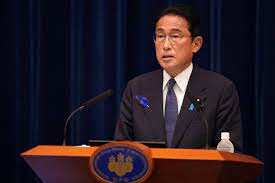
Japanese PM Kishida
Japan’sPrime Minister Fumio Kishida reshuffled his cabinet on Wednesday, removing some ministers with ties to the Unification Church in an effort to stem falling support amid escalating public outrage over the ruling party’s associations with the controversial organisation.
Kishida, who has been in office since last October, unveiled his new cabinet in a reorganisation that occurred earlier than observers had predicted.
The positions of some prominent ministers were eliminated, including Nobuo Kishi, the younger brother of the assassinated former prime minister Shinzo Abe, who was replaced as defence minister by Yasukazu Hamada. However, key individuals like foreign minister Yoshimasa Hayashi and finance chief Shunichi Suzuki retained their positions.

With polls showing Kishida’s favour ratings plummeting and respondents stating a need to know precisely how tight such ties may be, the Liberal Democratic Party’s (LDP) historic ties to the Unification Church have come under scrutiny in the month since Abe was fatally shot.
According to Abe’s alleged killer, his mother was a member of the Unification Church who became bankrupt after giving to it, and Abe was to blame for endorsing it.
In other changes, Koichi Hagiuda, the trade minister, was appointed to the powerful position of head of the LDP’s policy research council. Despite the fact that Hagiuda has publicly admitted to attending an event sponsored by an organisation with ties to the Unification Church, that appointment is perceived as an effort to placate members of the Abe faction.
&imwidth=180&imheight=135&format=webp&quality=medium)
US-Iran war: Bibi, Trump gamble on new Iran war to save themselves in polls
&imwidth=180&imheight=135&format=webp&quality=medium)
US midterms 2026: What polls and prediction markets indicate about Congress
&imwidth=180&imheight=135&format=webp&quality=medium)
EU probes Booking.com under Digital Services Act
&imwidth=180&imheight=135&format=webp&quality=medium)
Feds obtain DNA evidence that could prove Ilhan Omar married her brother: Report
&imwidth=180&imheight=135&format=webp&quality=medium)
Meta slapped with $25 billion fine in New Mexico over Facebook data practices, company plans appeal
&imwidth=180&imheight=135&format=webp&quality=medium)
Pakistan signs another defence pact even as Makkah Alliance shows no teeth. This time, it's with Qatar, Indonesia, Turkey
&imwidth=180&imheight=135&format=webp&quality=medium)
Viral video shows cross falling on Colombia priest, no official confirmation | WATCH
&imwidth=180&imheight=135&format=webp&quality=medium)
Priyanka Chopra celebrates Dussehra 2026 with Nick Jonas and daughter Malti Marie | See pics
&imwidth=180&imheight=135&format=webp&quality=medium)
China's dancing robot turns violent bodyguard, lifts cars and fights intruders - Watch
&im=FitAndFill=(700,400)&imwidth=180&imheight=135&format=webp&quality=medium)
New OTT releases this week (October 19-25, 2026): Gajab Raat to Chaar Yaar-8 titles to watch during Dussehra week on Netflix, Prime Video and more
&imwidth=180&imheight=135&format=webp&quality=medium)
16-foot doomsday fish in Chile triggers fears that the next earthquake is coming
&imwidth=180&imheight=135&format=webp&quality=medium)
Will Rohit and Kohli play ODI World Cup 2027? BCCI president Manhas says board 'not in a position to comment'
&imwidth=180&imheight=135&format=webp&quality=medium)
Australia police arrest former national 100m champ Jake Doran for alleged child abuse
&imwidth=180&imheight=135&format=webp&quality=medium)
Ranbir Kapoor apologises for Dussehra speech slip, clarifies remark at Ramayana event
&imwidth=180&imheight=135&format=webp&quality=medium)
From Agni-V to Project Kusha: How are India’s indigenous missile systems and defence shield reshaping modern warfare
&imwidth=180&imheight=135&format=webp&quality=medium)
US Midterms 2026 and money: From Bloomberg to Musk, corporate donors, super PACs and lobbies, it's all about the cash
&imwidth=180&imheight=135&format=webp&quality=medium)
WATCH | Mysterious haze grips Ohio city as toxic chemical leak forces mass evacuation – What is happening?
&imwidth=180&imheight=135&format=webp&quality=medium)
US midterms 2026: Trump's approval rating hits record low as Democrats gain ground
&imwidth=180&imheight=135&format=webp&quality=medium)
Kolkata airport: CISF detects ₹1.13 crore in US dollars hidden in bags of 2 Bangkok-bound passengers
&imwidth=180&imheight=135&format=webp&quality=medium)
'Gyanu must go': CJP's Saurav Das, Ashutosh Ranka after release, despite Jantar Mantar protest undertaking
&imwidth=180&imheight=135&format=webp&quality=medium)
Finance influencer dies by suicide in Chennai; father accuses tech CEO, who denies charge
&imwidth=180&imheight=135&format=webp&quality=medium)
'Bombed the Vidhana Soudha': Bihar man arrested over AI-generated Bengaluru blast video; netizens slam 'zero freedom of speech' | Watch
&imwidth=180&imheight=135&format=webp&quality=medium)
Why websites around the world are suddenly going offline? What you need to know about PHP
&imwidth=180&imheight=135&format=webp&quality=medium)
Rafale Marine fighter begins flight trials in Goa ahead of Indian Navy induction
&imwidth=180&imheight=135&format=webp&quality=medium)
'You are a dummy, you are a stupid person': Trump loses temper with CNN, ABC reporters after questions about Russia sanctions
&imwidth=180&imheight=135&format=webp&quality=medium)
1 killed, several injured in attack on Saudi Arabia's King Fahd airport
&imwidth=180&imheight=135&format=webp&quality=medium)
Hunger makes alcohol more appealing, study finds
&imwidth=180&imheight=135&format=webp&quality=medium)
Kim Jong Un death rumors explode | China accused of secretly sending troops to Pyongyang
&imwidth=180&imheight=135&format=webp&quality=medium)
WATCH: Woman IPS officer fires several rounds of AK-47, ignites debate online
&imwidth=180&imheight=135&format=webp&quality=medium)
Are the US and Israel preparing for another major attack on Iran? Here's what report claims
&imwidth=180&imheight=135&format=webp&quality=medium)
'Father of all bombs' vs 'mother of all bombs': Iran threatens US with new weapon as Trump hints at MOAB strike
&imwidth=180&imheight=135&format=webp&quality=medium)
‘I caution the president...’: Trump’s ex-press secretary warns after Zacharia’s exit
Here’s why there’s a problem with the church.
WHAT IS THE CONTEXT?
The anti-communist messiah Sun Myung Moon established the Family Federation for World Peace and Unification, also known as the Unification Church, in South Korea in 1954.
One of the first countries to which it expanded internationally was Japan, where Moon’s conservatism coincided with the ruling class’s Cold War ideologies.
According to church publications, he founded the International Federation for Victory Over Communism organisation in the 1960s and cultivated ties with Japanese leaders during that time.
THE LDP: WHY?
According to Eito Suzuki, a journalist who researches parliamentarians’ interactions with religious groups, the church and the LDP share some viewpoints, opposing same-sex marriage and advocating modification of Japan’s pacifist constitution.
According to attorney Hiro Yamaguchi, who has worked on litigation against the religion, the church established relationships with politicians to draw members and establish credibility. He claimed that politicians were able to approach churchgoers for support during campaigns.
According to LDP Secretary General Toshimitsu Motegi, there were no “systematic contacts” between the party and the church. He declared on Monday that it will sever ties with the religion.
WHERE DOES SHINZO ABE FIT IN THIS PICTURE?
Abe was not a member nor an adviser, according to the religion. According to the website of a church affiliate, he spoke at a gathering in September.
The current defence minister and younger brother of Abe, Nobuo Kishi, told reporters that he had help from churchgoers who helped with his campaign.
Nobusuke Kishi, a former prime minister and Abe’s grandfather, served as an honorary executive chair at a dinner hosted by Moon in 1974, according to the International Federation for Victory Over Communism.
FALL-OUT?
According to Japanese public broadcaster NHK, support for Kishida’s cabinet has reached its lowest level since he entered office in October, falling to 46%, with many survey respondents indicating they sought an explanation over connections to the church.
New cabinet members and new governing party officials must “thoroughly investigate” connections with the church, according to Kishida, who has previously stated he had “no affiliations” to it.
MAJOR IN JAPAN?
According to Ahn Ho-yeul, a spokeswoman based in Seoul, the church has about 600,000 members in Japan out of its 10 million total members, making it the fourth-largest congregation in the world. However, monitoring organisations in Japan dispute this figure.
Former followers claim that recruitment strategies include knocking on doors, focusing on members’ families, and approaching people outside of train stations.
According to the spokeswoman, trading religious artefacts for donations has made Japan its main source of funding for many years.
According to a lawyers’ association, these ‘spiritual sales’ by the Unification Church and other organisations cost followers close to $1 billion and led to almost 35,000 compensation claims since 1987.
After some members were found guilty of using unethical sales techniques, the church had vowed not to solicit excessive donations.
According to his social media posts and news reports, the murder suspect for Abe said the church convinced his mother to give the equivalent of $736,000.
Following the incident, the church said it had given the mother back about $400,000 in cash. It refused to remark on the exact amount and denied forcing her.
(With inputs from agencies)