Exclusive: South African HC says BRICS meet to amplify global south voices; backs proposal for AU's G20 entry

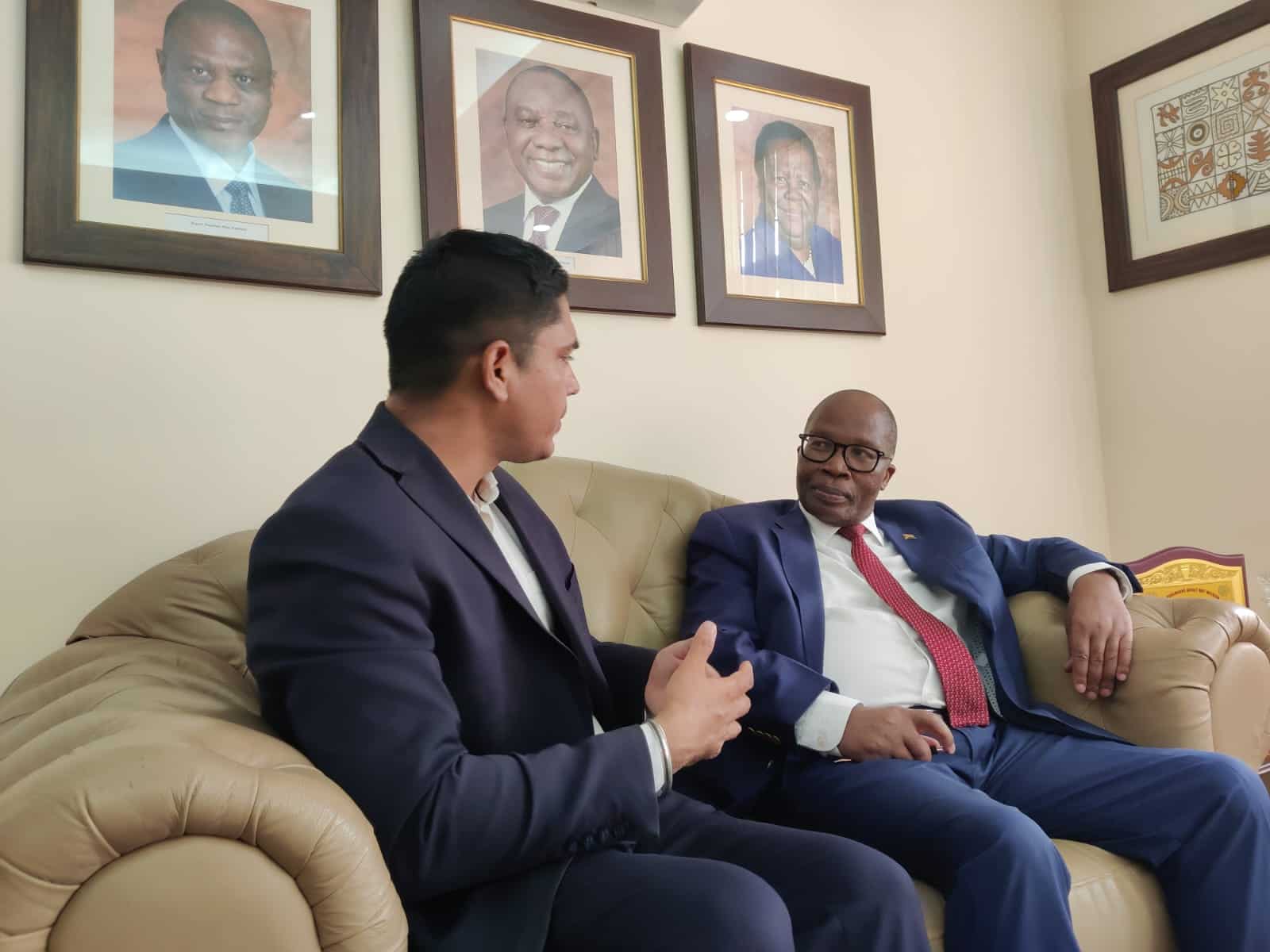
Sibal interview
Ahead of the BRICS summit, South African High Commissioner Joel Sibusiso Ndebele has highlighted his country’s focus as the chair of the grouping which includes sustainable development and inclusion of the global South in multilateral systems. The mega summit will take place in Johannesburg from August 22 to 24, and a total of 67 countries have been invited to attend.
Speaking to our diplomatic correspondent Sidhant Sibal exclusively ahead of the summit, High Commissioner Ndebele affirmed, "The Summit will also provide an opportunity to amplify the voices of our friends in Africa and the global South with the BRICS-Africa outreach and BRICS-plus dialogues." He stressed that the summit's priorities align with the shared challenges and opportunities faced by South Africa, other BRICS members, and the global south.
President Cyril Ramaphosa will host this year's BRICS Summit, which encompasses the Business Forum and the BRICS leaders retreat on August 22, followed by the main Summit on August 23. The event will conclude with the BRICS-Africa outreach and BRICS-plus dialogues on August 24.

High Commissioner Ndebele emphasised the pivotal role of aligning the work plans and calendars of South Africa, as the chair of BRICS, and India, the G20 host. "With India currently holding the G20 presidency and pushing for a more inclusive world order, it is an opportune time to induct the African Union (AU) as a permanent member of the G20," he stated. He expressed South Africa's full support for India's G20 Presidency's proposal for the African Union's full membership during the upcoming New Delhi Summit.
Here is the full interview
WION: Could you highlight the significance of the BRICS summit for South Africa, and how does it reflect the country's priorities and objectives on the international stage?
&imwidth=180&imheight=135&format=webp&quality=medium)
Pakistan to head IMF, World Bank boards after 74 years amid persistent economic crisis
&imwidth=180&imheight=135&format=webp&quality=medium)
Russian woman and Bihar boy's love story goes viral after she reaches India to marry him
&imwidth=180&imheight=135&format=webp&quality=medium)
'We are not sitting in ivory towers, we are aware': SC issues notice to Rahul Gandhi, Akhilesh Yadav
&imwidth=180&imheight=135&format=webp&quality=medium)
Group's fibre-optic drones pose new challenge for Israel
&imwidth=180&imheight=135&format=webp&quality=medium)
CJP's Tiranga march: People hit streets of Delhi again, reiterate call for Gyanesh Kumar's resignation
&imwidth=180&imheight=135&format=webp&quality=medium)
US midterms 2026: Ken Paxton may have Elon Musk to thank if he wins the Texas Senate race. Here's why
&imwidth=180&imheight=135&format=webp&quality=medium)
Trump invokes national interest to waive new Russia sanctions, tariffs; India gets relief from 100% tariff threat
&imwidth=180&imheight=135&format=webp&quality=medium)
Ankita Bhandari murder case: Parents meet CBI, seek impartial investigation
&imwidth=180&imheight=135&format=webp&quality=medium)
US budget deficit nears $2 trn as tariff refunds rise; debt crosses $40 trn
&imwidth=180&imheight=135&format=webp&quality=medium)
Gravitas | Iran threatens to hit key bridges in 7 countries if US resumes strikes
&imwidth=180&imheight=135&format=webp&quality=medium)
‘Pee-wee Herman’: Trump mocks Jon Ossoff’s appearance at Georgia rally, repeats false claim about El-Sayed
&imwidth=180&imheight=135&format=webp&quality=medium)
Ukraine drone strike disrupts 22 Russian airports, over 200 flights

Not Khan but Pal: Why did Imran Khan choose his mother's surname over his father's? Family tree explained
&imwidth=180&imheight=135&format=webp&quality=medium)
A secret code, a midnight escape and 300 deaths: The Russian officer who turned on Putin
&imwidth=180&imheight=135&format=webp&quality=medium)
Oregon school shooting: 16-year-old shooter identified, used shotgun bought by mother; Trump praises bystander who shot gunman as 'great hero'
&imwidth=180&imheight=135&format=webp&quality=medium)
After ODIs, T20Is and Tests, cricket set to introduce a new format: All you need to know
&imwidth=180&imheight=135&format=webp&quality=medium)
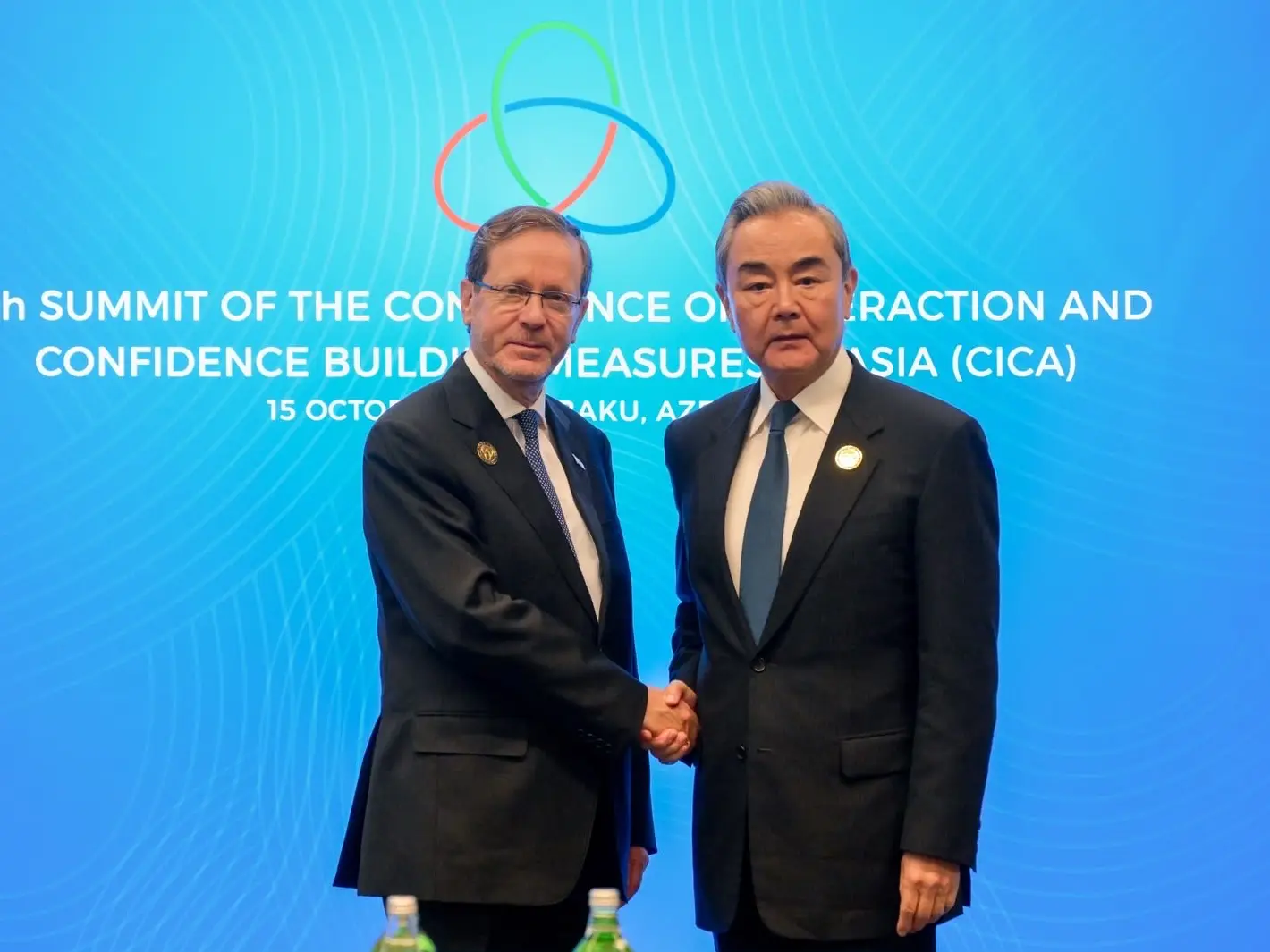
China tells Israel to stop West Bank settlements, calls Palestine issue ‘historic injustice’
&imwidth=180&imheight=135&format=webp&quality=medium)
‘My president, I mean my husband’: Trump's new press secretary Katie Zacharia's first briefing goes off the rails in 14 minutes
&imwidth=180&imheight=135&format=webp&quality=medium)
China responds to Trump's Press Secretary Katie Zacharia after toilet remark: 'Visit China more often'
&im=FitAndFill=(700,400)&imwidth=180&imheight=135&format=webp&quality=medium)
Who left the White House podium the fastest? Press secretaries with the shortest stints
&imwidth=180&imheight=135&format=webp&quality=medium)
Vijay Deverakonda and Rashmika Mandanna's Ranabaali X Review: Netizens call it history-rich but overstuffed
&imwidth=180&imheight=135&format=webp&quality=medium)
Israel examines Russia's Shahed-type drones sent by Ukraine to combat Iran | Gravitas
&imwidth=180&imheight=135&format=webp&quality=medium)
US midterms 2026: Alexandria Ocasio-Cortez donates $1 million to Abdul El-Sayed’s as Michigan race heats up
&imwidth=180&imheight=135&format=webp&quality=medium)
Here’s who is eyeing the White House press secretary role after Katie Zacharia’s exit
&imwidth=180&imheight=135&format=webp&quality=medium)
BCCI names India’s ODI squad for New Zealand tour, Gill and Iyer to share captaincy
&imwidth=180&imheight=135&format=webp&quality=medium)
Abhishek Sharma sets all-time record for most T20I sixes in a year
&imwidth=180&imheight=135&format=webp&quality=medium)
US midterms 2026: Dan Sullivan’s ‘gotcha’ attempt backfires against Mary Peltola in fiery Alaska Senate debate
&im=FitAndFill=(700,400)&imwidth=180&imheight=135&format=webp&quality=medium)
Inside Tesla's Roadster: 10 features of Elon Musk's 'flying car' that push the limits of electric vehicles | In Pics
&imwidth=180&imheight=135&format=webp&quality=medium)
India’s naval priorities: Ex-Navy Chief calls for third aircraft carrier, more warships and submarines
&im=FitAndFill=(700,400)&imwidth=180&imheight=135&format=webp&quality=medium)
New Friday OTT releases (October 16, 2026): DC, Sacrifice, Aasha- 6 new movies and TV shows coming on Netflix, Zee 5, Prime Video and more
&imwidth=180&imheight=135&format=webp&quality=medium)
Selma Blair’s team responds to flight incident, says actress ‘did not intend to harm anyone’
&imwidth=180&imheight=135&format=webp&quality=medium)
India's Gen Z rebellion: Can the 'Lehra Do Tiranga' movement reshape the political order? | The Verdict
&im=FitAndFill=(700,400)&imwidth=180&imheight=135&format=webp&quality=medium)
Salman Khan-Karisma Kapoor reunion at Koffee with Karan season 9 sparks nostalgia: A look at their most loved films
&imwidth=180&imheight=135&format=webp&quality=medium)
Delhi police places CJP's Abhijeet Dipke under preventive arrest over breach of peace, AISA Chief Neha Bora released
&imwidth=180&imheight=135&format=webp&quality=medium)
Did Trump just fire Katie Zacharia as his new press secretary? Here’s what he said
&imwidth=180&imheight=135&format=webp&quality=medium)
Iran rejects Saudi allegations of backing Houthi attacks, renews mediation offer
Joel Sibusiso Ndebele: South Africa chairs BRICS for the third time in 2023 under the theme: 'BRICS and Africa: Partnership for Mutually Accelerated Growth, Sustainable Development, and Inclusive Multilateralism.' This theme reflects a vision of BRICS providing global leadership in addressing the needs and concerns of the majority of the world, namely beneficial economic growth, sustainable development and inclusion of the global South in multilateral systems. The theme informs the chair's five priorities for 2023.
1) Developing a partnership towards an equitable just transition: Climate change forces significant transformational changes to our economies, particularly the energy sector. This should not stand in the way of improving the lives of our people.
2) Transforming education and skill development for the future.
3) Unlocking opportunities through the African Continental Free Trade Area.
4) Strengthening post-pandemic socio-economic recovery and the attainment of the 2030 agenda on sustainable development.
5) Strengthening multilateralism, including working toward real reform of global governance institutions, and strengthening the meaningful participation of women in peace processes. South Africa's priorities reflect our principled position that we advance in partnership with others. Our priorities respond to challenges and opportunities that are shared by South Africa, BRICS members and the global South.
WION: How does South Africa view the expansion of the grouping? More and more countries want to join the grouping.
Joel Sibusiso Ndebele: The significant interest in joining BRICS is a clear sign that BRICS has remained true to its values of championing the global south, strengthening multilateralism, and driving reform as well as boosting global economic growth and stability. South Africa welcomes the discussion on BRICS membership expansion and will, in our capacity as chair, take this forward in close cooperation and full consultation with our BRICS partners.
WION: South Africa has been inviting a few countries to BRICS's proceedings like FMs or NSAs meet. What has been the key focus, and which countries will be invited to the summit?
Joel Sibusiso Ndebele:South Africa initiated the BRICS outreach/plus during its chairship in 2013 by inviting African countries to the summit as a clear message that BRICS aims to act in concert with the global south. In this regard, all BRICS members subsequently hosted an outreach dialogue on the margins of their respective Summits until 2019. China restarted the practice during their chairship in 2022 extending it for the first time to foreign ministers' meetings. This mechanism is an effort to further promote dialogue with like-minded countries and to enhance the inclusiveness of the BRICS strategic partnership. This year we hosted the National Security Advisors meeting, inviting all 15 countries that were invited to the foreign ministers' meeting in June 2023. These meetings typically exchange views on issues such as strengthening multilateralism and global governance and responding to new threats and challenges to national security. In inviting these countries is to acknowledge that the dynamics around various aspects of the globe have material and adverse bearings at a global, regional, and national level. South Africa has again invited the Friends of BRICS to the impending Summit as a vehicle for building global support to promote sustainable development in the spirit of South-South cooperation. In line with our theme, we have invited 67 leaders from Africa and the global south in addition to dignitaries and decision-makers in the regional and international organisations.
WION: How has South Africa been preparing to host the BRICS summit this month?
Joel Sibusiso Ndebele: Since assuming our chairship in January 2023, many meetings across all three pillars of cooperation, namely, Political and security, economic and financial; and Social and people-to-people cooperation have taken place such as the BRICS Civil Forum, BRICS Ministers of Communication, the BRICS Youth Forum, the BRICS Urbanisation, BRICS Ministers of Health, and BRICS Ministers of Science and Innovation. All these activities build up to the 15th BRICS summit which will provide an opportunity for BRICS leaders to reflect on all the elements of BRICS cooperation. The Summit will also provide an opportunity to amplify the voices of our friends in Africa and the global south with the BRICS-Africa outreach and BRICS-plus dialogues. President Ramaphosa has confirmed South Africa's readiness to host the summit which will kick off with the business forum, followed by the BRICS leaders retreat. The summit will take place on August 23 whereafter the BRICS-Africa outreach and BRICS-plus dialogues will be held on August 24.
WION: How does South Africa see India's G20 presidency?
Joel Sibusiso Ndebele: I wish to congratulate the Government of India for chairing a very successful G20 Presidency thus far. We look forward to President Ramaphosa’s participation at the summit next month. India has certainly set the bar high. We are taking many lessons and we will take these forward as South Africa will be taking over G20's presidency after Brazil for the first time in 2025. With South Africa chairing BRICS and India, the G20, there is an opportunity to align our respective work plans and calendars in the interests of the global South such as reform of the world’s systems, such as the UN multilateral system as well securing a voice for all in the global financial architecture. With India currently holding the G20 presidency and pushing for a more inclusive world order, it is an opportune time to induct the African Union (AU) as a permanent member of the G20.
With seven years left to meet the Sustainable Development Goals of the United Nations, development must be at the centre of this agenda, Indian Presidency’s focus on Accelerating Progress on Sustainable Development Goals (SDGs) is therefore of critical importance. The G20 2023 Action Plan on accelerating progress on the SDGs will have a significant impact on Africa’s development which addresses issues that are critical for Africa’s development.
WION: India has mooted the idea of AU being a permanent member of the group, how do you see this idea, and do you support it?
Joel Sibusiso Ndebele: South Africa strongly believe that admission of the AU in the G20 will be the right step towards the development of a just, fair, more inclusive and representative global governance architecture. President Cyril Ramaphosa advocated for the AU’s membership of the G20 during the Bali summit’s working session on food and energy security in 2022. As the G20 is a key multilateral platform for global economic and financial cooperation, discussions at the G20’s annual Leaders’ Summit have far-reaching implications for Africa. It is therefore important for Africa to be adequately represented in the G20. We are therefore pleased to confirm South Africa’s support for the Indian G20 Presidency’s proposal for the AU to be accorded full membership of the G20 at the New Delhi Summit.
WION: As the South African high commissioner to Delhi, how do you perceive the current state of bilateral relations between South Africa and India?
Joel Sibusiso Ndebele: This year South Africa and India celebrate 30 years of formal diplomatic ties. South Africa and India enjoy a strategic partnership and bilateral relations that are anchored by a deep and shared history of friendship and solidarity. We will never forget India’s support for the fight for freedom and democracy in South Africa. Our partnership with India has grown from being a partner in the struggle for freedom to a partnership that embraces the best of both of our societies. Bilateral relations with India are structured via a Joint Ministerial Commission (JMC) and Foreign Office Consultations (FOC) which are held at a senior officials’ level. India hosted the FOC in 2022 and we are to host the next JMC. In today’s highly polarised and fragmented world, South Africa and India continue the struggle for equitable and inclusive development, as well as greater voice and representation in global institutions. The economic relations between South Africa and India have grown exponentially since 1993. Today, South Africa is India's second-largest trading partner in Sub-Saharan Africa and India is South Africa’s second-largest trading partner in Asia after China. The potential for tourism, both leisure and business, cannot be underestimated. Currently, India is South Africa’s largest source market in Asia for tourism and the 6th largest in the world. In the last year, post Covid, the Indian market has grown by 200%.
WION: As a representative of South Africa in India, how do you assess the potential for increased trade and investment between the two countries?
Joel Sibusiso Ndebele: South Africa and India have a well-developed bilateral investment relationship. There is considerable progress in cooperation in the defence, education, and agriculture sectors, among others. Both countries have reiterated the need for further deepening bilateral cooperation in trade and investment, food security, defence, pharmaceuticals, digital financial inclusion, skill development, insurance, health, and people-to-people contacts. Our cooperation is as wide as it much as it has depth.
The two countries recognise a huge potential for increased trade and investment cooperation and desire a mutually beneficial relationship. The South African High Commission is inundated with a considerable number of Indian companies which are interested in setting up their operations in South Africa. According to the latest estimates, there are over 130 Indian companies in South Africa, employing approximately 18 000 South Africans. South Africa’s largest investment into India is through Naspers / Prosus Ventures in Indian start-ups. Moreover, given South Africa’s expertise in the areas of defence equipment, agriculture and agro-processed goods, capital and mining equipment and financial services, there is considerable room for expansion in trade and investment between our two countries.
WION:What is the state of bilateral defence relations?
Joel Sibusiso Ndebele:In terms of defence cooperation, India and South Africa officially commenced in 1996 with the signing of an MoU on "Cooperation in the field of Defence Equipment", this was subsequently replaced by a MoU titled "Defence Cooperation" in 2000. The last Joint Defence Committee (JDC) was held in 2017, post Covid, no JDC has taken place with one scheduled for late 2023.
Various Indian Navy ships have made port calls to South Africa with the latest vessel the INS Trishul docking in Durban from 7 to 10 June 2023. The IBSAMAR exercise between India, Brazil and South Africa has proven to be very valuable for the three countries in the maritime domain. The South African Army participated in the multinational field training exercise for African nations conducted by the Indian Army in Pune in March 2019. Chief of the SA Air Force visited the Indian Armed Forces in 2021 and the Chief of the Army visited his Indian counterparts in 2022. Various military officers from South Africa have and currently are undergoing training in India. Two Indian officers are attending staff courses in South Africa. The South African military industry is making small gains in the field of exporting military equipment. South African and Indian soldiers work side by side in many peacekeeping operations in various mission areas. The relationship bond between the Indian Armed Forces and the SANDF is cordial and friendly and growing at a steady pace.
WATCH WION LIVE HERE