

&imwidth=800&imheight=600&format=webp&quality=medium "Every part of Pakistan is in reach: The Power and politics of BrahMos")
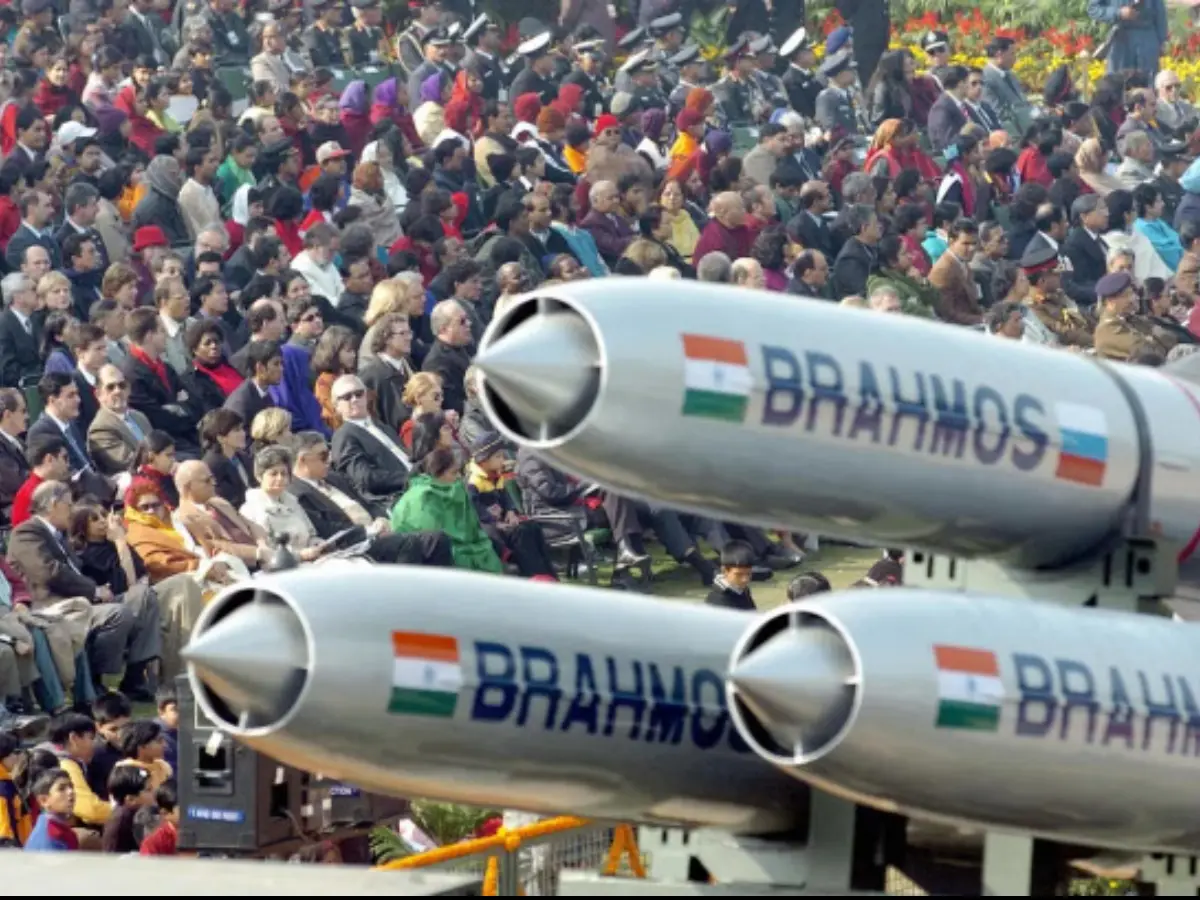
India’s BrahMos missile, a homegrown supersonic weapon, has become a defining symbol of India’s defence self-reliance and technological strength. (Supersonic means the missile travels faster than the speed of sound—over 1,200 km/h—allowing it to strike targets with extreme speed and precision.) Co-developed with Russia, the BrahMos reportedly played a key role in striking Pakistan’s military bases during the May 7–10 conflict—known as Operation Sindoor—where it demonstrated unmatched precision and power.
The BrahMos story began in 1993, when Dr. APJ Abdul Kalam, then Secretary of DRDO, visited Russia to explore joint work on supersonic missiles. During his visit, he came across a half-finished supersonic engine project that had been abandoned after the Soviet Union’s collapse due to a lack of funds. Recognising the potential of collaboration, this meeting laid the foundation for a landmark defence partnership.
Five years later, on February 12, 1998, Dr. Kalam and Russia’s Deputy Defence Minister NV Mikhailov signed an agreement to create BrahMos Aerospace, a joint venture between DRDO and Russia’s NPOM, with India holding 50.5% and Russia 49.5%. The venture was established to design, develop, and market the world’s only supersonic cruise missile, bringing together Indian innovation and Russian experience.
The first contract, signed on July 9, 1999, included India’s contribution of $126.25 million (about ₹11,110 crores today's price conversion ) and Russia’s share of $123.75 million (around ₹10,890 crores). Work began that same year in the specialised laboratories of DRDO and NPOM. The first successful launch took place on June 12, 2001, from a land-based launcher at Chandipur, Odisha. Since then, BrahMos has been displayed at major international defence shows, beginning with MAKS-1 in Moscow in 2001, marking India’s entry into the global missile arena.
Following numerous successful tests, the BrahMos was inducted into the Indian Army, Navy, and Air Force. It flies at a speed of Mach 2.8 (about 3,430 km/h)—nearly three times the speed of sound. Its success is rooted in India’s Integrated Guided Missile Development Programme (IGMDP), launched in 1983 to achieve self-reliance in missile technology. Originally designed for land and ship launches, the BrahMos was later modified in 2013 for air-launch capability, making it adaptable across all major platforms.
“The most challenging task,” said S.K. Mishra, former Director General of DRDO, “was to integrate the BrahMos missile on the Sukhoi-30MKI fighter jet.” The redesign, handled by Hindustan Aeronautics Ltd (HAL), was estimated by Sukhoi to cost ₹1,300 crore, but HAL completed it for just ₹88 crore, showcasing India’s engineering excellence.
Trending Stories
&imwidth=180&imheight=135&format=webp&quality=medium)
Russia-Ukraine drone attacks kill 6, injure 31 across both countries
&imwidth=180&imheight=135&format=webp&quality=medium)
Tu Hai Meri Kiran film review: Sonakshi Sinha and Zaheer Iqbal's thriller gets tangled in its own twists
&imwidth=180&imheight=135&format=webp&quality=medium)
What was the note found inside bag of Class 12 student, who set herself on fire inside Delhi school?
&imwidth=180&imheight=135&format=webp&quality=medium)
AI slop or smart strategy? South African author Coral Hart defends Her 370 AI- assisted books in 20 months
&imwidth=180&imheight=135&format=webp&quality=medium)
NEET protests: Panel to hear evidence on pellet gun use, harassment
&imwidth=180&imheight=135&format=webp&quality=medium)
'Already tired of his 9-to-5': Baby born with a moustache becomes internet sensation, video goes viral | Watch
&imwidth=180&imheight=135&format=webp&quality=medium)
'You’re a horrible little reporter, aren’t you?': Trump snaps at NBC reporter questioning his support for Ramaswamy's campaign ad
&imwidth=180&imheight=135&format=webp&quality=medium)
'If it was up to me, it wouldn't have ended like this': James Anderson opens up on Lancashire exit
&imwidth=180&imheight=135&format=webp&quality=medium)
Farooq Abdullah says Pakistan’s raising of Kashmir issue keeps pressure on Delhi
&imwidth=180&imheight=135&format=webp&quality=medium)
Pezeshkian says Iranians ‘struggling to put food on the table’ as war with US drags on
&imwidth=180&imheight=135&format=webp&quality=medium)
French Open: PV Sindhu storms into final with win over Hina Akechi
&imwidth=180&imheight=135&format=webp&quality=medium)
Train crashes into crane on São Paulo monorail line, wreckage falls onto busy road | VIDEO
&imwidth=180&imheight=135&format=webp&quality=medium)
Bodies of 2 missing Japanese climbers recovered from Himalayan peak
&imwidth=180&imheight=135&format=webp&quality=medium)
Saudi says debris fell in Mecca, Medina after missile interceptions; Houthis deny targeting holy cities
&imwidth=180&imheight=135&format=webp&quality=medium)
An AI that reads your face can now estimate how long you have to live
&imwidth=180&imheight=135&format=webp&quality=medium)
Can Putin cheat death? All about his daughter’s billion-dollar quest for immortality
&imwidth=180&imheight=135&format=webp&quality=medium)
Pakistan airline PIA unveils new crew uniforms, faces online criticism
&imwidth=180&imheight=135&format=webp&quality=medium)
Nagpur man fails to pay rent, allegedly prints fake Rs 500 notes worth Rs 37 lakh
&imwidth=180&imheight=135&format=webp&quality=medium)
J-20 designers plan to put radar into aircraft wing; strategy to expand coverage during air combat
&im=FitAndFill=(700,400)&imwidth=180&imheight=135&format=webp&quality=medium)
New Friday OTT releases (October 23, 2026): Gajab Raat, Dorothy, Chaar Yaar- Watch these 6 new movies and TV shows on Netflix, Prime Video and more
&imwidth=180&imheight=135&format=webp&quality=medium)
Frontier AIs keep escaping their test cages! The industry still can't reliably stop them
&imwidth=180&imheight=135&format=webp&quality=medium)
‘Maybe play one more season’: MS Dhoni to decide on his IPL future before December
&imwidth=180&imheight=135&format=webp&quality=medium)
‘Modi ka baap bhi jayega,’ Kharge loses cool at party event in Patna; BJP slams him
&imwidth=180&imheight=135&format=webp&quality=medium)
Viral video shows cross falling on Colombia priest, no official confirmation | WATCH
&imwidth=180&imheight=135&format=webp&quality=medium)
Chorbagan stampede: A week later, the strangest visarjan Kolkata has seen
&imwidth=180&imheight=135&format=webp&quality=medium)
China's dancing robot turns violent bodyguard, lifts cars and fights intruders - Watch
&imwidth=180&imheight=135&format=webp&quality=medium)
‘Saddam Hussein opened a cheesecake factory’: Obama mocks Trump’s White House renovations; defends Abdul El-Sayed
&imwidth=180&imheight=135&format=webp&quality=medium)
France protests: 135 arrested, weapons seized as fresh demonstrations erupt amid heavy security
&imwidth=180&imheight=135&format=webp&quality=medium)
'Killing people never allowed': Elon Musk admits restricting Starlink in Ukraine, explains why
&imwidth=180&imheight=135&format=webp&quality=medium)
Telangana unveils AI avatar of IT minister D Sridhar Babu at Hyderabad DevFest 2026
&imwidth=180&imheight=135&format=webp&quality=medium)
Shilpa Rao’s performance cut short at Mumbai event, organisers react to backlash
&imwidth=180&imheight=135&format=webp&quality=medium)
Britain is building the world's first AI biosecurity lab, with OpenAI and Anthropic inside
&imwidth=180&imheight=135&format=webp&quality=medium)
Why Europe’s protests are about more than austerity and rising costs
&imwidth=180&imheight=135&format=webp&quality=medium)
WATCH: Thousands across Manipur bang plates, beat drums in "noise protest"
&imwidth=180&imheight=135&format=webp&quality=medium)
AI just found a flaw in software running most of the web! One request hijacks the server
&imwidth=180&imheight=135&format=webp&quality=medium)
Spanish reporter swept by giant wave while reporting on dangerous sea conditions | WATCH
The BrahMos’ global reputation grew rapidly. In 2024, India delivered BrahMos missiles to the Philippines, marking its first export of the supersonic system. This followed a $375 million (₹33,000 crore) deal signed in 2022, with a second batch delivered in April 2025. S.K. Mishra noted that other countries, including Argentina, have also shown strong interest, demonstrating BrahMos’s global credibility.
At present, India has three BrahMos variants—air-launched, land-based, and submarine-launched. The missile operates in two stages: a solid-fuel booster for take-off, followed by a ramjet engine that propels it to Mach 3 speed, allowing it to fly from 15 km altitude to just 10 metres above the ground. Its “fire and forget” principle means that once launched, it needs no further guidance. With a low radar signature, high speed, and massive impact power, it is extremely difficult to intercept.
Originally limited to 290 km under Missile Technology Control Regime (MTCR) rules, the BrahMos’ range was extended to 450 km after India joined the MTCR in 2016. Ongoing tests aim to develop a new 800 km version, featuring an upgraded ramjet engine and improved guidance systems, including an INS (Inertial Navigation System) that works even without GPS, and external navigation through GPS, GLONASS, and NavIC satellites. The new version, expected by 2027, promises greater accuracy and resilience against jamming.
Once tests are complete, the Navy can upgrade its existing 450-km BrahMos missiles to the 800-km version through software updates—modifying only the fire-control graphical interface (the computer system used by operators to select targets and monitor launches). The Army and Navy will induct the upgraded version first, followed by the air-launched variant.
In March last year, the Defence Ministry signed its largest-ever deal worth ₹19,519 crores to buy over 220 BrahMos missiles for the Indian Navy. About 20 warships, including India’s latest destroyers and frigates, are already equipped with vertically launched BrahMos systems. Following Operation Sindoor, the Defence Acquisitions Council, led by Rajnath Singh, also approved 110 more air-launched BrahMos missiles worth ₹10,800 crores for the IAF.
Calling Operation Sindoor a “trailer,” Defence Minister Rajnath Singh declared that every part of Pakistan is now within BrahMos’s reach, sending a powerful message to India’s adversaries. Speaking on October 18, after flagging off the first BrahMos batch from the Lucknow unit with Chief Minister Yogi Adityanath, Singh described the missile as a symbol of India’s growing self-reliance and technological power.
He said, “India believes its enemies cannot escape the power of BrahMos.” Referring to Operation Sindoor, he added, “If India could create Pakistan, it also knows what to do when the time comes,” making his message unmistakably clear.
During the same event, Singh noted that the Lucknow facility will produce around 100 BrahMos missiles each year for the Army, Navy, and Air Force, generating a ₹3,000 crore turnover and ₹500 crore in GST revenue. He praised the speed and efficiency of the project, which has strengthened both BrahMos’s reputation and Lucknow’s industrial identity. He also highlighted PTC Industries’ contribution in setting up the Strategic Material Technology Complex, proving that India is moving rapidly toward full self-reliance in defence production with strong private sector participation. From strategic material production to ready-to-fit critical components, India’s entire missile supply chain is now domestically developed.
From a vision shared in 1993 to global recognition three decades later, BrahMos stands as a living symbol of India’s innovation, resilience, and resolve. It is not just a missile—it is the embodiment of India’s confidence to defend its sovereignty and shape its future in the modern world.
