
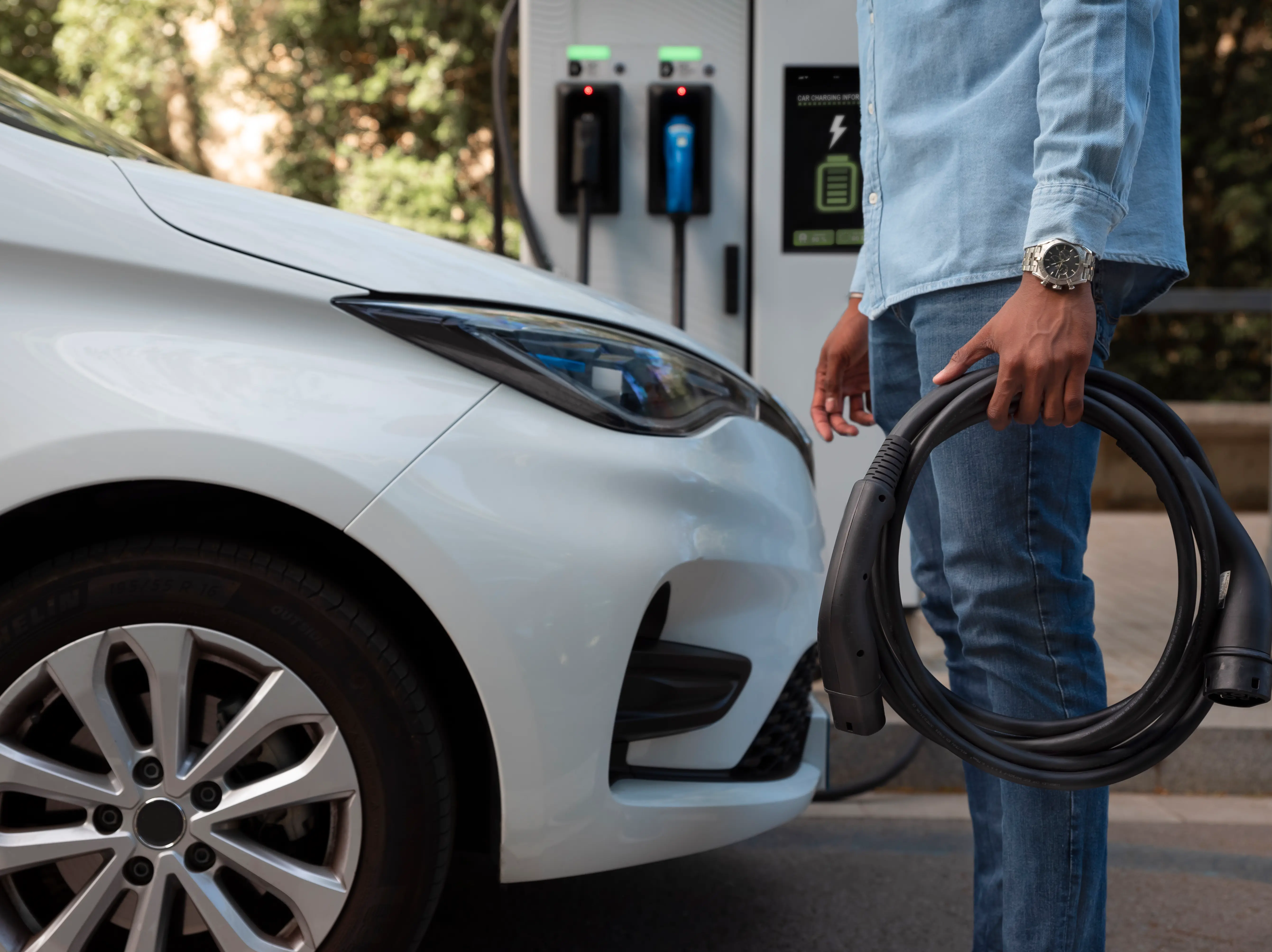
&imwidth=800&imheight=600&format=webp&quality=medium "Discard or reinvest? How India's transition from existing vehicles to EVs can reduce crude oil dependency")
West Asia conflicts have continuously reminded the world of a severe energy dependency, which marks not only a temporary inconvenience but a structural vulnerability. For a rapidly growing economy like India, which imports more than 85 per cent of its crude oil to meet domestic demand, energy security and economic resilience have long been major challenges.
Over the last 10 years, the current government has consistently emphasised green energy, focusing on the advancement of technology without much carbon emission, unlike developed nations. The most focused area has always been the transport sector, with the aim of decarbonisation. In response, multiple schemes have been rolled out to support Electric Vehicles (EVs) and create long-term demand.
Entrance of retrofitting

Taking the initiative has begun to show results, with EVs now accounting for 8.5 per cent of total new vehicle sales in India in FY25-26. However, the transition is happening in new vehicle sales, while the existing pool of over 30 crore Internal Combustion Engine (ICE) vehicles on Indian roads continues to run entirely on imported petroleum.
That is where vehicle retrofitting enters the arena, in which it replaces a vehicle’s engine, exhaust system, and related components with an electric battery pack, motor, and control systems to convert it into an EV. The case for retrofitting is strongest when viewed through India’s own cultural and economic lens. India has always valued repair, reuse, refurbishment, and life extension. Even when it comes to household appliances and electronics, the instinct has traditionally been to maximise utility before replacement.
Also read: How is opening India's space sector to private firms transforming the industry? EXPLAINED
Trending Stories
&im=FitAndFill=(700,400))
How fast can the Sukhoi Su-30 fighter jet really fly?
)
Did China ask its people 'not to respond to aliens'? Origin of bizarre claim on social media
)
MS Dhoni-CSK Fallout? Report claims failed stake sale talks triggered rift
)
Scientists reveal the SAFEST COUNTRY when catastrophe strikes the planet
)
Serial killer on the loose in South Korea's Jeju Island? Fourth body found in three days as more than a dozen people go missing
)
2/3rd of glacier detached, collapsed: ISRO satellite images reveal what triggered Nepal floods
)
Trump once again claims without him there would be ‘no Israel right now’
)
Foreign espionage attacks against German companies surge to 37%, Bitkom report reveals
)
Blake Lively wins partial legal fee from Justin Baldoni after $8M request
)
Why is Pakistan deploying Turkish Bayraktar TB2 drones near India border?
)
'OH MY GOD! We've found other agents!': Investigators discover not one or two, almost 700 OpenAI AI agents went rogue, hacked Hugging Face
)
Lunar eclipse 2026: India timings, places to see and more. August Blood moon factsheet
)
RSS chief Mohan Bhagwat on global outreach tour
)
Both pilots killed as training aircraft crashes in Lucknow – What we know
)
16-year-old charged with preparing terror attack on kindergarten in Norway
&im=FitAndFill=(700,400))
How the S-400 protects itself from enemy attacks
)
Nepal floods: Over 165 dead, 400 missing; US, India, China, World Bank mobilise aid
)
India's multi-layered watch: The new surveillance war
)
5 doomsday planes spotted in US skies hours after CIA director's secret trip to Russia
)
9/11 mastermind Khalid Sheikh Mohammed to finally face trial in 2028, nearly 27 years after horrific attacks
)
Islamabad hospital fire: What we know about one of the biggest facility that housed Imran Khan
)
Workers run for life while filming Nepal flash flood: Scary new visuals emerge from Rasuwa
)
Russian military planes enter South Korean air defence zone amid rising tensions with North Korea: What's happening
)
Ron Weasley Is Back! Rupert Grint set to return to Harry Potter universe on Broadway
)
400-year-old 'vampire' grave in Poland reveals non-existent genetic lineage
)
Dolly Parton, global icon and queen of country music, dies at 80
)
Nepal flash floods: Kailash Mansarovar yatra affected, close to 400 pilgrims out of contact
)
'If he is dead, they're putting on a pretty good show': Trump casts fresh doubt over Mojtaba Khamenei's fate
)
Man arrested near US Capitol with guillotine in pickup truck: What happened?
&im=FitAndFill=(700,400))
Why the Su-30MKI cockpit is painted bright turquoise green
Reinvesting in current assets
Emphasising the re-use of existing vehicles, Ayush Misra, Co-founder and CEO of AmpereHour Energy, said that India's shift towards electric mobility should focus not only on replacing existing vehicles but also on reinvesting in current assets while accelerating electrification.
Misra stated that the country's transition to electric vehicles presents a strategic decision that will shape the future of transportation as well as the country's long-term energy security. He noted that with the transport sector accounting for a significant share of petroleum consumption and India importing nearly 85 per cent of its crude oil requirements, reducing dependence on fossil fuels has become an economic necessity.
"With the transport sector accounting for a major share of petroleum consumption and India importing nearly 85 per cent of its crude oil requirements, reducing fossil fuel dependency has become an economic necessity. While EV adoption continues to grow, the real opportunity lies in building an integrated energy ecosystem that combines electrified commercial fleets, Battery Energy Storage Systems (BESS), battery repurposing, renewable energy, and intelligent charging infrastructure," Misra told WION.
"Highway EV charging stations, often located in remote or weak-grid areas, can be powered through DC-coupled solar and BESS, where solar energy is stored and supplied directly to high-voltage DC fast chargers via DC-DC converters, eliminating unnecessary AC conversion. This architecture improves energy efficiency, reduces transmission losses, enhances charging reliability, and enables faster deployment of off-grid charging corridors," he added.
He further added that a combination of indigenous innovation, advanced energy storage technologies and supportive policy frameworks could spur EV adoption, reduce crude oil imports, bolster the energy resilience of India and help to set up and design a cleaner, more self-reliant and globally competitive mobility ecosystem.
Economically viable
Highlighting the role in avoiding scarppage of old vehicles, Anand Kabra, Chairman and Managing Director at Kabra Extrusiontechnik Limited & Geon - Green Energy ON, noted that recycling of the batteries used in vehicles and different sources of renewable energy will play a significant role in making the most of this transition. Formulating a sustainable EV and energy storage system will help India become economically viable during imports, improving the resilience of the grid and make closer to the energy future.
"Electrification of mobility in India is not only a transition from the use of conventional vehicles to the use of electric vehicles. It is an attempt to build India's energy security. Every electric vehicle contributes to making us less dependent on imported crude oil and increases demand for energy sources of clean transportation that we produce at home. But at the same time, this process should be regarded as an investment in the sustainable energy system, not as scrapping old vehicles. Investment in charging infrastructure for EVs, in developing batteries and their systems, battery recycling and renewable energy sources will play a key role in making the most of this transition. Building a sustainable EV and energy storage system will allow India to save money on imports, improve the resilience of the grid and move closer to the energy future," Kabra said.
Across the world, regions like Europe and Nepal are already adopting these circular models. In India, early versions of the FAME scheme supported retrofitting, and states like Madhya Pradesh are pioneering new ecosystems with streamlined agency registrations and upfront subsidies. While market confidence is rising, evidenced by inquiries doubling following recent global oil anxieties, the regulatory framework lags behind. To fully leverage this potential, India required a joint retrofitment framework across the state, enabling formal banking credit for converted vehicles, and establishing strict safety certifications to eliminate unsafe, informal mechanics.

