

&imwidth=800&imheight=600&format=webp&quality=medium "How is opening India's space sector to private firms transforming the industry? EXPLAINED")
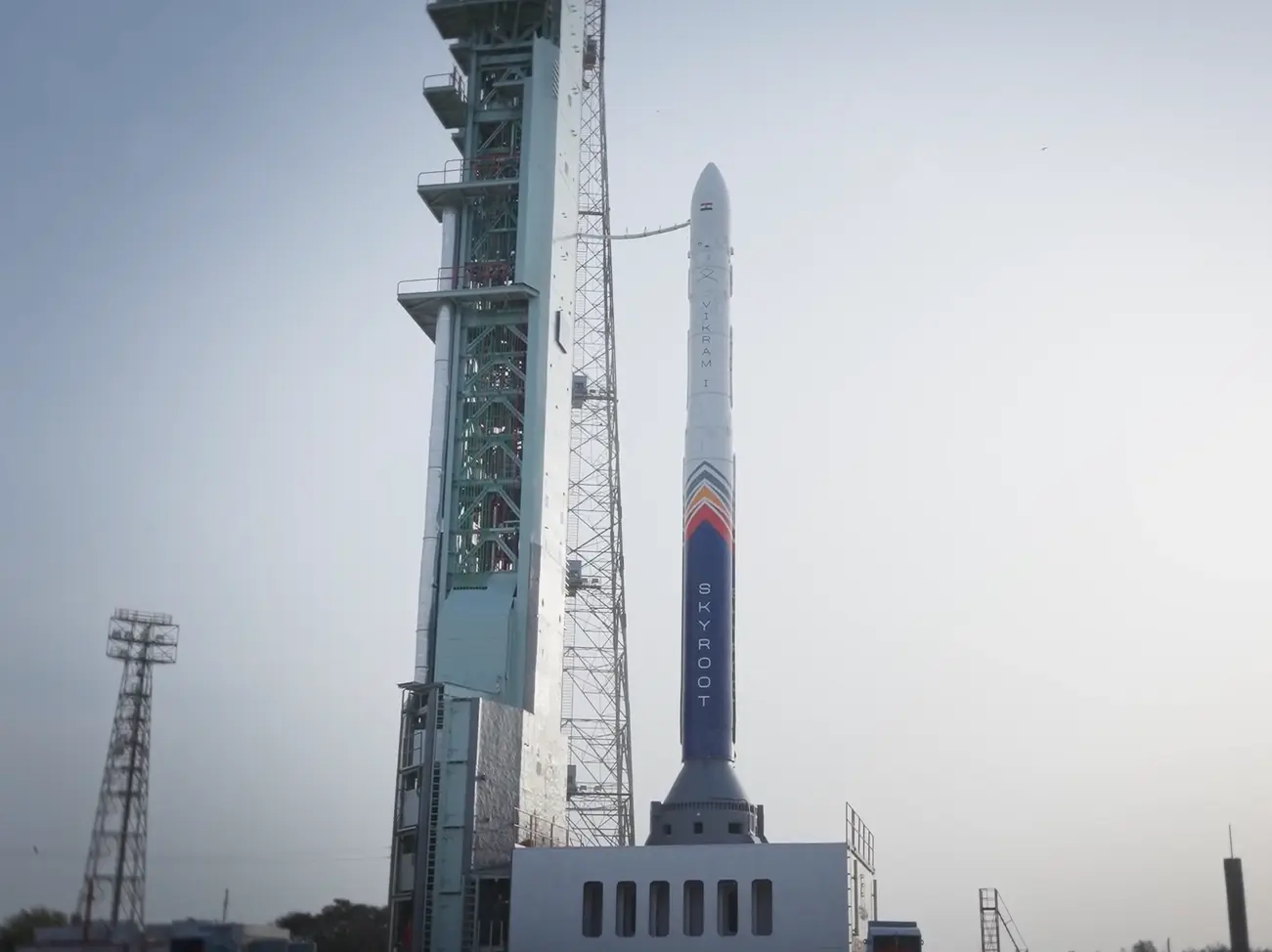
Skyroot Aerospace is set to achieve a milestone, creating history with the maiden launch of Vikram-1, marking India's first privately owned orbital-class rocket, from the Satish Dhawan Space Centre in Sriharikota on July 18. The Mission, named Aagaman, aims to validate the rocket's performance ahead of its commercial operations debut. If the launch succeeds, it will become the first instance of an Indian private company placing a rocket into orbit from Indian soil, marking a major milestone in the country's rapidly growing India's private space industry after recent policy reforms.
In 2020, the Government of India introduced sweeping reforms in the space sector, opening the field to greater participation of non-governmental entities (NGEs) in enabling them to undertake end-to-end activities in the space domain on an equal footing.
Building on these reforms, the government introduced the Indian Space Policy 2023 to provide a clear regulatory framework and foster a vibrant space ecosystem. The policy seeks to strengthen India's space capabilities, promote commercial participation, drive technological innovation, expand international cooperation, and accelerate the adoption of space-based applications across sectors.
The vision of the reform was to augment space capabilities allowing to enable, enabling, encouraging, and developing a rising commercial presence in space; using space as a driver of technology development and fetching benefits in allied areas; pursuing international relations, along with creating an ecosystem for effective implementation of space applications among all stakeholders.
How have private companies changed India's space ecosystem?
Trending Stories
&imwidth=180&imheight=135&format=webp&quality=medium)
Viral video shows cross falling on Colombia priest, no official confirmation | WATCH
&imwidth=180&imheight=135&format=webp&quality=medium)
Trump’s approval ratings hit a new low, Democrats want US president to campaign more
&imwidth=180&imheight=135&format=webp&quality=medium)
France reports first human case of livestock virus Shamonda, patient dies; what we know so far
&imwidth=180&imheight=135&format=webp&quality=medium)
Trump called Musk to lift Starlink restrictions affecting Ukraine's military operation: Report
&imwidth=180&imheight=135&format=webp&quality=medium)
Two BrahMos missiles on Tejas, triple the range and 100% indigenisation, says former BrahMos CEO
&imwidth=180&imheight=135&format=webp&quality=medium)
Ilhan Omar breaks silence over alleged marriage to her brother; Trump thinks it's 'really good answer'
&imwidth=180&imheight=135&format=webp&quality=medium)
Pakistan signs another defence pact even as Makkah Alliance shows no teeth. This time, it's with Qatar, Indonesia, Turkey
&imwidth=180&imheight=135&format=webp&quality=medium)
Netanyahu dials PM Modi, invites him and Capt Smit Machchhar to light torch on Israel’s Independence Day
&imwidth=180&imheight=135&format=webp&quality=medium)
'This time I’m not doing it': Trump reveals Google CEO refused his Atlantic Ocean renaming idea
&imwidth=180&imheight=135&format=webp&quality=medium)
Acton was raped by her stepfather as a child, Ramaswamy mocks it
&imwidth=180&imheight=135&format=webp&quality=medium)
Iran to invade neighbours soon, Israeli jets in action, American troops ready to strike any moment
&imwidth=180&imheight=135&format=webp&quality=medium)
US midterms 2026: US Supreme Court allows New Hampshire to restrict student IDs for voting
&imwidth=180&imheight=135&format=webp&quality=medium)
Putin fires nuclear capable hypersonic missiles, Zelensky ready to surrender 25% territory
&imwidth=180&imheight=135&format=webp&quality=medium)
Trump ordered to answer questions under oath in BBC defamation lawsuit by December 11
&imwidth=180&imheight=135&format=webp&quality=medium)
Putin says Russia is ready to resume Ukraine-US peace talks but rejects 'short ceasefire' amid deadly attacks
&imwidth=180&imheight=135&format=webp&quality=medium)
From Agni-V to Project Kusha: How are India’s indigenous missile systems and defence shield reshaping modern warfare
&imwidth=180&imheight=135&format=webp&quality=medium)
'It's a crime not to see this scene': Tehran puts Trump 'behind bars'
&imwidth=180&imheight=135&format=webp&quality=medium)
What is the ‘heat ray’ weapon? Pete Hegseth reportedly authorises DHS to test it at US-Mexico border
&imwidth=180&imheight=135&format=webp&quality=medium)
Will Rohit and Kohli play ODI World Cup 2027? BCCI president Manhas says board 'not in a position to comment'
&imwidth=180&imheight=135&format=webp&quality=medium)
China's dancing robot turns violent bodyguard, lifts cars and fights intruders - Watch
&imwidth=180&imheight=135&format=webp&quality=medium)
Watch: India rejects ‘imprecise and unsupported’ references in UN migrant rights report
&imwidth=180&imheight=135&format=webp&quality=medium)
US to get 850 F-35 stealth fighter jets under 10-year Pentagon-Lockheed deal
&imwidth=180&imheight=135&format=webp&quality=medium)
GRAVITAS | Putin fires nuclear-capable hypersonic missiles, Zelensky ready to surrender 25% territory
&imwidth=180&imheight=135&format=webp&quality=medium)
IIFA 2026: Salman Khan warns paps, kisses little fan and hugs Kareena Kapoor at press conference
&imwidth=180&imheight=135&format=webp&quality=medium)
US business activity grows in June, but tariffs and inflation cloud outlook
&imwidth=180&imheight=135&format=webp&quality=medium)
'That was great, who threw that punch?': Trump asks as protester punched at rally
&imwidth=180&imheight=135&format=webp&quality=medium)
‘I caution the president...’: Trump’s ex-press secretary warns after Zacharia’s exit
&im=FitAndFill=(700,400)&imwidth=180&imheight=135&format=webp&quality=medium)
Serbia elections: Nearly 150,000 people take to streets in massive rally against Aleksandar Vucic | In pics
&imwidth=180&imheight=135&format=webp&quality=medium)
Trump’s bid to put his name on everything: This time, it was Atlantic Ocean; a look at past efforts
&imwidth=180&imheight=135&format=webp&quality=medium)
'This is despicable': Amy Acton hits back at Vivek Ramaswamy over Ohio campaign ad featuring her estranged mother
&imwidth=180&imheight=135&format=webp&quality=medium)
Finance influencer dies by suicide in Chennai; father accuses tech CEO, who denies charge
&imwidth=180&imheight=135&format=webp&quality=medium)
'Vivek should keep it up': Trump defends Ramaswamy's controversial campaign ad targeting Amy Acton
&imwidth=180&imheight=135&format=webp&quality=medium)
One man, 8 months of work, and a river dirty again: Why Bittu Tabahi may quit
&imwidth=180&imheight=135&format=webp&quality=medium)
ENG vs SL: Harry Brook’s 202 goes in vain as Sri Lanka pull off second-highest ODI chase
&imwidth=180&imheight=135&format=webp&quality=medium)
ENG vs SL: Harry Brook breaks Shubman Gill’s record for fastest ODI double century
&imwidth=180&imheight=135&format=webp&quality=medium)
Saudi Arabia targeted yacht carrying 14 Indians in Red Sea, rescue underway, Houthis claim
Union Minister of State (Independent Charge) for Science and Technology and Space, Dr Jitendra Singh, confirmed that the space economy has risen to an estimated $8.4 billion, with 399 start-ups now operating across launch vehicles, satellites, propulsion systems and space-grade electronics. The reforms formulated a conducive environment for private investment and entrepreneurship in a sector that had remained largely government-driven for more than 10 years.
This resulted in the rise of the space start-ups, which have increased sharply from single-digit levels to 399 at present. It has also prompted the space sector to be valued at about $8.4 billion, which is likely to grow four to five times over the next eight to ten years, potentially reaching $40–45 billion.
The Minister also underscored the revenue generated after the launch of foreign satellites. He noted that out of the 434 foreign satellites launched by ISRO so far, 399 were launched after 2014, earning India revenues of nearly € 323 million and $233 million. This growth has reflected the country’s growing presence in the global space launch market.
The proposed change is transitioning from a “Supply-Based Model” to a “Demand-Based Model”. In addition, it will also help ISRO to carry out capacity building in the space domain through the development of new technologies and capabilities, allowing the sharing of facilities by NewSpace India Limited (NSIL) and Indian National Space Promotion and Authorisation Centre (IN-SPACe).
NGEs to play a larger role
Further in future, the policy encourages Non-Government Entities (NGEs) to play a larger role in India's space sector by allowing them to provide a wide range of commercial space services. They can offer satellite-based communication services using their own, leased or procured satellites, establish and operate ground infrastructure such as satellite control centres and tracking stations, and use both Indian and foreign orbital resources.
NGEs are also permitted to develop and operate remote-sensing satellite systems, distribute satellite data and related applications, and commercialise technologies in navigation, communication and remote sensing. The framework allows private companies to manufacture and operate launch vehicles, build launch infrastructure, and develop reusable and advanced space transportation technologies.
They can also strengthen space situational awareness, conduct research and innovation for the long-term sustainability of space activities, and provide end-to-end services for safe space operations. Additionally, the policy permits commercial recovery, ownership, transport, use and sale of asteroids or other space resources in accordance with Indian laws and international obligations, while enabling participation in other commercial space activities approved by IN-SPACe.

