
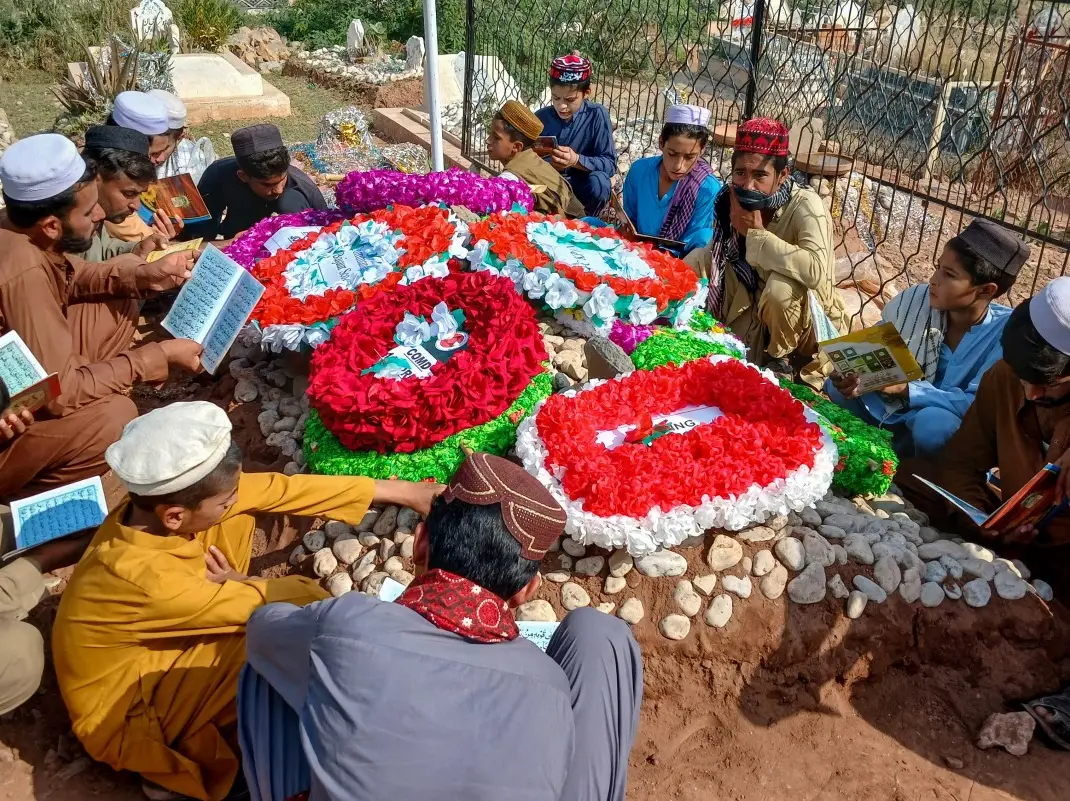
&imwidth=800&imheight=600&format=webp&quality=medium "Pakistan, Afghanistan agree to ‘immediate ceasefire’ after deadly airstrikes, says Qatar")
Pakistan and Afghanistan have agreed to an "immediate ceasefire," announced Qatar’s Ministry of Foreign Affairs announced Sunday (Oct 19). This comes after days of deadly cross-border clashes that left dozens dead and threatened to unravel already fragile ties between the neighbours. The breakthrough came after emergency talks in Doha, mediated by Qatar and Turkey, aimed at halting the spiral of violence along the border. Qatar’s foreign ministry, in a statement, announced early Sunday that "During the negotiations, the two sides agreed to an immediate ceasefire and the establishment of mechanisms to consolidate lasting peace and stability between the two countries."
The statement added that follow-up meetings would be held in the coming days to ensure the truce holds and to verify its implementation.
Also read | ‘Ridiculous question’: Trump dodges question on whether he ordered CIA to 'take out' Maduro

Pakistan confirms ceasefire
Islamabad’s delegation was led by Defence Minister Khawaja Asif and intelligence chief General Asim Malik. The Afghan side was represented by Defence Minister Mohammad Yaqoob, son of the Taliban’s late founder Mullah Omar. Following the Doha meeting, Pakistan minister Asif confirmed that a ceasefire agreement had been reached and that the two nations would meet again in Istanbul on October 25.
"Terrorism on Pakistani soil conducted from Afghanistan will immediately stop," Asif said in a social media post, adding that "neighbouring countries will respect each other's sovereignty".
Trending Stories
)
The Early Spring is proof not everyone can talk about their real feelings, and it is perfectly OK
)
UN votes to ‘correct the map’ as India backs fairer world view
)
Nigerian Navy discovers 99,000 litres of suspected stolen, illegally refined products as it intensifies anti-crude oil theft operations
)
Who is Aditi Paudel? 17-year-old becomes Japan's first literacy ambassador
)
Bengaluru: Officials find 40 kg expired chilli at chairman's club
)
Jaishankar rejects trade link to ending Ukraine war
)
Israeli strikes on Lebanon kill three, injure 23 despite truce
)
Alpine glacier was covered with sheep wool sheets to prevent melting. It worked
)
South Korea mulls deploying military assets to Strait of Hormuz
)
World's fifth-largest economy, British army can't afford to train
)
Breaking | Vance takes the podium: First White House briefing since Leavitt's exit
)
Taiwan raises 'concerns' over China's missile test
)
BRICS 2026: $1 trillion sovereign capital set to converge in Delhi for first iBRICS Summit
)
What is Iran's Pickaxe Mountain that Trump has again threatened to bomb?
)
UN votes to correct world map that visually shrank Africa for 450 years
)
Former NewJeans member Danielle launches YouTube channel, hints at new solo journey
)
Bangladesh batter Towhid Hridoy creates history with 350 not out in South Africa
)
Brendan Fraser’s transformation fuels The Mummy 4 excitement as fans welcome back Rick O’Connell
&im=FitAndFill=(700,400))
Krishna Janmashtami 2026: From Dhaniya Panjiri to Makhana Kheer- 5 best sweet dishes perfect for celebrating Lord Krishna’s birth
)
Donald Trump plans to travel to Ireland on Qatari-donated jet amid security concerns
)
Nazi-looted art to return to Jewish heirs
)
Eight killed in Kerala’s Thrissur after car rams into lorry parked on highway
&im=FitAndFill=(700,400))
Why Russian fighter jets use bulky, low-pressure tyres compared to US jets
)
FBI-wanted fraud accused arrested in Jalandhar over $600,000 scam
&im=FitAndFill=(700,400))
Why US tanks weigh over 20 tons more than Russian tanks
&im=FitAndFill=(700,400))
New Friday OTT releases (September 4, 2026): GDN, Dhamaal 4, Jagamae Sangeetham- Watch 6 new movies and TV shows on Netflix, Prime Video and more
)
Killing the Himalayas slowly: Human urine is melting a glacier on Mount Everest
Also read | JD Vance blurts out Trump admin’s alarming new mission: ‘Retrain entire government’ to target the Left
Pakistan-Afghanistan clashes
The Doha meeting followed a wave of Pakistani airstrikes late Friday that Kabul said killed at least ten civilians, including two children, in Afghanistan’s Paktika province. Local officials told AFP that three cricket players were among the dead. Pakistan’s military sources, however, said the strikes were aimed at a militant faction linked to the Tehreek-e-Taliban Pakistan (TTP) that had launched a recent attack on paramilitary troops inside Pakistan.
The violence erupted on October 11, just days after bomb blasts shook Kabul during an unprecedented visit to India by Taliban foreign minister Amir Muttaqi — a visit that Pakistan viewed with suspicion. The Taliban responded to Pakistan’s strikes by mobilising forces along the southern border, with both sides trading accusations of ceasefire violations. Kabul has long denied Islamabad’s claims that it harbours the Pakistani Taliban, while Pakistan insists the TTP uses Afghan territory as a base for attacks.

