Blog sparks advertising industry's #MeToo movement

Women's Rights
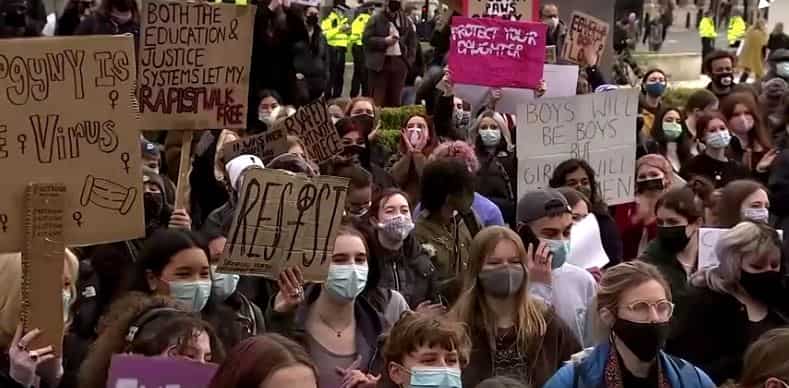
After a blog caused an outpouring of fury, hundreds of women working in the advertising industry have described harassment, assault and discrimination, in what is now being called the industry's #MeToo moment.
Zoe Scaman, a leading figure in the advertising industry, said she received emails from women worldwide detailing incidents ranging from sexist statements in meetings to sexual assault and rape. As a result, she is now collaborating with leaders of organizations representing women in the advertising sector who want to make effective change instead of just another policy pledge.

She has removed identifying details, but included some examples inher blog titled "Mad Men, Furious Women"`.
In one instance, a woman described how her boss assaulted her when she was 24. He followed her into the restroom, where he proceeded to assault her and later suggested they "forget about it". In her letter, she stated that it was neither.
Yet another was paid £20,000 less than a man with the same experience and seniority, while a senior executive lost her job just six months after bringing in new business because she was pregnant.
&imwidth=180&imheight=135&format=webp&quality=medium)
New Cold War: Why is China buying more gold? Explained
&imwidth=180&imheight=135&format=webp&quality=medium)
'I will not be silenced': Ilhan Omar alleges political intimidation after federal officers search her Washington home
&imwidth=180&imheight=135&format=webp&quality=medium)
Robotic surgery, advanced treatment: What is coming to this small Gujarat town?
&imwidth=180&imheight=135&format=webp&quality=medium)
Opposition’s 10 demands in Supreme Court petition range from stay on SIR to audit of voter rolls
&im=FitAndFill=(700,400)&imwidth=180&imheight=135&format=webp&quality=medium)
How does a robot decide what to do next?
&im=FitAndFill=(700,400)&imwidth=180&imheight=135&format=webp&quality=medium)
Navratri 2026: 9 days, 9 forms of Goddess Durga and 9 colours- Check the complete list
&imwidth=180&imheight=135&format=webp&quality=medium)
Girl 'dead' for 8 hours wakes up at her own funeral, dad insists she wasn't breathing
&imwidth=180&imheight=135&format=webp&quality=medium)
Houthis warns US of 'painful response' if Washington joins Saudi war in Yemen as airlines suspend flights to Saudi Arabia
&imwidth=180&imheight=135&format=webp&quality=medium)
‘This is just the start’: Maaya Rajeshwaran on historic ITF title, confidence boost and future goals
&imwidth=180&imheight=135&format=webp&quality=medium)
India's Ajit Doval, Iran's Mohsen Rezaei hold talks amid escalating West Asia tensions, discuss 'issues of mutual interest'
&imwidth=180&imheight=135&format=webp&quality=medium)
'Almost certainly': UK Prime Minister Andy Burnham says Iran's IRGC behind RAF Fairford threat
&imwidth=180&imheight=135&format=webp&quality=medium)
China’s gold rush puts billion in focus
&imwidth=180&imheight=135&format=webp&quality=medium)
Congress demands action against chief election commissioner
&imwidth=180&imheight=135&format=webp&quality=medium)
'I am thoroughly unamused': Judge slams Trump administration after 400 trees cut at Washington golf course
&imwidth=180&imheight=135&format=webp&quality=medium)
BCCI rejects venue shift reports, India vs Sri Lanka 1st ODI to remain in Delhi
&imwidth=180&imheight=135&format=webp&quality=medium)
Korean peninsula tensions escalate as North Korea launches multiple ballistic missiles, PACOM says 'no threat to US personnel'
&imwidth=180&imheight=135&format=webp&quality=medium)
Sidhu Moose Wala’s younger brother wins hearts by recreating late singer’s signature move at Toronto Hologram Show
&im=FitAndFill=(700,400)&imwidth=180&imheight=135&format=webp&quality=medium)
The world’s best places to live in 2026: Is your city on the list? Top 7 ranked
&imwidth=180&imheight=135&format=webp&quality=medium)
Trump weighs firing Kimberly Guilfoyle as US ambassador to Greece amid misconduct allegations: Report
&imwidth=180&imheight=135&format=webp&quality=medium)
Rahul Gandhi's plea against Election Commission delayed as Supreme Court registry flags 14 ‘defects’
&imwidth=180&imheight=135&format=webp&quality=medium)
1,500 drones illuminate Mumbai sky as Cordelia Cruises unveils second ship, Cordelia Sky
&imwidth=180&imheight=135&format=webp&quality=medium)
'Turn approver, resign, we'll forgive you': Rahul Gandhi claims receiving messages from CEC Gyanesh Kumar
&imwidth=180&imheight=135&format=webp&quality=medium)
Delhi protest: CJI Surya Kant declines to meet India Bloc leaders
&imwidth=180&imheight=135&format=webp&quality=medium)
'Absolutely disgusting': Australia slams US plan to livestream Nidal Hasan's execution; Mike Johnson raises concerns, warns of terrorist propaganda
&imwidth=180&imheight=135&format=webp&quality=medium)
Elon Musk pumps $276 million into Republican campaigns ahead of US midterm elections
&imwidth=180&imheight=135&format=webp&quality=medium)
Trump says he 'may' meet North Korean leader Kim Jong Un during upcoming Asia trip
&im=FitAndFill=(700,400)&imwidth=180&imheight=135&format=webp&quality=medium)
New OTT releases this week (October 12-18, 2026): Sacrifice, Koffee with Karan S9, Roadies Rebirth- 6 titles coming on Netflix, JioHotstar and more
&imwidth=180&imheight=135&format=webp&quality=medium)
‘Fortress breached, reclaimed’: CJP leaders enter Jantar Mantar a day after loss of protest venue status | WATCH
&imwidth=180&imheight=135&format=webp&quality=medium)
I.N.D.I.A. Bloc lists 10 requests to Supreme Court
&imwidth=180&imheight=135&format=webp&quality=medium)
Pakistan's government blames PTI for rise of terrorism in Khyber Pakhtunkhwa
&imwidth=180&imheight=135&format=webp&quality=medium)
UK school ditches technology, shifts from screen to pen and paper for learning
&imwidth=180&imheight=135&format=webp&quality=medium)
Anti-SIR protest in Mumbai: Protestors wear black masks & ribbons in Mumbai
&imwidth=180&imheight=135&format=webp&quality=medium)
'Ouch!!! That must hurt': Kangana Ranaut hails Kamal Haasan's sharp reply to Elon Musk over Starlink row
&imwidth=180&imheight=135&format=webp&quality=medium)
UK PM Andy Birnham renews claims of Russian meddling in Brexit vote
Women described being told to "suck it up" and "take it for the team" when faced with sexual advances from their clients.
Also read |Egypt jails man for 8 years in #MeToo case
Despite the anger expressed by most of the women who contacted Scaman, many did not want their stories posted online.
She stated that many women are scared of being honest about the abuse they face. NDAs silence these women. They are pushed out.
It's particularly problematic that those men continue to lead these agencies and succeed.
Scaman believes that even though misogyny and discrimination exist in every field, advertising has a particular reputation as a "maverick" industry that's especially harmful to women.
She went on to say that the problem with claiming to live outside the rules of society is that you get away with bad behaviour, and it is dismissed as just a typical occurrence in advertising.
Approximately 41 per cent of respondents to a 2018 survey by TimeTo, the industry group set up after #MeToo, had experienced harassment at work, but around 83per centdidn't report it.
More than half of women surveyed by the '3% Conference' in 2016 had been sexually harassed in the workplace - 88per centby a colleague, 70per centby a superior, and 49 per cent by a client. The average number of complaints was one out of three. Sixty-eight per cent of women had also been told they were "too aggressive" and 64 per cent said they were "too emotional".
Scaman has joined a coalition of women's advocacy organizations, and claims there is the potential for a "real change" in the advertising industry. It is her wish that NDAs (non-disclosure agreements) are no longer used to protect the harassers and the assaulters, and the industry should employ a "central repository" where harassment can be independently and externally reported.
Scaman further says that in cases of sexual assaults, a woman can only escalate the issue via the company's human resources department, but it is a known fact that HR is only "there to silence staff and avoid scandal".
However, establishing an unbiased third party that women could go to, would put the fear of God into the agencies.
Advertising agencies should fund such a body rather than make an easy-to-forget pledge if they are serious about tackling the issue. She said that she doesn't care about pledges or codes of conduct because they don't mean anything. Adding that solutions like those don't work and changing policies is what's needed.