&imwidth=800&imheight=600&format=webp&quality=medium "Bangladesh to petition Interpol for Sheikh Hasina’s extradition from India: Reports")
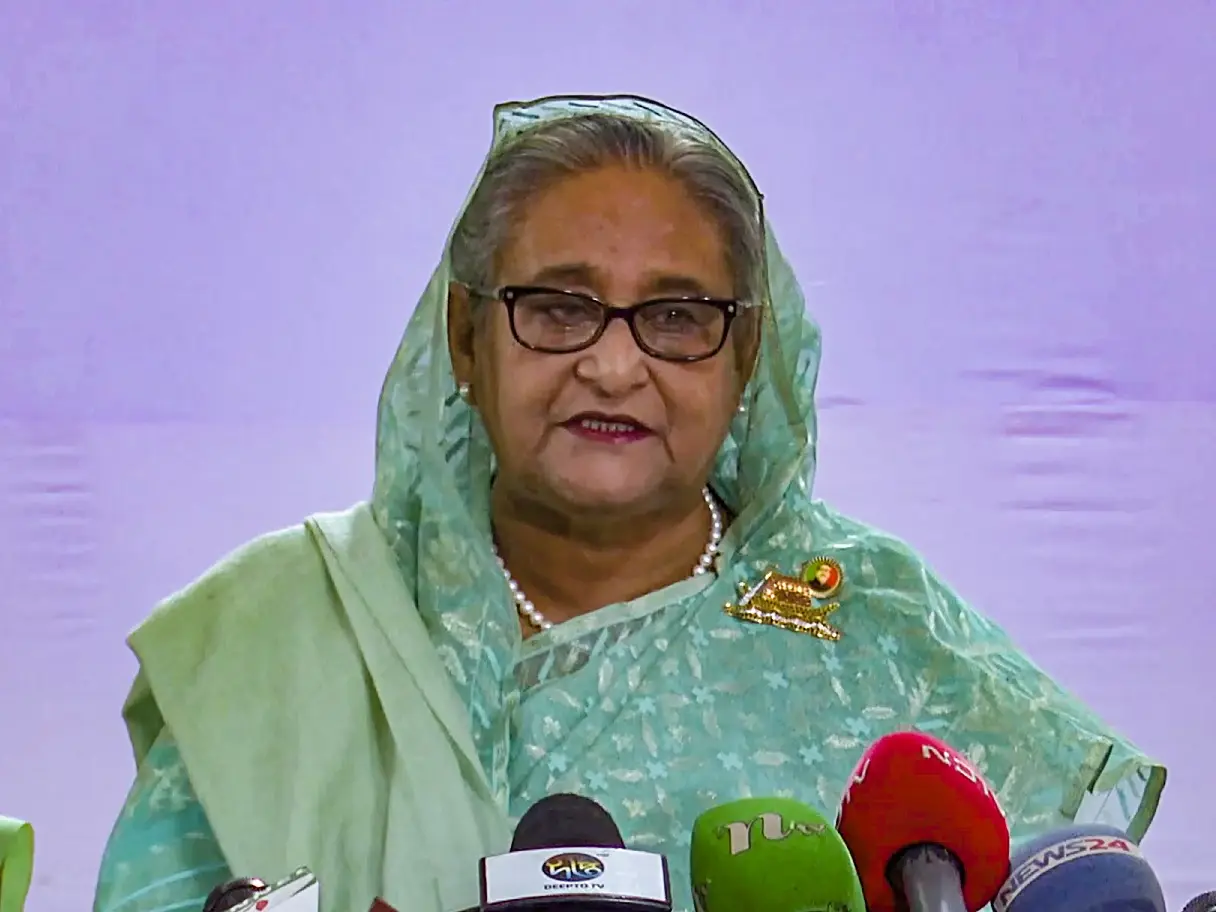
After Bangladesh’s International Crimes Tribunal sentenced former Prime Minister Sheikh Hasina to death in an absentia trial for “crimes against humanity” over her government’s crackdown on student protests in July 2024, the Muhammad Yunus-led interim government in Dhaka is planning to seek the help of Interpol for her extradition along with former home minister Asaduzzaman Khan Kamal from India. The Yunus government had urged the Indian government on Monday to extradite Hasina and Kamal, after both were sentenced to death. Bangladesh foreign ministry cited an extradition agreement with India and said it was an “obligatory responsibility” for New Delhi to ensure her return to Bangladesh. The plan to tap Interpol for the extradition of Hasina and Kamal has been reported by several Bangladeshi media outlets.
“Providing refuge to these individuals, who have been convicted of crimes against humanity, by any other country would be a highly unfriendly act and a disregard for justice,” the letter read.
The Chief Prosecutor’s Office of Bangladesh’s International Crimes Tribunal, which led the prosecution against Hasina for the alleged atrocities during students’ protests, is preparing an application to seek the extradition of the two top leaders, Bangladesh-based The Daily Star reported.

Hasina has been living in India after she had to flee Bangladesh on August 5, 2024 following the massive protests.
Both Hasina and Kamal have alleged that the verdict is politically motivated and lacked due process. Hasina’s Awami League condemned the judgment as “made by a rigged tribunal established and presided over by an unelected government with no democratic mandate”. The party called the process “biased and politically motivated”.
Trending Stories
)
Did India risk its US trade deal despite softer stance at BRICS?
)
Pakistan puts Pak Rs 70 lakh bounty on UN terrorist Masood Azhar; move draws skepticism in Delhi
)
First naval drone battle? Ukraine says Sargan 3000 sank Russian unmanned boat
)
Practical Magic 2 breaks Spidey spell over North American box office
)
'Huge destructive power': North Korea calls its latest missile launches 'live-fire drill' even as US dismisses 'immediate threat'
)
‘Let’s go’: Newly declassified videos show dramatic rescue of US Air Force officers downed in Iran
)
Ganesh Chaturthi 2026: Devotees throng the iconic Lalbaugcha Raja pandal in Mumbai
)
Delhi’s balancing act: BRICS serves as a stage for West Asia diplomacy
&im=FitAndFill=(700,400))
Why European Meteor missiles use ramjet engines compared to standard US solid rockets
)
Iran, India agree to deepen humanitarian and political ties, President Pezeshkian says
)
‘Want to reset ties with India, have engagement based on mutual interests,’ says Bangladesh minister
)
Trump says Canada eager to reach a deal, it could come ‘fairly soon’ if Ottawa treats US farmers better
)
Turkish Airlines plane flies through a storm three times, triggering severe turbulence
&im=FitAndFill=(700,400))
Why Chinese PL-15 air-to-air missiles use dual-pulse motors compared to European interceptors
)
Orlando Bloom addresses Pirates of the Caribbean comeback and reunion with Johnny Depp
)
China thinned Himalayan troop presence in 2025, India defence report says; terms border situation 'stable'
)
Russia proposes to build 360 kmph Ivolga FG trains in India: What happened on sidelines of BRICS
)
800 million years old - Scientists discover 'fingerprints' of supercontinent Gondwana in ancient rocks
)
Israeli minister calls to strip Gaza film directors of citizenship
)
'Nobody knows if it can be in control': ‘Godfather’ of AI, China spy chief back AI slowdown calls, flags political threat
)
China discovers vast gold and silver 'mine' in the Pacific with unheard-of deposits
)
Russian drone hits Warsaw-bound train near Polish border, Zelensky accuses Moscow of ‘deliberate’ targeting
)
War is making Russia stronger? How Ukraine is shaping Moscow’s next generation of weapons
)
Plane carrying prominent figure crashes at Libya’s Misrata airport: Report
)
Veteran Bollywood actress Nafisa Ali shares health update as Stage 4 cancer progresses, starts targeted therapy
)
NEET-UG to move to computer-based test soon, NTA DG says ‘CBT is the future’
)
Woman removes all her clothes on American Airlines flight, performs 'indecent acts'; arrested
)
Liam Neeson sparks romance rumours after holding hands with Stella Stocker at TIFF 2026
&im=FitAndFill=(700,400))
New OTT releases this week (September 14-20, 2026): Lust Stories 3, Waiting Hai, Irumudi- 5 new titles coming on Netflix, Prime Video and more
)
Indian importers urge Bangladesh to lift export ban on 'Hilsa' fish ahead of Durga Puja
)
Video of Pakistani lawmaker struggling to read English tribute to Jinnah goes viral - WATCH
)
Did China give Iran intel before US base strike that killed 3 troops? Trump says, 'You’re right...'
)
Women's Asia Cup 2026: India denied trophy once again despite winning the title
)
Humans may lose control of AI: Anthropic CEO calls for slowdown, Altman, Musk back him
Kamal said that the verdict was on “expected” linesand alleged the court was created solely to “finish Awami League leadership”. He also pointed to Pakistan’s reaction to the verdict and said that it revealed a lot.
WATCH: Sheikh Hasina's Son Urges India To Disregard Extradition Request
What did India say on ICT conviction order
India has said that it noted the International Crimes Tribunal’s verdict regarding Sheikh Hasina and that it remains committed to the best interests of the people of Bangladesh.
“As a close neighbour, India remains committed to the best interests of the people of Bangladesh, including in peace, democracy, inclusion, and stability in that country. We will always engage constructively with all stakeholders to that end,” the Ministry of External Affairs said in a statement.
However, India has not commented on the request for Hasina’s extradition. Extradition is a lengthy process requiring review of tribunal documents to ensure due procedure, fair representation, and credible testimony, and exemptions to the treaty apply if the case appears political, said a Reuters report, citing an Indian government source.
The interim government in Dhaka said that India’s failure to return her would be “a highly unfriendly gesture and an affront to justice”.
Interpol Red Notice for Sheikh Hasina?
Prosecutor Gazi MH Tamim on Tuesday said preparations were underway to request an Interpol Red Notice for the two on the basis of a conviction warrant, reported Bangladeshi daily The Financial Express.
The police in Bangladesh had earlier sought Interpol red notices for 12 absconding suspects including Sheikh Hasina, accused of crimes against humanity after cases were filed last year.
India and Bangladesh have a 2013 extradition treaty that obligates both countries to hand over convicted fugitives. However, the treaty also allows refusal in cases deemed “political in character”.