

&imwidth=800&imheight=600&format=webp&quality=medium "‘3 hours longer than men’: Japanese PM Sanae Takaichi’s workday remarks spark gender role debate")
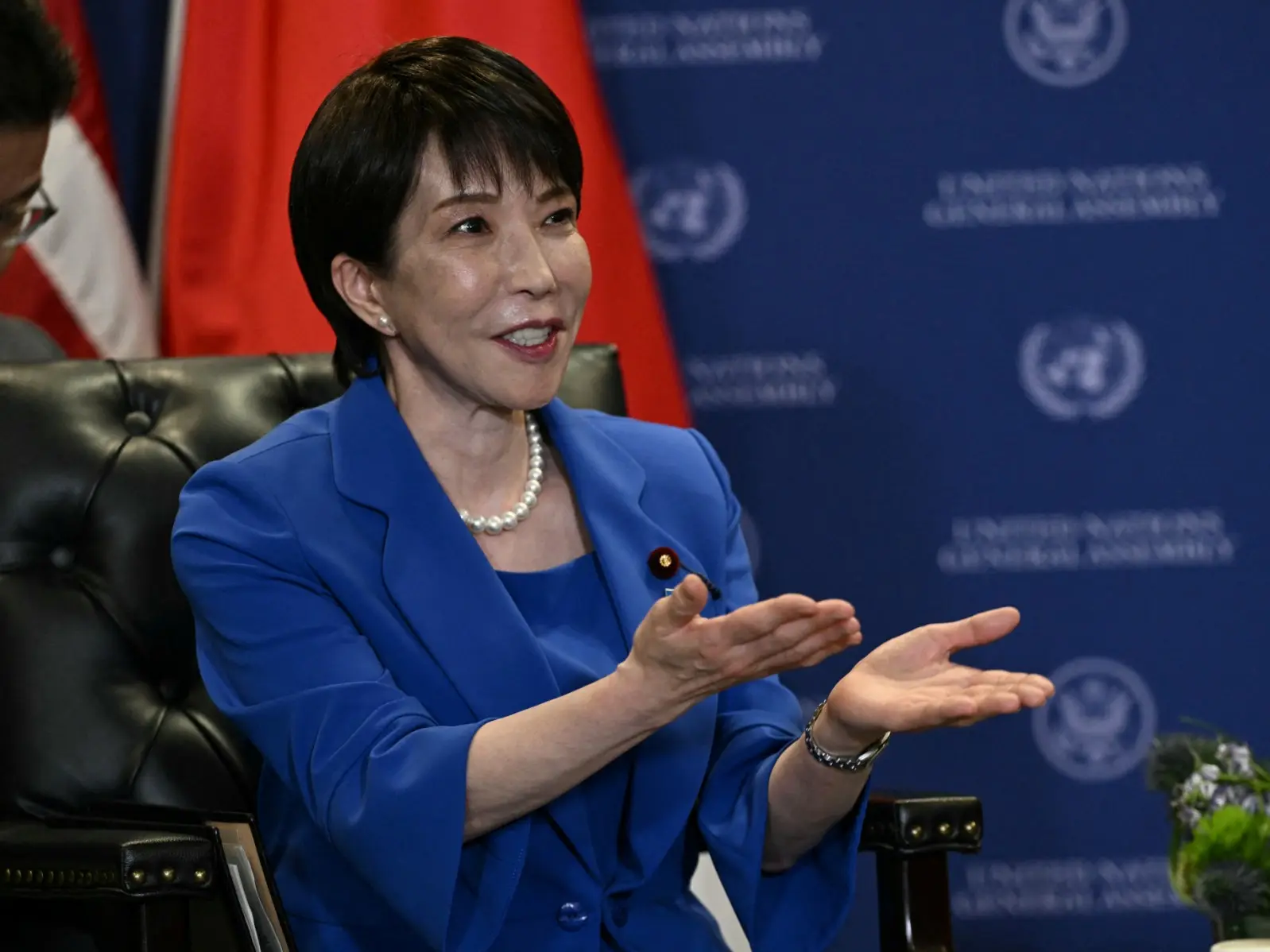
Japanese Prime Minister Sanae Takaichi has ignited a national debate on gender roles after telling parliament that she carries extra burdens as a woman that her male predecessors never faced, putting her performance under fresh scrutiny. Speaking on Wednesday (Oct 14), Takaichi said she works longer hours than earlier prime ministers because of expectations placed on women, including household chores and makeup. "In the morning, I take a bath, fix breakfast and do the dishes, then apply makeup," she said, estimating that this adds three to four hours to her day.
She added that it took her aides time to understand she needs extra preparation before appearing on camera. The remarks quickly backfired. Critics saw them as reinforcing outdated gender roles and glorifying the excessive working hours long regarded as a problem in Japan. Gender roles in the country remain rigid, and while long hours are the norm for men, working women also shoulder most domestic duties. Government data shows women spend nearly five hours a day on housework, compared with about 40 minutes for men. Social media users pointed out that many working women who raise children or care for elderly parents face far heavier demands than the prime minister, arguing that her comments reflected a time-management issue and a dated view of gender equality.
Also read: Motorcycles, fast sports cars and a drummer: The life of Japan PM Sanae Takaichi beyond politics
Lawyer Fusako Miwa wrote on social media that it is acceptable for Takaichi to need more time as long as she does her job, but using makeup as an excuse and seeking forgiveness for it is unacceptable. The controversy adds to earlier criticism. Since taking office last year, Takaichi has spoken of sleeping zero to three hours a night because of homemaking duties on top of her workload, prompting accusations that she sets a poor example on work-life balance and gender equality. Although she posts regularly on X, she has reduced her appearances in parliament and largely stays at her residence at night and on weekends, a habit critics say shows neglect of policy debate. Her troubles deepened on Wednesday when newly appointed farm minister Kazuo Yana resigned over multiple scandals. These included boasting about cutting road construction budgets for municipalities that did not back him in an election, and admitting to arranging questionable free transport for supporters at his rallies.
Also read: India to overtake Japan, become 4th-largest economy by 2027? What IMF’s latest projection reveals
Takaichi's schedule was also raised by Fumitake Fujita, a senior official of her junior coalition partner, the Japan Innovation Party. He proposed shortening the hourslong parliamentary sessions ministers attend almost daily, noting that Japan's prime minister attended for 72 days in 2022, versus 50 in Britain and 13 in Germany, citing think tank NXJI Research. The report also suggested hiring cooks and housekeeping staff for the prime minister's official residence so the leader can focus on duties and get enough sleep. Takaichi acknowledged that managing her schedule is hard and that she routinely takes a thick stack of documents home. She said she enjoys reading them late at night, but admitted it is difficult to find time to reflect on Japan's future direction or develop a grand vision.
Trending Stories
&imwidth=180&imheight=135&format=webp&quality=medium)
'Reason UN has lost credibility': Amid SIR protests India hits out at report alleging 'youth repression'
&imwidth=180&imheight=135&format=webp&quality=medium)
Ankita Bhandari murder case: Parents meet CBI, seek impartial investigation
&imwidth=180&imheight=135&format=webp&quality=medium)
Here’s who is eyeing the White House press secretary role after Katie Zacharia’s exit

US ends automatic work permit extensions; Indian workers lose 540-day safety net: What it means

Not Khan but Pal: Why did Imran Khan choose his mother's surname over his father's? Family tree explained
&imwidth=180&imheight=135&format=webp&quality=medium)
A secret code, a midnight escape and 300 deaths: The Russian officer who turned on Putin
&imwidth=180&imheight=135&format=webp&quality=medium)
Lizard people? Ex-US Army sniper claims soldier killed by 'reptilian beings' in battle near Area 51
&imwidth=180&imheight=135&format=webp&quality=medium)
US midterms 2026: Alexandria Ocasio-Cortez donates $1 million to Abdul El-Sayed’s as Michigan race heats up
&imwidth=180&imheight=135&format=webp&quality=medium)
US midterms 2026: Dan Sullivan’s ‘gotcha’ attempt backfires against Mary Peltola in fiery Alaska Senate debate
&im=FitAndFill=(700,400)&imwidth=180&imheight=135&format=webp&quality=medium)
Who left the White House podium the fastest? Press secretaries with the shortest stints
&imwidth=180&imheight=135&format=webp&quality=medium)
Infiltration bid foiled in Kupwara’s Keran sector, search operation underway
&imwidth=180&imheight=135&format=webp&quality=medium)
Vijay Deverakonda and Rashmika Mandanna's Ranabaali X Review: Netizens call it history-rich but overstuffed
&imwidth=180&imheight=135&format=webp&quality=medium)
Selma Blair’s team responds to flight incident, says actress ‘did not intend to harm anyone’
&imwidth=180&imheight=135&format=webp&quality=medium)
‘My president, I mean my husband’: Trump's new press secretary Katie Zacharia's first briefing goes off the rails in 14 minutes
&imwidth=180&imheight=135&format=webp&quality=medium)
Starlink says 'ready to connect India with high-speed internet' amid Reliance row
&imwidth=180&imheight=135&format=webp&quality=medium)
One species, two lineages: Why Sri Lanka’s spectacled cobra differs genetically from Indian variant
&imwidth=180&imheight=135&format=webp&quality=medium)
Oregon school shooting: 16-year-old shooter identified, used shotgun bought by mother; Trump praises bystander who shot gunman as 'great hero'
&imwidth=180&imheight=135&format=webp&quality=medium)
Ukraine drone strike disrupts 22 Russian airports, over 200 flights
&im=FitAndFill=(700,400)&imwidth=180&imheight=135&format=webp&quality=medium)
Inside Tesla's Roadster: 10 features of Elon Musk's 'flying car' that push the limits of electric vehicles | In Pics
&imwidth=180&imheight=135&format=webp&quality=medium)
India’s naval priorities: Ex-Navy Chief calls for third aircraft carrier, more warships and submarines
&im=FitAndFill=(700,400)&imwidth=180&imheight=135&format=webp&quality=medium)
New Friday OTT releases (October 16, 2026): DC, Sacrifice, Aasha- 6 new movies and TV shows coming on Netflix, Zee 5, Prime Video and more
&imwidth=180&imheight=135&format=webp&quality=medium)
CJP's Tiranga march: People hit streets of Delhi again, reiterate call for Gyanesh Kumar's resignation
&imwidth=180&imheight=135&format=webp&quality=medium)
Trump invokes national interest to waive new Russia sanctions, tariffs; India gets relief from 100% tariff threat
&imwidth=180&imheight=135&format=webp&quality=medium)
IND-W vs ZIM-W, 1st T20I: Deepti Sharma, Niki Prasad shine as India beat Zimbabwe by four wickets
&imwidth=180&imheight=135&format=webp&quality=medium)
Pakistan to head IMF, World Bank boards after 74 years amid persistent economic crisis
&imwidth=180&imheight=135&format=webp&quality=medium)
Gravitas | Iran threatens to hit key bridges in 7 countries if US resumes strikes
&imwidth=180&imheight=135&format=webp&quality=medium)
Oil tanker carrying over 2M barrels of crude hits mine in Strait of Hormuz, catches fire, says Iran
&imwidth=180&imheight=135&format=webp&quality=medium)
China tells Israel to stop West Bank settlements, calls Palestine issue ‘historic injustice’
&imwidth=180&imheight=135&format=webp&quality=medium)
Group's fibre-optic drones pose new challenge for Israel
&imwidth=180&imheight=135&format=webp&quality=medium)
US midterms 2026: Ken Paxton may have Elon Musk to thank if he wins the Texas Senate race. Here's why
&imwidth=180&imheight=135&format=webp&quality=medium)
Abhishek Sharma sets all-time record for most T20I sixes in a year
&imwidth=180&imheight=135&format=webp&quality=medium)
Israel examines Russia's Shahed-type drones sent by Ukraine to combat Iran | Gravitas
&imwidth=180&imheight=135&format=webp&quality=medium)
BCCI names India’s ODI squad for New Zealand tour, Gill and Iyer to share captaincy
&imwidth=180&imheight=135&format=webp&quality=medium)
China responds to Trump's Press Secretary Katie Zacharia after toilet remark: 'Visit China more often'

