
&imwidth=800&imheight=600&format=webp&quality=medium "'11 nights, 729 sorties, 1,240 missiles fired': The B-52's most brutal mission was over Hanoi")
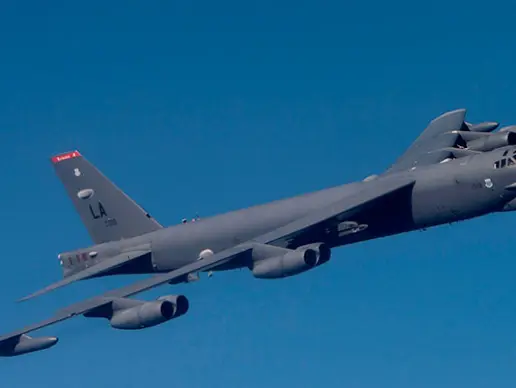
By December 1972, the Vietnam War had dragged on for over a decade. Peace negotiations in Paris had stalled. North Vietnam was refusing to make concessions. President Richard Nixon ordered what would become the most concentrated strategic bombing campaign since the Allied raids over Germany and Japan in World War II: Operation Linebacker II. The weapon of choice was the B-52 Stratofortress, and the target was the heart of North Vietnam — Hanoi and the port city of Haiphong.
The Scale Of The Assault
Over 11 consecutive nights, from December 18 to December 29, 1972, the US Air Force flew 729 B-52 sorties over North Vietnam. The bombers dropped more than 15,000 tons of ordnance on 18 industrial targets and 14 military installations, including surface-to-air missile sites, railway yards, power plants, and communications facilities. Fighter-bombers added another 5,000 tons of bombs to the total. The campaign was not a gradual escalation — it was an overwhelming, concentrated assault designed to break North Vietnam's resistance at the negotiating table.

1,240 Missiles Fired At Them
North Vietnam's air defence network responded with everything it had. Over the 11 nights of Linebacker II, North Vietnamese forces fired approximately 1,240 surface-to-air missiles — primarily Soviet-supplied SA-2 Guideline missiles — at the incoming B-52 formations. The sky over Hanoi during these raids was described by surviving crew members as a wall of explosions, with SAM contrails, anti-aircraft fire, and debris filling the airspace. Despite heavy electronic countermeasures and fighter escorts, 15 B-52 bombers were shot down — a loss rate of just under two per cent, but each loss meant an entire crew of six was killed, captured, or listed as missing.
The Human Cost
Trending Stories
)
NBA fines LA Clippers $30 million for salary cap violation involving Kawhi Leonard
)
Elle Muhoza wears a dress inspired by C-section layers
)
‘It is within reach’: Netanyahu says Iran regime could soon fall as US strikes resume
)
Earth-Theia collision created the moon in just 5 hours, study shows
)
Nigerian Navy discovers 99,000 litres of suspected stolen, illegally refined products as it intensifies anti-crude oil theft operations
)
Who is Aditi Paudel? 17-year-old becomes Japan's first literacy ambassador
)
Man pushes Russian humanoid robot. Watch what happens next
&im=FitAndFill=(700,400))
How the Su-30MKI flies up to 8,000 kilometres using mid-air refueling
)
Belgium, latest EU state cautioned by India over arms for Pakistan; gets assurances from Brussels
)
Netherlands shifts 86 tonnes of gold reserve to UK citing geopolitical risks
)
‘El Nino is being supersized’: UN warns of record heat and extreme weather
)
Indian Air Force pilot Abhinandan Varthaman, who shot down Pak fighter jet retires, takes up private job
)
Report: Egypt eyes new Rafale F4 deal amid air force modernisation push
)
Zelensky ‘grateful’ for India’s push to end Ukraine war after meeting Jaishankar in Kyiv
)
US President Donald Trump says he's 'happy' as Prince Harry and Meghan Markle move back to the UK
)
Ganga nears danger mark in Varanasi, most ghats submerged; PM Modi orders relief work on ‘war footing’
)
Rubio on Modi-Pezeshkian meeting: 'No country should help Iran evade sanctions'
)
WION Exclusive: Hasina says she reads father’s unfinished memoir while planning Dhaka return
&im=FitAndFill=(700,400))
Why the Su-30MKI uses a giant air brake on its back instead of its wings
)
Bangladesh batter Towhid Hridoy creates history with 350 not out in South Africa
)
Russia to shut German culture centres after Germany closes Russian consulate
)
Beginning of the end? More glacial lake outbursts threaten millions in India, Nepal and China
)
Gandhari review: Taapsee Pannu’s thriller is too dramatic to work
)
‘I wouldn’t call it a war,’ says JD Vance on ongoing conflict with Iran
)
ISRO EOS-05 launch: GSLV to lift heaviest payload in its 25-year flight history
)
Husband uses secret camera to record wife’s affair, wins divorce case, ends up in jail for spying
)
At least 2 killed in Minneapolis shooting, suspect also dead
&im=FitAndFill=(700,400))
Why Russian fighter jets use bulky, low-pressure tyres compared to US jets
)
Major AI platforms ChatGPT, Claude, and Grok hit by simultaneous service disruptions
)
Manipur violence: 25 houses torched in Manipur’s Kangpokpi a day after 10 homes were burnt along Imphal-Tamenglong road
)
Iran attacks US bases in Kuwait & UAE, supersecret missile project in focus | Gravitas
)
Influencer shows off what he claims is Apple's first foldable iPhone 18 Ultra
Doha-Bengaluru IndiGo flight diverted to Muscat after crew member falls sick. What really happened?
)
Of the 92 B-52 crew members involved in aircraft losses during Linebacker II, 26 were recovered by rescue teams, 33 were captured and became prisoners of war, 25 were listed as missing in action, and eight were killed or later died of wounds. For the crews who survived, the experience of flying through what many described as the most intense air defence environment since World War II left a lasting mark. Several crews flew multiple missions over consecutive nights, knowing that the SAM threat was not diminishing — North Vietnam was receiving fresh missile supplies throughout the campaign.
The Result
Linebacker II achieved its strategic objective. The scale of destruction inflicted on North Vietnam's military and industrial infrastructure — combined with the sheer intensity of the bombing — brought Hanoi back to the negotiating table. The Paris Peace Accords were signed on January 27, 1973, just four weeks after the bombing ended. American prisoners of war began returning home in February. The campaign remains one of the most debated operations in American military history — praised by some as the use of force that finally ended the war, condemned by others for the civilian casualties and destruction it caused. What is not debated is the scale of what the B-52 crews endured: 11 nights, 729 sorties, 1,240 missiles, and 15 bombers lost over the skies of Hanoi.
