‘Very serious increase’: North Korea ramps up nuclear arms production at alarming pace, IAEA warns

&imwidth=600&imheight=450&format=webp&quality=medium "‘Very serious increase’: North Korea ramps up nuclear arms production at alarming pace, IAEA warns")
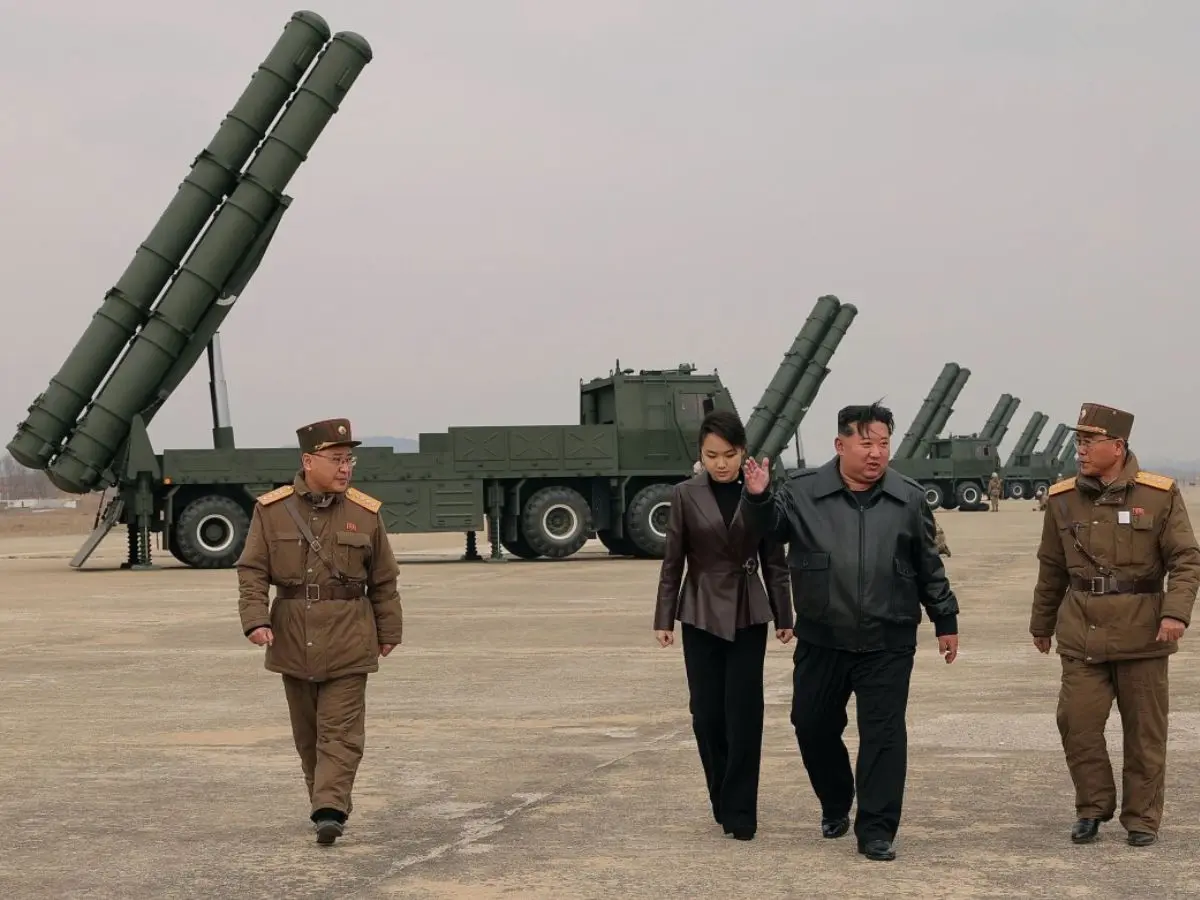
North Korea’s nuclear build-up intensifies with ‘very serious increase’ in production Photograph: (AFP, Representative Image)
While speaking in Seoul, IAEA chief Rafael Grossi said the agency had observed a “rapid increase in the operations” at the Yongbyon nuclear complex, including its reactor, reprocessing unit and light-water reactor.
North Korea is showing a ‘very serious increase’ in its ability to produce nuclear weapons, the head of the International Atomic Energy Agency has said, pointing to a surge in operations across key facilities. According to AFP, while speaking in Seoul, IAEA chief Rafael Grossi said the agency had observed a “rapid increase in the operations” at the Yongbyon nuclear complex, including its reactor, reprocessing unit and light-water reactor. These developments, he said, indicate a significant expansion in Pyongyang’s capacity to produce fissile material for atomic weapons.
Expanding facilities and enrichment capability
The Yongbyon site remains central to North Korea’s nuclear programme, despite earlier claims that parts of it had been decommissioned. It was reactivated in 2021, and alongside it, the IAEA has identified additional facilities, including a “new facility similar to the enrichment facility in Yongbyon”. While inspectors have not had access since 2009, the agency relies on satellite imagery and external analysis. Grossi said it was “not easy to calculate” precise increases, but added that observable developments suggest a “significant increase in the enrichment capacity” of the country, officially known as the Democratic People’s Republic of Korea.
AFP wrote that the diplomatically isolated north is believed to operate multiple facilities for enriching uranium, a key step in making nuclear warheads, South Korea's spy agency has said.
Sanctions, isolation and strategic implications
Trending Stories
)
)
)
)
)
)
)
)
)
)
)
)
)
)
)
)
)
)
)
)
)
)
)
)
)
)
)
)
)
)
)
)
&im=FitAndFill=(700,400))
)
)
)
)
)
)
North Korea conducted its first nuclear test in 2006 and remains under extensive UN sanctions over its weapons programmes. It has consistently maintained that it will not abandon its nuclear arsenal, which is estimated to comprise a few dozen warheads. Despite growing concerns over its ties with Russia amid the war in Ukraine, Grossi said the IAEA had not observed “anything in particular” indicating direct Russian involvement in Pyongyang’s nuclear development. The findings nevertheless underline a steady and sustained expansion of North Korea’s nuclear capabilities at a time of heightened regional and global security tensions.
Missile tests and naval modernisation drive
On Tuesday, North Korea conducted fresh tests of strategic cruise and anti-ship missiles as part of operational trials for its Choe Hyon-class destroyer, state media reported. Kim Jong Un oversaw the launches alongside senior military officials, signalling continued focus on strengthening naval strike capabilities. The cruise missiles reportedly flew for between 7,869 and 7,920 seconds, while the anti-ship missiles remained airborne for around 1,960 to 1,973 seconds before striking targets off the west coast with what was described as “ultra-precision accuracy”. According to KCNA, two cruise missiles and three anti-ship missiles were fired to evaluate the warship’s integrated weapons command system, crew readiness and upgraded navigation performance, including anti-jamming capabilities.
Kim was also briefed on plans for two additional destroyers, pointing to an expanding fleet. He had reiterated that reinforcing nuclear deterrence remains a priority, calling for improved strike capability and rapid-response readiness.