

&imwidth=800&imheight=600&format=webp&quality=medium "'REVERSE MIGRATION only can...': Trump threatens to suspend immigration from ‘Third World’. What happened with the ‘Muslim Ban’ of 2017?")
President Donald Trump on Thursday night (Nov 27 ) threatened to suspend immigration from what he called “Third World countries” in the wake of a Washington DC shooting of two National Guard soldiers by an Afghan who entered the US as a migrant. The suspect, Rahmanullah Lakanwal, is a 29-year-old who entered under a US resettlement programme following the chaotic 2021 US troop withdrawal from Afghanistan. One of the two injured soldiers later died while the other is fighting for life. While it is not clear if Trump would impose a full immigration suspension, his announcement is similar to what he did in 2017. Soon after starting his first term, Trump issued a sweeping travel ban targeting largely Muslim-majority nations, causing significant disruption at airports, family separations, and legal battles. Here is what unfolded in 2017 and its aftermath. But first, let's look at his latest threat.
Trump's latest 'reverse migration' threat: What did he say?
On Truth Social, Trump wrote: “I will permanently pause migration from all Third World Countries to allow the US system to fully recover.”
Blaming the previous administration of Joe Biden, Trump added he would “terminate all of the millions of Biden illegal admissions, including those signed by Sleepy Joe Biden’s Autopen,” and “remove anyone who is not a net asset to the United States, or is incapable of loving our Country.”
He also said the US would end all federal benefits and subsidies to non-citizens, “denaturalise migrants who undermine domestic tranquillity,” and deport any foreign national deemed a public charge, a security risk, or “non-compatible with Western Civilisation.”
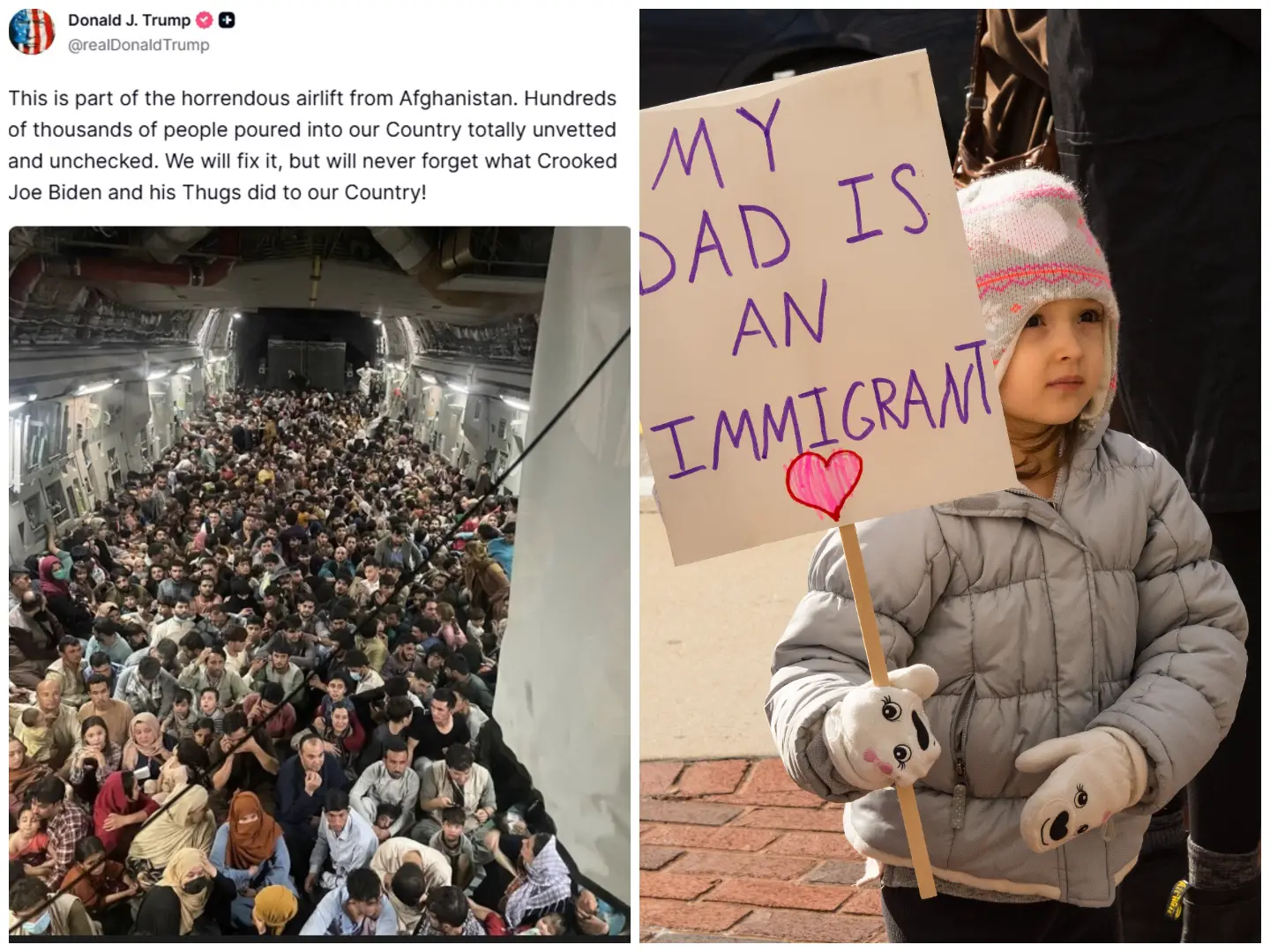
“Only REVERSE MIGRATION can fully cure this situation,” he concluded, while also sharing an image of the chaotic evacuation of some Afghan civilians in 2021.
Trending Stories
&imwidth=180&imheight=135&format=webp&quality=medium)
US charges two former FBI officials with lying to Congress about Hunter Biden probes. 'Politically motivated' Trump grievance or something else?
&imwidth=180&imheight=135&format=webp&quality=medium)
Tu Hai Meri Kiran film review: Sonakshi Sinha and Zaheer Iqbal's thriller gets tangled in its own twists
&imwidth=180&imheight=135&format=webp&quality=medium)
IND vs NZ 2nd T20I: Shreyas Iyer on brink of breaking Rohit Sharma’s record
&imwidth=180&imheight=135&format=webp&quality=medium)
Did Neha Bora call for Bangladesh-like GenZ protest, 'anarchy' in India? WION Fact-checks viral claim
&imwidth=180&imheight=135&format=webp&quality=medium)
Will the US attack Iran this weekend? Trump's envoy says, 'absolutely'
&imwidth=180&imheight=135&format=webp&quality=medium)
Global cybersecurity alert: PHP flaws trigger website shutdowns as hack attempts surge into millions
&imwidth=180&imheight=135&format=webp&quality=medium)
US Navy, Marine Corps boards defy Trump's transgender military ban, vote to retain troops
&imwidth=180&imheight=135&format=webp&quality=medium)
Fauzi teaser out: Prabhas takes on the British Empire in patriotic avatar | Watch
&imwidth=180&imheight=135&format=webp&quality=medium)
Viral video shows cross falling on Colombia priest, no official confirmation | WATCH
&imwidth=180&imheight=135&format=webp&quality=medium)
Google Fitbit Air’s new health guardian feature tracks trends: How it works
&imwidth=180&imheight=135&format=webp&quality=medium)
'You’re a horrible little reporter, aren’t you?': Trump snaps at NBC reporter questioning his support for Ramaswamy's campaign ad
&imwidth=180&imheight=135&format=webp&quality=medium)
'Black triangle' UFO flying at 1,800mph spotted over sensitive US site: Latest Trump admin UFO file dump
&imwidth=180&imheight=135&format=webp&quality=medium)
'My name has always been Ilhan Omar': Congresswoman hits back at Trump, calls him a 'creep'
&imwidth=180&imheight=135&format=webp&quality=medium)
Nairobi building collapse: Several feared trapped after 16-storey structure crumbles; rescue operation underway
&imwidth=180&imheight=135&format=webp&quality=medium)
Chemical warehouse explosion in Mexico: Several injured in multiple blasts, 1,000 evacuated in León
&imwidth=180&imheight=135&format=webp&quality=medium)
AI deepfakes are spreading online: Why is removing them so difficult?
&imwidth=180&imheight=135&format=webp&quality=medium)
US midterms 2026: Trump revises Canada tariffs as Susan Collins faces tight re-election race in Maine
&imwidth=180&imheight=135&format=webp&quality=medium)
Anthropic security chief issues grim cyberattack warning: ‘It’s going to get a lot worse’
&im=FitAndFill=(700,400)&imwidth=180&imheight=135&format=webp&quality=medium)
How smart robots and AI assemble vehicles in 20 hours
&imwidth=180&imheight=135&format=webp&quality=medium)
Pakistan airline PIA unveils new crew uniforms, faces online criticism
&imwidth=180&imheight=135&format=webp&quality=medium)
IND-W vs ZIM-W, 1st ODI: Rawal, Charani star in India’s nine-wicket win over Zimbabwe
&imwidth=180&imheight=135&format=webp&quality=medium)
Emmanuel Macron calls Paris suburb shooting a 'racist terrorist attack' after one killed, several injured
&imwidth=180&imheight=135&format=webp&quality=medium)
Gravitas | US attack could trigger WW III: Russian planes in Tehran, Israeli jets, US warships in action
&imwidth=180&imheight=135&format=webp&quality=medium)
Horrific video shows the moment 18-year-old fell to her death from Mexico amusement park ride
&imwidth=180&imheight=135&format=webp&quality=medium)
China's dancing robot turns violent bodyguard, lifts cars and fights intruders - Watch
&imwidth=180&imheight=135&format=webp&quality=medium)
US midterms 2026: Viral video claims Lindsey Graham paid underage men for sex; clip released weeks before his sister's Senate race
&imwidth=180&imheight=135&format=webp&quality=medium)
First Lady Melania Trump secures ceasefire between Russia, Ukraine in Oleshky: White House
&im=FitAndFill=(700,400)&imwidth=180&imheight=135&format=webp&quality=medium)
New Friday OTT releases (October 23, 2026): Gajab Raat, Dorothy, Chaar Yaar- Watch these 6 new movies and TV shows on Netflix, Prime Video and more
&imwidth=180&imheight=135&format=webp&quality=medium)
French Open: PV Sindhu storms into final with win over Hina Akechi
&imwidth=180&imheight=135&format=webp&quality=medium)
'Already tired of his 9-to-5': Baby born with a moustache becomes internet sensation, video goes viral | Watch
&imwidth=180&imheight=135&format=webp&quality=medium)
India-China face-off continues near Arunachal’s Taksing, reveals ITBP chief in first official confirmation of tensions
&imwidth=180&imheight=135&format=webp&quality=medium)
Negotiators from Ukraine, Russia, United States to meet in Abu Dhabi: Zelensky
&imwidth=180&imheight=135&format=webp&quality=medium)
Farooq Abdullah says Pakistan’s raising of Kashmir issue keeps pressure on Delhi
&imwidth=180&imheight=135&format=webp&quality=medium)
Massive 7.2 magnitude quake off Vanuatu triggers tsunami warning for coasts within 300 km
Trump triggers memories, alarm among immigrant communities
Trump's pronouncements are reviving a nightmare for migrant communities, refugee-rights groups and legal advocates. If a broad migration pause similar to 2017 is imposed, hundreds of thousands of lives will be disrupted. Years of resettlement efforts would be undone. Debates over immigration, security, and civil rights would be reignited on the streets, screens and courts of America.
What happened in 2017? The Trump ‘Muslim travel ban’ and its immediate impact
In January 2017, soon after assuming his first term in office, Trump signed Executive Order 13769, barring travel from seven predominantly Muslim countries: Iran, Iraq, Libya, Somalia, Sudan, Syria and Yemen (note that Afghanistan was not included at the time). The order also paused the US Refugee Admissions Programme for four months, and indefinitely stopped Syrian refugee resettlement. Touted as a security measure, the ban’s abrupt rollout caused widespread confusion among government agencies, airlines, airports, passengers, visa-holders and visa-seekers.
Hundreds of travellers were detained or denied boarding at American airports nationwide within hours of the executive order.
Nearly 90,000 people were affected by visa revocations and restrictions, with airports becoming battlegrounds of arguments and protests. An estimated 60,000 visas were revoked. Many lawful permanent residents from the seven countries were initially barred from entering the US.
Airport chaos and protests after ‘Muslim travel ban’
The ban was seen as an Islamophobic action, with major airports including JFK, Dulles, O’Hare, LAX and San Francisco seeing large-scale disruptions. Even lawful visa holders were detained for hours, often without rightful access to lawyers, with critics calling it the ‘Muslim ban’.
Lawyers and community groups mobilised to assist many stranded travellers, even as thousands of protesters gathered outside airports and government buildings. They demanded that stranded individuals be admitted. Even after lengthy vetting, many asylum-seekers, refugees, students and families were denied entry.
Trump's 'Muslim ban' faced legal battles and led to order revisions
Legal challenges were filed soon in local and federal courts, which issued temporary restraining orders within days. This essentially blocked the enforcement of the initial order in many places. By March 2017, the administration was forced to rework the policy with a new executive order. Presidential Proclamation 9645 in September 2017 modified the list of affected countries, removing Sudan and later Chad. Later, North Korea and certain Venezuelan officials were added to the travel ban. In June 2018, the US Supreme Court upheld this final version in a 5–4 decision, bowing to presidential authority over matters of national security and immigration.
Revocation of the Muslim ban in 2021
After the chaos that continued for several years, Democratic President Biden, who defeated Trump in the 2020 elections, rescinded all versions of the travel ban on his first day in office in January 2021. This, in practice, reinstated visa processing for previously barred nations.
But the damage had been done.
Many families - mostly Muslim ones - continued to face visa backlogs, months of uncertainty, separation, and economic or psychological hardship. Communities affected by the ban reported lasting damage in trust, social stability and mental health, according to reports.

