
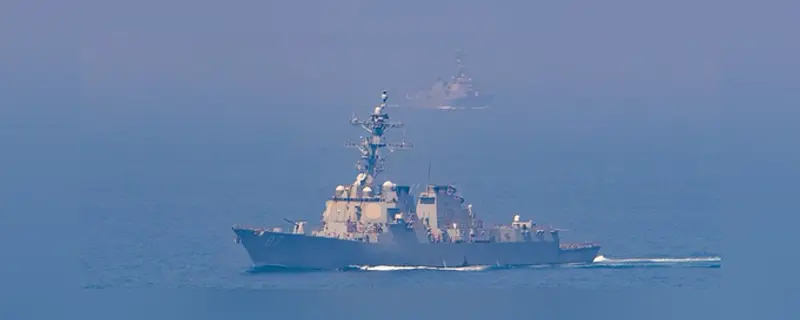
Iran on Friday (May 8) accused the United States of violating the ceasefire as both sides blamed each other for triggering overnight clashes in the Strait of Hormuz. This comes after Tehran’s military command said that Washington initiated the exchange of fire by attacking an Iranian oil tanker and another ship, adding that its forces “immediately and in retaliation attacked American military vessels.” Meanwhile, Iranian media reported fresh “sporadic clashes” with the US in Hormuz on Friday.
“The action carried out last night was both a blatant violation of international law and a breach of the ceasefire,” foreign ministry spokesman Esmaeil Baqaei said, as per the ISNA news agency.
“At the same time, the country's defenders delivered a 'major slap' to the enemy and repelled the enemies’ aggression with full force,” he added.

Iranian media reports fresh clashes
Iran’s Fars news agency on Friday reported fresh “sporadic clashes” with the US naval forces in the Strait of Hormuz. “For the last hour, sporadic clashes have taken place between the Iranian armed forces and American vessels in the Strait of Hormuz,” it said.
The US Central Command said that it struck and disabled two Iranian-flagged tankers, accusing them of attempting to violate the American naval blockade of Iran’s ports. Washington has now intercepted four ships that it said were attempting to violate the US restrictions, which have been in place since April 13.
Trending Stories
&im=FitAndFill=(700,400))
How fast can the Sukhoi Su-30 fighter jet really fly?
)
Did China ask its people 'not to respond to aliens'? Origin of bizarre claim on social media
)
MS Dhoni-CSK Fallout? Report claims failed stake sale talks triggered rift
)
Scientists reveal the SAFEST COUNTRY when catastrophe strikes the planet
)
Serial killer on the loose in South Korea's Jeju Island? Fourth body found in three days as more than a dozen people go missing
)
2/3rd of glacier detached, collapsed: ISRO satellite images reveal what triggered Nepal floods
)
Trump once again claims without him there would be ‘no Israel right now’
)
Foreign espionage attacks against German companies surge to 37%, Bitkom report reveals
)
Blake Lively wins partial legal fee from Justin Baldoni after $8M request
)
Why is Pakistan deploying Turkish Bayraktar TB2 drones near India border?
)
'OH MY GOD! We've found other agents!': Investigators discover not one or two, almost 700 OpenAI AI agents went rogue, hacked Hugging Face
)
Lunar eclipse 2026: India timings, places to see and more. August Blood moon factsheet
)
RSS chief Mohan Bhagwat on global outreach tour
)
Both pilots killed as training aircraft crashes in Lucknow – What we know
)
16-year-old charged with preparing terror attack on kindergarten in Norway
&im=FitAndFill=(700,400))
How the S-400 protects itself from enemy attacks
)
Nepal floods: Over 165 dead, 400 missing; US, India, China, World Bank mobilise aid
)
India's multi-layered watch: The new surveillance war
)
5 doomsday planes spotted in US skies hours after CIA director's secret trip to Russia
)
9/11 mastermind Khalid Sheikh Mohammed to finally face trial in 2028, nearly 27 years after horrific attacks
)
Islamabad hospital fire: What we know about one of the biggest facility that housed Imran Khan
)
Workers run for life while filming Nepal flash flood: Scary new visuals emerge from Rasuwa
)
Russian military planes enter South Korean air defence zone amid rising tensions with North Korea: What's happening
)
Ron Weasley Is Back! Rupert Grint set to return to Harry Potter universe on Broadway
)
400-year-old 'vampire' grave in Poland reveals non-existent genetic lineage
)
Dolly Parton, global icon and queen of country music, dies at 80
)
Nepal flash floods: Kailash Mansarovar yatra affected, close to 400 pilgrims out of contact
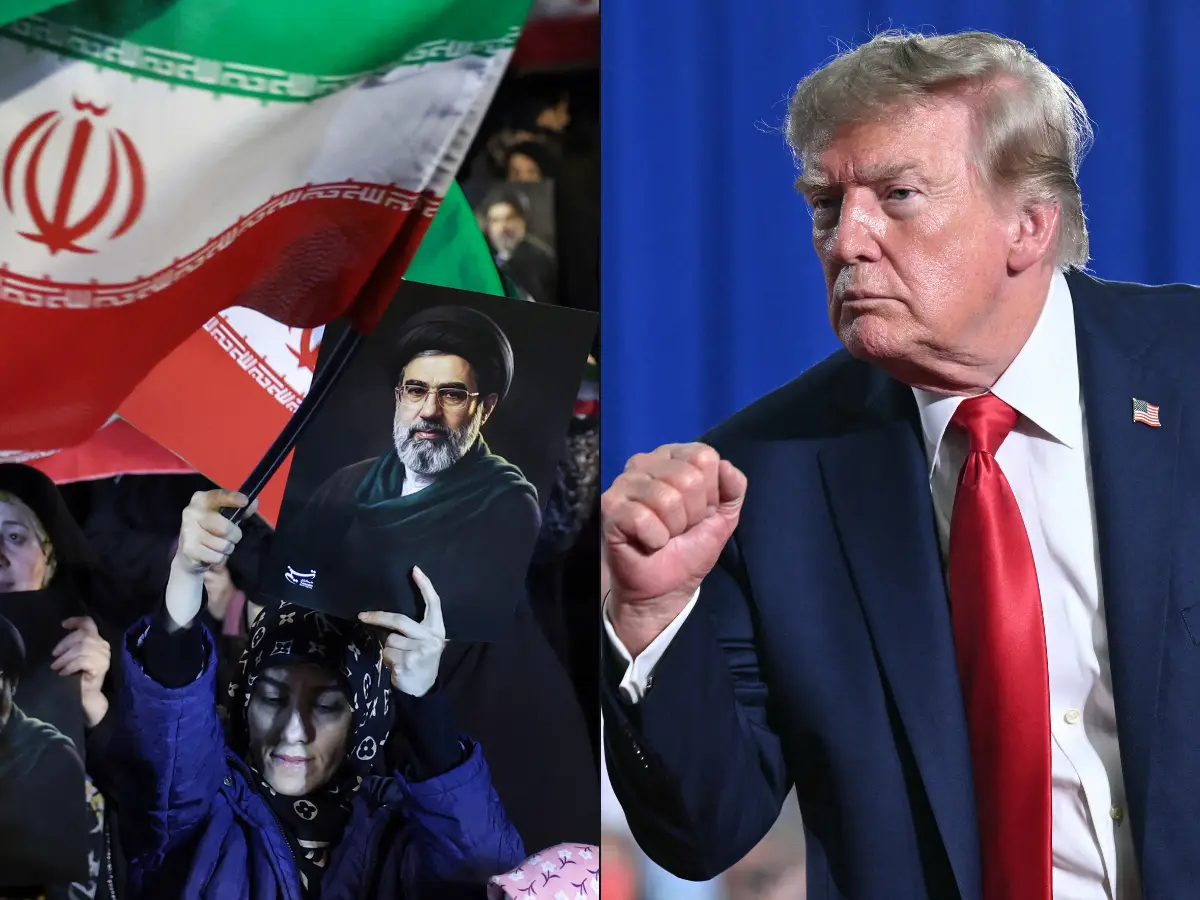)
'If he is dead, they're putting on a pretty good show': Trump casts fresh doubt over Mojtaba Khamenei's fate
)
Man arrested near US Capitol with guillotine in pickup truck: What happened?
&im=FitAndFill=(700,400))
Why the Su-30MKI cockpit is painted bright turquoise green
In a post on X, US Central Command said that the vessels, M/T Sea Star III and M/T Sevda, were entering an Iranian port on the Gulf of Oman. CENTCOM enforced blockade measures against the two unladen oil tankers, with F/A-18 Super Hornet from USS George H.W. Bush (CVN 77) disabling them after firing munitions.
It added that US forces earlier disabled the Iranian-flagged M/T Hasna on May 6 when it attempted to move towards an Iranian port in the Gulf of Oman. The vessel was disabled with an F/A-18 Super Hornet from USS Abraham Lincoln (CVN 72).
“All three vessels are no longer transiting to Iran,” CENTCOM said.
Tensions have remained in the West Asian water despite a fragile ceasefire between the US and Iran, with both sides enforcing their blockades. Tehran has blocked the most crucial waterway, the Strait of Hormuz, triggering a global energy supply crisis. Meanwhile, peace talks remained stalled.
Disclaimer: WION takes utmost care to accurately and responsibly report ongoing conflicts in West Asia involving Israel, Iran, the US, Gulf nations and non-state actors like Hezbollah, Hamas, Houthis, Islamic State, and others. Claims and counterclaims, disinformation and misinformation are being made online and offline. Given this context, WION cannot independently verify the authenticity of all statements, social media posts, photos and videos.

