

&imwidth=800&imheight=600&format=webp&quality=medium "‘All is not well with the UN’: Jaishankar slams Pakistan over protecting terror outfit TRF in UNSC")
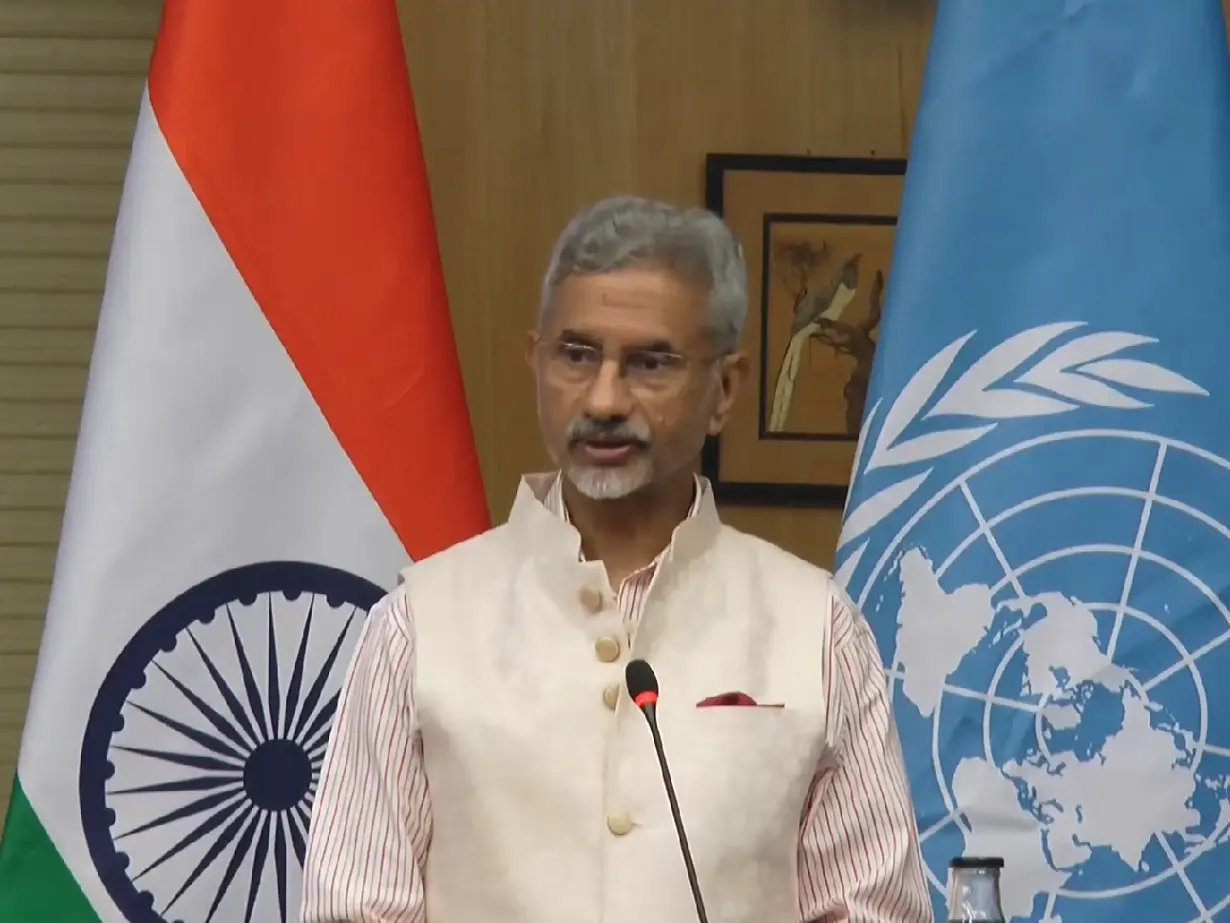
India’s External Affairs Minister S Jaishankar said on Friday that all is not well with the United Nations, as its debates have become “increasingly polarised” and its working “visibly gridlocked,” and any meaningful reform is obstructed using the reform process itself. Speaking at the launch of a commemorative postage stamp in New Delhi to mark the 80th anniversary of the United Nations (UN), Jaishankar also slammed Pakistan for protecting the terror outfit that claimed responsibility for the Pahalgam attack at the UN Security Council and highlighted the incident to point out that the global body’s work has been “gridlocked” in the absence of urgent reforms.
Jaishankar also criticised those equating victims and perpetrators of terrorism in the name of global strategy, in an apparent reference to the hyphenation of India and Pakistan in the context of the dastardly terror strike.
Also Read: Fresh US strike on Venezuelan gang’s drug-smuggling boat kills 6 narco-terrorists, says Hegseth
“We must also recognize that all is not well with the United Nations. Its decision-making neither reflects its membership nor addresses global priorities. Its debates have become increasingly polarized and its working visibly gridlocked. Any meaningful reform is obstructed using the reform process itself,” he said.
Referring to Pakistan without mentioning its name, Jaishankar said, “When a sitting Security Council member openly protects the very organization that claims responsibility for the barbaric terror attack such as at Pahalgam, what does it do to the credibility of multilateralism?”
Also Read: Trump pardons convicted Binance founder Changpeng Zhao having ties with family crypto venture
“Similarly, if victims and perpetrators of terrorism are equated in the name of global strategy, how much more cynical can the world get. When self-proclaimed terrorists are shielded from the sanctioning process, what does it say for the sincerity of those involved,” he added.
Pakistan is currently a member of the UN Security Council and was the chair of the top global body in the month of July.
The UNSC has 15 members, including five permanent ones, namely China, France, Russian Federation, the United Kingdom, and the United States, while 10 non-permanent member nations are elected for two-year terms by the General Assembly.
The Resistance Front (TRF), a proxy of the Lashkar-e-Taiba (LeT) terror group, had claimed responsibility for the Pahalgam terror attack.
TRF was mentioned in a UNSC report in July for its role in the Pahalgam attack, but Pakistan had attempted to remove references to TRF in the UNSC press statement condemning the Pahalgam attack.
Jaishankar also said that the UN has failed to address pressing issues. “If the maintenance of international peace and security has become lip service, the predicament of development and socio-economic progress is even more serious,” he said.
Trending Stories
&imwidth=180&imheight=135&format=webp&quality=medium)
Brendan Taylor overtakes Andy Flower to become Zimbabwe’s leading ODI run-scorer
&im=FitAndFill=(700,400)&imwidth=180&imheight=135&format=webp&quality=medium)
What is the real meaning behind Pete Hegseth's tattoos?
&imwidth=180&imheight=135&format=webp&quality=medium)
Kenyan cult leader found guilty over starvation deaths of nearly 200 children
&imwidth=180&imheight=135&format=webp&quality=medium)
Flying car race: Alef Aeronautics welcomes Tesla Roadster '11 years' later, but are the two models the same?
&imwidth=180&imheight=135&format=webp&quality=medium)
France is burning. Trump blames immigrants. But who is answering Europe's real questions? | The Verdict
&imwidth=180&imheight=135&format=webp&quality=medium)
Shastri backs Shami comeback; lauds Bhuvi and warns Bumrah on format workload ahead of World Cup
&imwidth=180&imheight=135&format=webp&quality=medium)
Netanyahu rival Benny Gantz quits Israel election race, vows to push for unity government
&imwidth=180&imheight=135&format=webp&quality=medium)
US Midterm 2026: What do opinion polls and prediction markets say less than two weeks before voting
&imwidth=180&imheight=135&format=webp&quality=medium)
WATCH | Albania protesters set Supreme Court on fire as anti-Rama riots escalate
&imwidth=180&imheight=135&format=webp&quality=medium)
Trump Commerce Secretary Howard Lutnick’s family fortune more than doubles to $7.3 billion, outpacing his boss
&im=FitAndFill=(700,400)&imwidth=180&imheight=135&format=webp&quality=medium)
Ghaziabad is world's fastest-growing city; Surat, Patna, Rajkot also feature on list
&imwidth=180&imheight=135&format=webp&quality=medium)
‘Spare India from anarchy’: Over 400 Indian-origin academics from MIT, Oxford condemn anti-CEC protests
&imwidth=180&imheight=135&format=webp&quality=medium)
WATCH | Japan launches historic mission to collect samples from Mars' moon Phobos
&imwidth=180&imheight=135&format=webp&quality=medium)
Pakistan betrays Iran, shuts border, trade as Trump moves towards new war
&imwidth=180&imheight=135&format=webp&quality=medium)
PCB omits Atherton, Hussain from tri-series commentary panel over Imran Khan interview row
&imwidth=180&imheight=135&format=webp&quality=medium)
US Congressman Raja Krishnamoorthi describes foiled temple attack as ‘divine intervention’, criticises Vance and MAGA rhetoric
&imwidth=180&imheight=135&format=webp&quality=medium)
Trump calls on New Mexico to become 'New America', claims 'home values and incomes would rise'
&imwidth=180&imheight=135&format=webp&quality=medium)
9/11 case: US Supreme Court rejects plea deal appeal by alleged mastermind Khalid Sheikh Mohammed
&imwidth=180&imheight=135&format=webp&quality=medium)
Girl 'dead' for 8 hours wakes up at her own funeral, dad insists she wasn't breathing
&imwidth=180&imheight=135&format=webp&quality=medium)
Pujara says 'Samson and Vaibhav cannot be in Playing XI' for India on NZ tour
&imwidth=180&imheight=135&format=webp&quality=medium)
One dead after shooting near mosque in Columbus, Ohio. Here's what we know so far
&imwidth=180&imheight=135&format=webp&quality=medium)
Watch: Trump predicts Netanyahu’s victory, says ‘You’re the man I want by my side’
&im=FitAndFill=(700,400)&imwidth=180&imheight=135&format=webp&quality=medium)
New OTT releases this week (October 19-25, 2026): Gajab Raat to Chaar Yaar-8 titles to watch during Dussehra week on Netflix, Prime Video and more
&imwidth=180&imheight=135&format=webp&quality=medium)
Baby orangutan rescued in India returns to Indonesia
&imwidth=180&imheight=135&format=webp&quality=medium)
India moves to buy 10,000 more AI chips for a national compute pool open to startups
&imwidth=180&imheight=135&format=webp&quality=medium)
'Whatever I can do to end this war': Trump floats China Summit with Putin and Xi, questions Zelensky's role in peace talks
&imwidth=180&imheight=135&format=webp&quality=medium)
WATCH | Viral video shows woman jogging past burning barricade amid Paris unrest, sparks online debate
&imwidth=180&imheight=135&format=webp&quality=medium)
'Paris is going to be a Muslim city very soon': Trump blames immigration for France unrest, urges Macron to tighten border policies
&imwidth=180&imheight=135&format=webp&quality=medium)
'We feel like Mr India': Gujarat’s undercover SHE team guard garba nights at Navratri
&imwidth=180&imheight=135&format=webp&quality=medium)
Cattle-feed bran in biscuits, detergent in milk: FSSAI acts against 3 companies
&imwidth=180&imheight=135&format=webp&quality=medium)
'It's a joy to see the makers bring it on such a grand scale': SS Rajamouli on Ramayana
&imwidth=180&imheight=135&format=webp&quality=medium)
Priest dies after crucifix falls on his head during livestreamed Mass in Ecuador | VIDEO
&imwidth=180&imheight=135&format=webp&quality=medium)
Ramayana advance booking: Ranbir Kapoor, Yash's film cross $500K ahead of Diwali release
&imwidth=180&imheight=135&format=webp&quality=medium)
US midterm elections 2026: Early voting picks up pace ahead of November 3 polls
“Yet, on such a notable anniversary, we cannot abandon hope. However difficult, the commitment to multilateralism must remain strong. However flawed, the United Nations must be supported in this time of crisis,” Jaishankar emphasised.

