Tri-service coordination: How the Indian Army, Navy and Air Force worked together in Operation Vijay

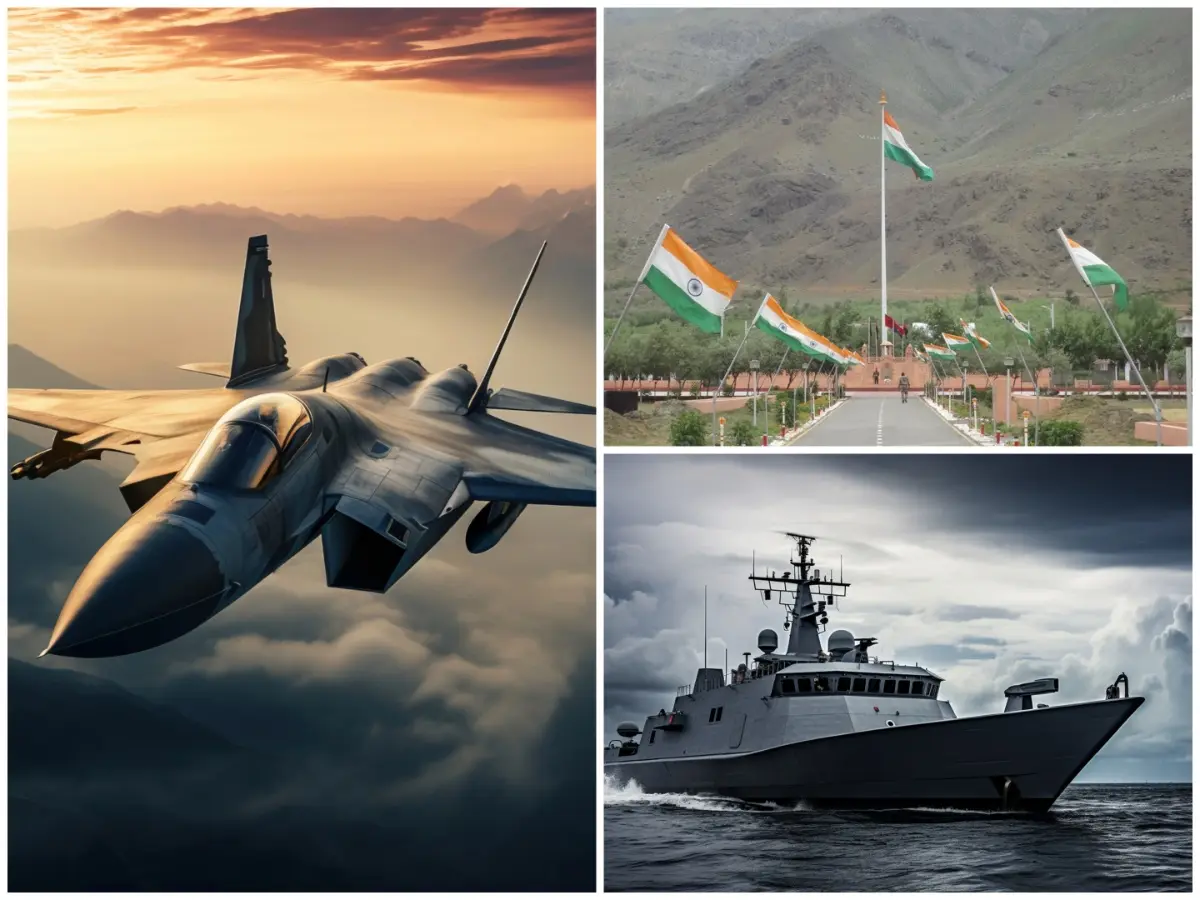&imwidth=600&imheight=450&format=webp&quality=medium "Tri-service coordination: How the Indian Army, Navy and Air Force worked together in Operation Vijay")
Representative image. Photograph: (Wikimedia Commons & Magnific)
Indian troops faced unprecedented challenges during the war, where soldiers had to climb nearly vertical cliffs under enemy fire along with heavy equipment. In addition, oxygen levels were quite low, temperatures remained below freezing and artillery support was also frequently limited.
Kargil Vijay Diwas, commemorated annually on July 26, marks India's victory in the 1999 Kargil War. It honours the lives of 527 soldiers who died during Operation Vijay and pays tribute to the courage of thousands who fought in the icy heights of Kargil, the toughest battlefields in the world.
Nearly twenty-seven years after Indian soldiers reclaimed the strategic heights, the legacy of the Kargil War continues to influence India's military doctrine, defence modernisation and national security strategy. Fought between May and July 1999, the war remains the only conventional warfare between two nuclear-armed neighbours. The battle was fought at elevations above 5,000 metres, spanning the rugged terrain of Kargil, Dras, Batalik, Mushkoh and Kaksar of the Ladakh region.
Tri-service coordination
The 1999 Kargil War stands out not just as a military victory at the world's toughest battlefields but as a defining example of coordinated tri-service warfare in Indian military history. While the Indian Army spearheaded Operation Vijay on the ground, reclaiming peak after peak from Pakistani infiltrators, the Indian Air Force launched Operation Safed Sagar on May 26, 1999, providing critical air support in some of the most challenging high-altitude combat conditions ever faced by the IAF.
Simultaneously, the Indian Navy deployed its fleet in the Arabian Sea, applying strategic pressure on Pakistan and safeguarding maritime approaches, even though the conflict itself was confined to the mountains of Ladakh.
Trending Stories
)
)
)
)
)
)
)
)
)
&im=FitAndFill=(700,400))
)
)
)
)
)
)
)
)
)
)
)
&im=FitAndFill=(700,400))
)
)
)
)
)
)
&im=FitAndFill=(700,400))
&im=FitAndFill=(700,400))
This coordinated approach, infantry battling at altitudes exceeding 5,000 metres, fighter jets striking enemy positions in thin air, and naval assets projecting power at sea, reflected a strategy of "contain, evict and deny." The synchronised effort across all three services proved instrumental in reclaiming Indian territory without crossing the Line of Control.
However, a war at such a level was not as easy as we think. During the operation, Indian troops faced unprecedented challenges. Soldiers had to climb nearly vertical cliffs under enemy fire along with heavy equipment. In addition, oxygen levels were quite low, temperatures remained below freezing and artillery support was also frequently limited by the difficult terrain.

