Study in Israel shows humans stood tall in front of climate change 6,500 years ago

&imwidth=600&imheight=450&format=webp&quality=medium "Study in Israel shows humans stood tall in front of climate change 6,500 years ago")
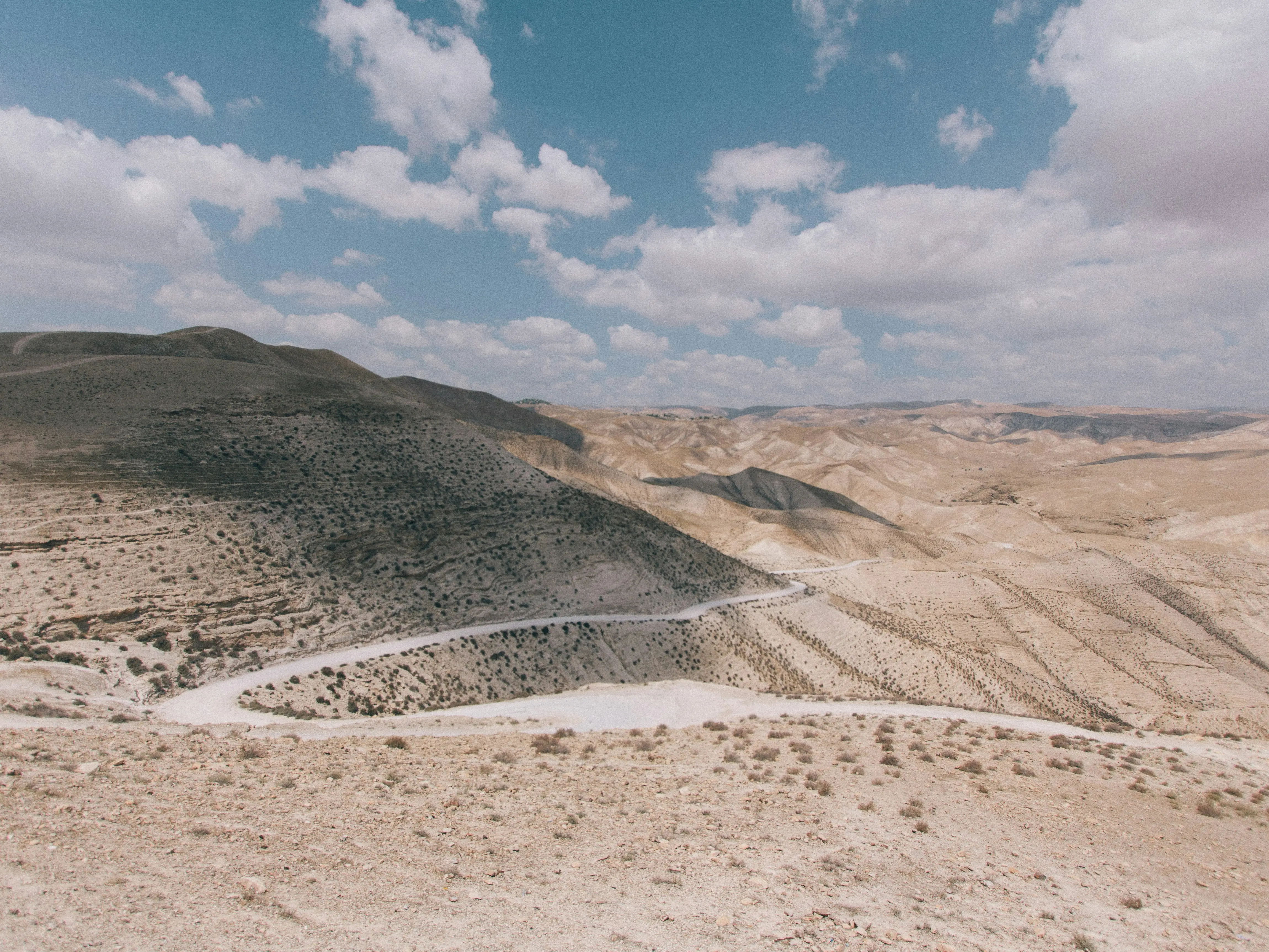
Ancient humans fought droughts with novel ways and did not necessarily retreat. Photograph: (Unsplash)
Droughts have typically been known to trigger migration and population decline in ancient societies. However, a study in Israel has found that humans devised methods to survive these conditions instead of retreating.
A study by an international team of scientists has found evidence that humans found a way to adapt to extreme climate changes instead of collapsing or relocating thousands of years ago. Ancient mud drilled from the Carmel Coast in northern Israel has thrown light on 4,000 years of environmental history in the ancient Mediterranean. The researchers said their findings prove that human societies survived through droughts. Senior author Tom Levy said, "People have always been problem solvers." Environmental stress did not stress them, and they developed new technologies and strategies to overcome it. The study was published last month in the Quaternary Science Reviews.
Scientists state that they did not find a "direct correlation between environmental changes and settlement reorganisation from 8,000 to 4,000 years ago." The researchers say human societies did not always reside near favourable regions. Gilad Shtienberg, the paper’s first author, told Times of Israel that humans came up with creative ways to live through harsh conditions. "During the Neolithic period, many communities were concentrated near reliable freshwater sources...during the Chalcolithic period, populations expanded into the more semi-arid Beersheba valley," he said. Also Read: Sea ice twice the size of Rajasthan goes missing from Antarctica in winter
Humans came up with ways to live through droughts
So the communities developed new strategies to survive. They came up with early floodwater farming systems, where seasonal floods were used to divert water into the agricultural fields, one of the early forms of irrigation. Instead of relying on rainfall, they planted crops like barley "under managed irrigation rather than relying solely on rainfall." Also Read: World Environment Day in the age of AI - Are humans sacrificing the climate for data centres?
For the study, the researchers dug 52 feet into the Earth and retrieved layers of ancient mud. They were like a time capsule recording changes over centuries. Inside them, they found a clue to climate fluctuations in the form of objects like tiny shells, pollen grains, charred plant fragments and chemical traces. All these elements indicated the climate at the time. For eg. Freshwater snails and mussels indicated rain, while charcoal revealed erosion, and pollen and seeds showed the kind of plants. Also Read: Sea ice twice the size of Rajasthan goes missing from Antarctica in winter
Piecing them together, the team created a climate timeline spanning 4,000 to 8,000 years. They found that annual rainfall had dropped by half by around 6,500 years ago along Israel’s coast. A severe drought gripped the region around 4,200 years ago. They compared this data with existing archaeological information to determine if the population declined at this time. They found that the societies found novel ways to deal with the dry conditions instead of moving away.
)
)
)
)
)
)
)
)
)
)
)
)
)
)
)
)
)
)
)
)
)
)
)
)
)
)
)
)
)
)
)
)
)
)
)
)
)

