

&imwidth=800&imheight=600&format=webp&quality=medium "No sunlight, no chlorophyll, no problem: Meet 'demon flower' discovered in Thailand")
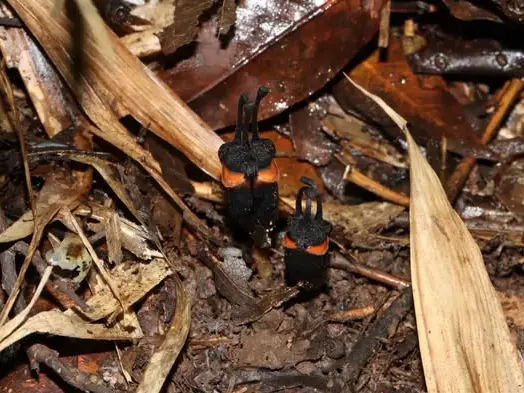
Scientists have discovered a new species of leafless flowering plant that grows on the forest floor of a national park in western Thailand. The findings revealed that the plant belongs to Thismia, a genus of tiny species also known as "fairy lanterns." The distinctive quality of these plants is that they lack chlorophyll and do not carry out photosynthesis. Instead, they produce their food from fungi beneath the earth's surface and also remain concealed beneath layers of leaf litter for nearly their entire lives.
The plant's new species was discovered by botanists from Chulalongkorn University and Prince of Songkla University while surveying Thong Pha Phum National Park. The plant was found growing at an elevation of approximately 1,000 meters, an unusually high and seasonally dry setting for this genus.
"Finding Thismia daemona in Thong Pha Phum National Park was indeed a major surprise," said Dr Sahut Chantanaorrapint of Prince of Songkla University. "Typically, Thismia species are known to occur in perennially humid lowland rainforests. However, this population was discovered in a seasonal, montane evergreen forest at an elevation of nearly 1,000 meters above sea level," he added.
Thismia daemona as devil-like essence
This discovery also reshapes scientists' understanding of where this group of plants is found. Thismia daemona is part of the Thismia section Geomitra, previously known to exist only in Peninsular Malaysia, Borneo, and Sumatra. Its discovery in Thailand marks the first time the section's known range has extended further north.
Trending Stories
&imwidth=180&imheight=135&format=webp&quality=medium)
Punjab CM Bhagwant Mann allegedly detained for three hours at Delhi airport, fined ₹50,000: AAP
&imwidth=180&imheight=135&format=webp&quality=medium)
France protests: 'Block everything' movement escalates as public fury over austerity grows; over 200 arrested. Here's all you to need to know
&imwidth=180&imheight=135&format=webp&quality=medium)
Far-left parties, global networks among 54 groups linked to France protests, only 16 are youth outfits: Report
&imwidth=180&imheight=135&format=webp&quality=medium)
After France unrest, Italy tightens security amid violent protests in Milan
&imwidth=180&imheight=135&format=webp&quality=medium)
US midterms 2026: Red seats once deemed safe now appear shaky as Republicans spend big on ads
&imwidth=180&imheight=135&format=webp&quality=medium)
Musk ordered Starlink restrictions that caught Ukraine off guard amid escalating tensions: Report
&imwidth=180&imheight=135&format=webp&quality=medium)
Boeing 737 MAX10 gets FAA certification, deliveries expected to begin in 2027
&imwidth=180&imheight=135&format=webp&quality=medium)
Trump says he wants Zelensky to 'make a deal' with Russia, asks Putin to release American prisoner Stephen Hubbard
&imwidth=180&imheight=135&format=webp&quality=medium)
Rubio asks India to raise purchases of US energy, tech for security, prosperity
&imwidth=180&imheight=135&format=webp&quality=medium)
Man marries off wife of 17 years to her lover in Uttar Pradesh
&imwidth=180&imheight=135&format=webp&quality=medium)
'What's wrong with you? Are you a sick person?': Trump at it again as he snaps at reporters, faces backlash
&imwidth=180&imheight=135&format=webp&quality=medium)
Ramayana advance booking: Ranbir Kapoor, Yash's film cross $500K ahead of Diwali release
&imwidth=180&imheight=135&format=webp&quality=medium)
Iran rejects US talks until demands are met, rules out moving enriched uranium out of the country
&imwidth=180&imheight=135&format=webp&quality=medium)
Over 100 US lawmakers urge FBI to probe foiled Hindu temple shooting as hate crime
&imwidth=180&imheight=135&format=webp&quality=medium)
PAK vs ENG: Arafat Minhas, Hasan Nawaz shine as Pakistan beat England by 87 runs
&im=FitAndFill=(700,400)&imwidth=180&imheight=135&format=webp&quality=medium)
What is the real meaning behind Pete Hegseth's tattoos?
&imwidth=180&imheight=135&format=webp&quality=medium)
WATCH | Albania protesters set Supreme Court on fire as anti-Rama riots escalate
&imwidth=180&imheight=135&format=webp&quality=medium)
Feds obtain DNA evidence that could prove Ilhan Omar married her brother: Report
&imwidth=180&imheight=135&format=webp&quality=medium)
RAF Fairford security scare: UK re-arrests two men over suspected Iran links
&imwidth=180&imheight=135&format=webp&quality=medium)
US midterms 2026: With Republicans spending big, Bloomberg opens his wallet for Democrats. Here's how much he is pouring
&imwidth=180&imheight=135&format=webp&quality=medium)
India calls for formal migration agreement with Cyprus to protect Indian workers, students
&im=FitAndFill=(700,400)&imwidth=180&imheight=135&format=webp&quality=medium)
Priyanka Chopra to Shilpa Shetty: 6 Bollywood actresses and their fitness secrets
&imwidth=180&imheight=135&format=webp&quality=medium)
Elon Musk will give away one SpaceX share to each American child. That comes to $10.5bn
&imwidth=180&imheight=135&format=webp&quality=medium)
Iranian woman, 23, handed death sentence for ‘blasphemy’ in social media post; appeals for help
&imwidth=180&imheight=135&format=webp&quality=medium)
Dandiya Nite ’26: Indian High Commissioner hails diaspora as bridge between India and Nigeria
&imwidth=180&imheight=135&format=webp&quality=medium)
Tiger Shroff firing incident: Four arrested in arms supply probe, two women allegedly sent weapons to Mumbai
&imwidth=180&imheight=135&format=webp&quality=medium)
'They are not even telling us' - Mysterious metallic object discovered in Minnesota field
&imwidth=180&imheight=135&format=webp&quality=medium)
Pujara says 'Samson and Vaibhav cannot be in Playing XI' for India on NZ tour
&imwidth=180&imheight=135&format=webp&quality=medium)
Asian Para Games 2026: India adds 24 medals on Day 2, remains sixth in standings
&imwidth=180&imheight=135&format=webp&quality=medium)
Shastri backs Shami comeback; lauds Bhuvi and warns Bumrah on format workload ahead of World Cup
&im=FitAndFill=(700,400)&imwidth=180&imheight=135&format=webp&quality=medium)
New OTT releases this week (October 19-25, 2026): Gajab Raat to Chaar Yaar-8 titles to watch during Dussehra week on Netflix, Prime Video and more
&imwidth=180&imheight=135&format=webp&quality=medium)
The Verdict | Trump, Putin and Xi: A superpower triangle that could reshape global diplomacy
&imwidth=180&imheight=135&format=webp&quality=medium)
India moves to buy 10,000 more AI chips for a national compute pool open to startups
&imwidth=180&imheight=135&format=webp&quality=medium)
US midterms 2026: Trump pledges $400 million for Republican candidates as election day nears
&imwidth=180&imheight=135&format=webp&quality=medium)
'US will never part with niche technology' former IAF assistant chief on India's fighter jet ambitions
The plant's dramatic name stems from its unusual appearance. Its flower, mostly black, features horn-like structures rising from a dome-shaped "mitre," while bright reddish-orange patches near its base resemble glowing eyes, giving it a demon-like look. "Combined with its hidden, subterranean, and mysterious lifestyle on the forest floor, our team unanimously agreed that naming it Thismia daemona perfectly captured its enigmatic and devil-like essence," Dr Chantanaorrapint said.
Scientists also claimed that the survival of the new species may be at risk. Therefore, it has been provisionally assessed as Critically Endangered. In response, Dr Chantanaorrapint believed that the participation of nearby communities will help in protecting the plant and its fragile habitat.
"A key next step is adopting a sustainable conservation approach aligned with the UNESCO Man and the Biosphere concept, harmonising biodiversity conservation with human engagement. Inspiring local people to take pride in their natural heritage not only safeguards the microhabitat, but also supports sustainable, community-led ecotourism," Dr. Chantanaorrapint further said.

