'Shy and watchful' monkey with no thumb and orange lips discovered in Africa

&imwidth=600&imheight=450&format=webp&quality=medium "'Shy and watchful' monkey with no thumb and orange lips discovered in Africa")
Monkey with orange and pink lips discovered in Democratic Republic of Congo. Photograph: (Kate Detwiler and Junior Amboko)
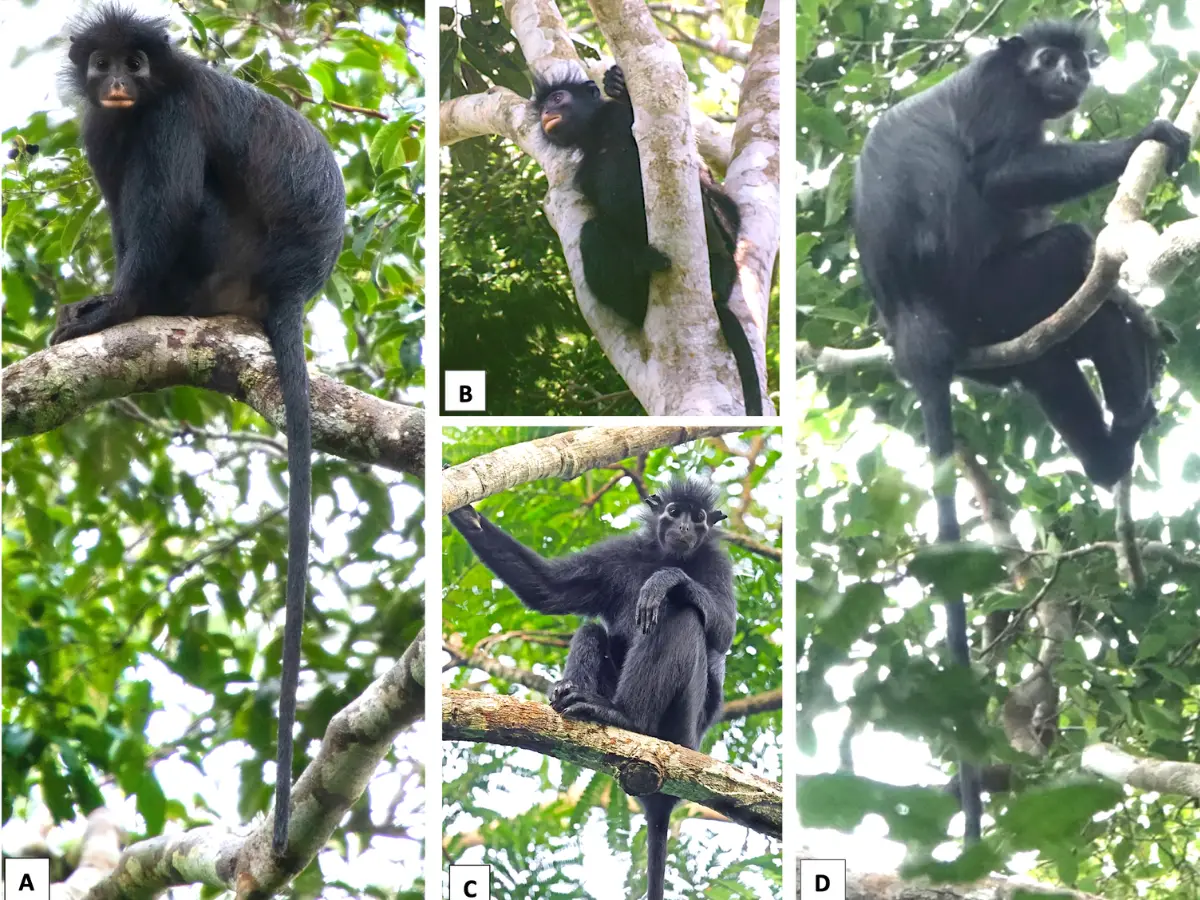
Democratic Republic of Congo has revealed a new monkey species with orange and pink lips and bright facial hair. The animals also make a distinct roar. It has been named Colobus congoensis, and is apparently shy and watchful.
A monkey species that was first seen in 2008 has finally been confirmed 18 years later. The primate with orangish-pink lips and black fur lives in the forests of the Democratic Republic of Congo. Researchers photographed it in the dense tropical forests of Lomami National Park. It is only the fifth African monkey species to be discovered in the last 75 years. The findings have been published in PLOS One, and it has been named Colobus congoensis, locally known as Likweli.
Conservationists took a blurry photo of the monkey in 2008 during an expedition. It was new and different, but they did not see it again. The unidentified primate was again seen 10 years later. So scientists decided to officially look for it. Their work bore fruit as over the next four years, they saw the creature 114 times between the Lomami and Lilo rivers. The team described the monkey as "quiet, shy and with a watchful nature."
Kate Detwiler and Junior Amboko, from Florida Atlantic University, said that instead of fleeing, these monkeys climbed higher into the canopy and watched them. "It often feels as though we’re studying each other," they said. Several people in the region already knew about the monkeys. The researchers interviewed people in 52 villages in the nearby areas, and only people in eight villages said they had seen them.
"These are really important African monkeys that don't have thumbs," Detwiler said. The monkeys have bright facial markings, which the team thinks could be a way to attract partners to mate, and could also be used for identification purposes.
Another unique feature is their loud roar. "You often hear them, but don't see them," said Amboko. The roar can be heard over long distances. The sounds they make are acoustically distinct from those of other colobus monkeys. This was another reason the team was sure they had encountered a unique species.
They also said that they are hunted for meat, and are hoping that the Colobus congoensis classification would lead them to be termed a distinct species so they can be officially protected.
&imwidth=280&imheight=210&format=webp&quality=medium)
&imwidth=280&imheight=210&format=webp&quality=medium)
&imwidth=280&imheight=210&format=webp&quality=medium)
&im=FitAndFill=(700,400)&imwidth=280&imheight=210&format=webp&quality=medium)
&imwidth=280&imheight=210&format=webp&quality=medium)
&imwidth=280&imheight=210&format=webp&quality=medium)
&imwidth=280&imheight=210&format=webp&quality=medium)
&imwidth=280&imheight=210&format=webp&quality=medium)
&imwidth=280&imheight=210&format=webp&quality=medium)
&imwidth=280&imheight=210&format=webp&quality=medium)
&imwidth=280&imheight=210&format=webp&quality=medium)
&imwidth=280&imheight=210&format=webp&quality=medium)
&imwidth=280&imheight=210&format=webp&quality=medium)
&imwidth=280&imheight=210&format=webp&quality=medium)
&imwidth=280&imheight=210&format=webp&quality=medium)
&imwidth=280&imheight=210&format=webp&quality=medium)
&imwidth=280&imheight=210&format=webp&quality=medium)
&imwidth=280&imheight=210&format=webp&quality=medium)
&imwidth=280&imheight=210&format=webp&quality=medium)
&imwidth=280&imheight=210&format=webp&quality=medium)
&imwidth=280&imheight=210&format=webp&quality=medium)
&im=FitAndFill=(700,400)&imwidth=280&imheight=210&format=webp&quality=medium)
&imwidth=280&imheight=210&format=webp&quality=medium)
&imwidth=280&imheight=210&format=webp&quality=medium)
&imwidth=280&imheight=210&format=webp&quality=medium)
&imwidth=280&imheight=210&format=webp&quality=medium)
&imwidth=280&imheight=210&format=webp&quality=medium)
&imwidth=280&imheight=210&format=webp&quality=medium)
&imwidth=280&imheight=210&format=webp&quality=medium)
&imwidth=280&imheight=210&format=webp&quality=medium)
&imwidth=280&imheight=210&format=webp&quality=medium)
&imwidth=280&imheight=210&format=webp&quality=medium)
&imwidth=280&imheight=210&format=webp&quality=medium)
&imwidth=280&imheight=210&format=webp&quality=medium)
&im=FitAndFill=(700,400)&imwidth=280&imheight=210&format=webp&quality=medium)

