

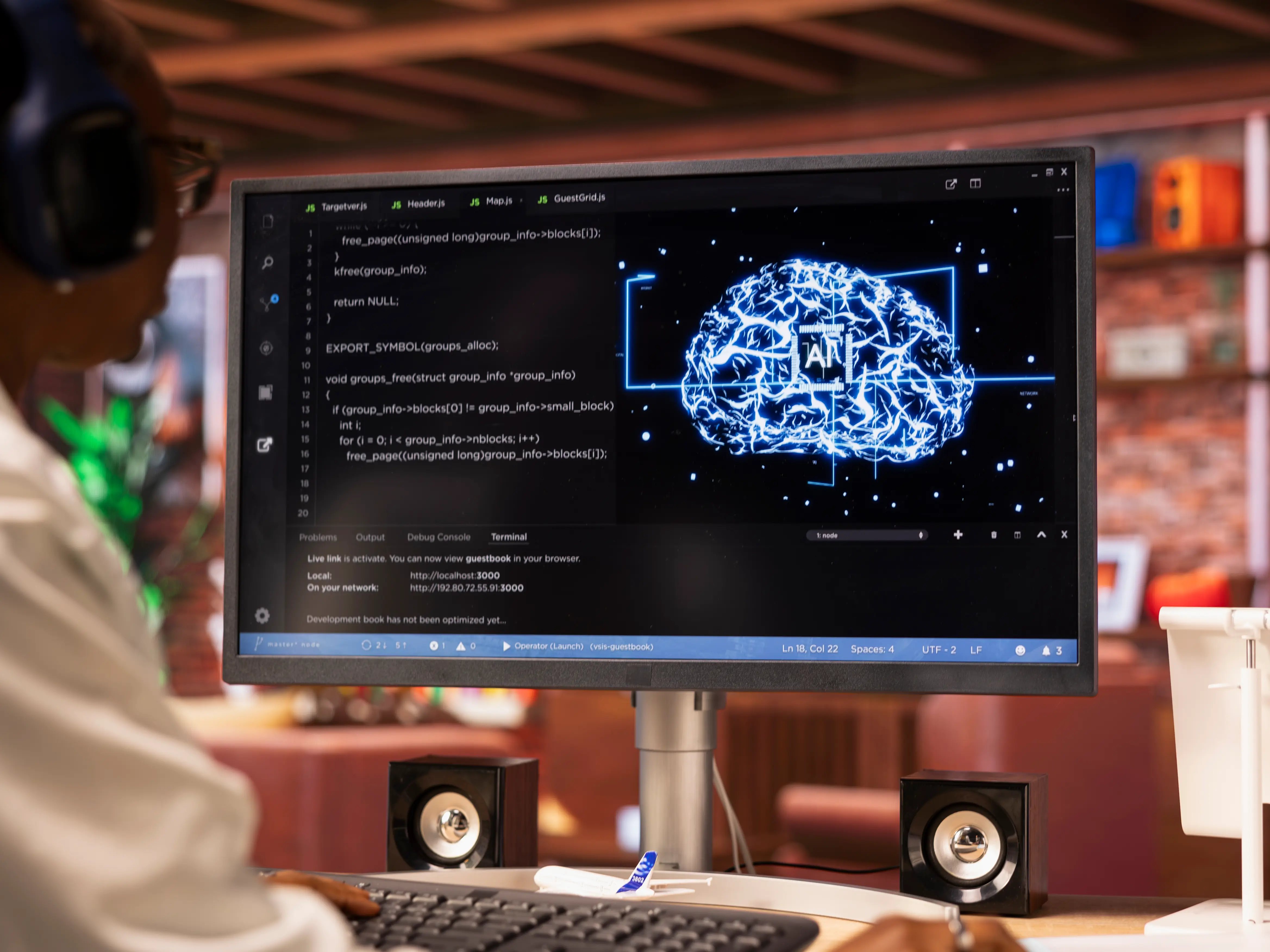
&imwidth=800&imheight=600&format=webp&quality=medium "From rote learning to chat-native learning: How AI is changing way students prepare for competitive exams")
Competitive exam preparation in 2026 looks quite different from the rote memorisation of previous generations, where students were vastly reliant on varied sources, materials and notes from multiple institutes or online materials. However, after the introduction of conversational AI tutors like ChatGPT and Claude, the preparation has become very easy and accessible to use.
This chat-native learning now provides answers to questions, generates practice problems, and simulates Socratic dialogues, while multimodal systems like Gemini process text, images, diagrams, and documents simultaneously for visual learning. Other than these tools, other platforms are also utilised for multiple processes and learning while preparing for the competitive exam.
No matter how these technologies change the way of preparation for the student, rote learning can never be completely eradicated, but it will prompt students to opt for a hybrid strategy. Rather than replacing textbooks entirely, the most successful students are still relying on traditional materials for foundational understanding while turning to AI for active practice, question generation, and diagram analysis. Platforms are also personalising the journey of students, allowing aspirants to upload syllabi, track progress, and generate revision schedules, helping identify weak areas over time.
Also read: EXPLAINED: How will India’s new Rs 62,500-crore smartphone manufacturing scheme boost local brands?
Experts on chat-native learning
Several experts have sided with the integration of chatbot learning, which provides better accessibility, time-saving, more resourcesful at single platform and quality of preparation. However, some experts have cautioned students, warning against an "illusion of learning," where over-reliance on AI could weaken students' critical thinking and metacognitive skills, stressing that the goal should be augmentation rather than replacement.
Trending Stories
&imwidth=180&imheight=135&format=webp&quality=medium)
Brendan Taylor overtakes Andy Flower to become Zimbabwe’s leading ODI run-scorer
&imwidth=180&imheight=135&format=webp&quality=medium)
No Kings' Instagram suspended during early-voting campaign
&imwidth=180&imheight=135&format=webp&quality=medium)
'Those who have destroyed must pay': Macron says France feels 'anger and shame' over protest violence
&imwidth=180&imheight=135&format=webp&quality=medium)
Lawrence Bishnoi gang claims responsibility for firing at Tiger Shroff over ties to Salman Khan
&imwidth=180&imheight=135&format=webp&quality=medium)
Flying car race: Alef Aeronautics welcomes Tesla Roadster '11 years' later, but are the two models the same?
&imwidth=180&imheight=135&format=webp&quality=medium)
2.5 lakh cap, 4-passenger limit: What is Delhi's new e-rickshaw draft policy
&imwidth=180&imheight=135&format=webp&quality=medium)
'We are not sitting in ivory towers, we are aware': SC issues notice to Rahul Gandhi, Akhilesh Yadav
&imwidth=180&imheight=135&format=webp&quality=medium)
WATCH | Flames engulf St Petersburg oil sites as Ukraine launches 1,000 drones at Russia
&imwidth=180&imheight=135&format=webp&quality=medium)
Tiger Shroff shows injuries after Juhu firing incident; Eknath Shinde says Mumbai won’t tolerate gang wars
&imwidth=180&imheight=135&format=webp&quality=medium)
Lizard people? Ex-US Army sniper claims soldier killed by 'reptilian beings' in battle near Area 51
&imwidth=180&imheight=135&format=webp&quality=medium)
NFl 2026/27 - Saints vs Steelers to go ahead in Paris next week despite protest
&imwidth=180&imheight=135&format=webp&quality=medium)
4 killed, 19 critically injured in grass fire at Canada's largest military base
&imwidth=180&imheight=135&format=webp&quality=medium)
Nobel laureate Machado, who dedicated prize to Trump, confirmed as Venezuela opposition leader
&imwidth=180&imheight=135&format=webp&quality=medium)
After Kennedy Center and reflecting pool disputes, Trump turns to Washington golf course plan amid legal battle
&imwidth=180&imheight=135&format=webp&quality=medium)
Why France looks the most fragile in the G7 amid protests and budget deadlock
&imwidth=180&imheight=135&format=webp&quality=medium)
Bessent accuses Europe of refusing secondary tariffs on India, China
&imwidth=180&imheight=135&format=webp&quality=medium)
Tel Aviv-Vienna flight makes emergency landing after bomb threat; Bulgarian Air Force scrambles MiG-29 fighter jet
&imwidth=180&imheight=135&format=webp&quality=medium)
‘My president, I mean my husband’: Trump's new press secretary Katie Zacharia's first briefing goes off the rails in 14 minutes
&imwidth=180&imheight=135&format=webp&quality=medium)
China responds to Trump's Press Secretary Katie Zacharia after toilet remark: 'Visit China more often'
&imwidth=180&imheight=135&format=webp&quality=medium)
UAE agrees with Saudi Arabia to rejoin Yemen fight as Houthi strikes rattle Riyadh
&imwidth=180&imheight=135&format=webp&quality=medium)
Cattle feed found in biscuits of Indian company, FSSAI sends legal notice
&imwidth=180&imheight=135&format=webp&quality=medium)
Iran says Hormuz reopening plan remains on table as Trump predicts quick war end
&imwidth=180&imheight=135&format=webp&quality=medium)
Anthropic’s public benefit plan: What its 5% share commitment means for AI’s future
&imwidth=180&imheight=135&format=webp&quality=medium)
MI5 is opening an AI threat centre, and OpenAI just told MPs the worst isn't over
&imwidth=180&imheight=135&format=webp&quality=medium)
WATCH | iPhones, luxury perfumes floating in Hormuz? Iranian fishermen make bizarre discovery
&imwidth=180&imheight=135&format=webp&quality=medium)
Elon Musk features on Lucknow's 'anti-India' Ravan poster alongside Rahul Gandhi, Akhilesh
&imwidth=180&imheight=135&format=webp&quality=medium)
Putin seeks Trump-Xi summit on Ukraine war, proposes talks alongside APEC: Report
&imwidth=180&imheight=135&format=webp&quality=medium)
No Ravindra Jadeja, Yashasvi Jaiswal in India’s 2027 ODI World Cup plans: Report
&imwidth=180&imheight=135&format=webp&quality=medium)
India moves to buy 10,000 more AI chips for a national compute pool open to startups
&imwidth=180&imheight=135&format=webp&quality=medium)
Tiger Shroff attacked by three gunmen in Mumbai, actor safe, two injured
&imwidth=180&imheight=135&format=webp&quality=medium)
Anirudh Ravichander-Kavya Maran wedding: Telangana CM reveals Chennai reception date
&im=FitAndFill=(700,400)&imwidth=180&imheight=135&format=webp&quality=medium)
Tesla Roadster engineering: The hidden hardware behind its flying demonstration
&imwidth=180&imheight=135&format=webp&quality=medium)
US to review Russia sanctions waiver within 60 days as Rubio cites India’s ‘substantial’ Russian energy imports
&imwidth=180&imheight=135&format=webp&quality=medium)
'We feel like Mr India': Gujarat’s undercover SHE team guard garba nights at Navratri
&imwidth=180&imheight=135&format=webp&quality=medium)
Cattle-feed bran in biscuits, detergent in milk: FSSAI acts against 3 companies
&im=FitAndFill=(700,400)&imwidth=180&imheight=135&format=webp&quality=medium)
5 technologies that could make the Tesla Roadster one of the most unusual cars ever built
&imwidth=180&imheight=135&format=webp&quality=medium)
'It's a joy to see the makers bring it on such a grand scale': SS Rajamouli on Ramayana
1. How is AI reshaping competitive exam preparation in India, and what key shifts are you seeing in how students consume and engage with educational content?
Prempreet Singh, Founder & CEO, SkillBytes: The biggest shift is away from consuming more content toward doing more. Students were never short on material; they were short on a daily practice habit. What we see now is a move from passive rote learning, reading and re-reading, toward active recall in small doses. AI makes that possible at scale, delivering the right practice and instant feedback to lakhs of students at once, inside the formats they already use rather than another app they have to open.
2. Why is microlearning and chat-based learning gaining traction, and can these formats address challenges such as shorter attention spans and information overload?
Prempreet Singh, Founder & CEO, SkillBytes: Because it fits how students actually live. A teenager will not defend a thirty-minute study block, but they will finish a five-minute unit inside a chat they are already in. Microlearning works with fragmented attention instead of fighting it, and closes the loop while focus is still warm. It does not solve information overload by adding more; it solves it by shrinking each step until starting is effortless and finishing is the default, not the exception.
3. How can AI-driven personalisation help identify learning gaps and make exam preparation more accessible and outcome-oriented for students across India?
Prempreet Singh, Founder & CEO, SkillBytes: Personalisation is where the technology and our roadmap are heading, not a solved feature anyone should claim today. The direction is clear: an experience that responds to each learner, focusing limited time where a student is weakest rather than teaching to the average. On accessibility, the unlock is delivery: no download, no login, no fixed device, so a student on a shared phone gets the same experience as anyone else. That is what widens access across India, well beyond the metros.
4. What are the key opportunities and challenges for edtech platforms as AI becomes increasingly integrated into mainstream education and test preparation?
Prempreet Singh, Founder & CEO, SkillBytes: The opportunity is reach: quality preparation can now travel to any student on the phone already in their hand. The challenge is discipline. It is easy to add more content and mistake activity for learning. The harder, more valuable work is building genuine habit and being honest about what the technology does today versus what it will do tomorrow. Platforms that overclaim on AI will lose trust; the ones that stay grounded will earn durable engagement.
5. What has SkillBytes observed from student engagement with its AI-led learning approach, and how does the platform see its model evolving over the next few years?
Prempreet Singh, Founder & CEO, SkillBytes: We measure engagement and consistency, not exam outcomes, because that daily return to practice is the leading indicator we are willing to be judged on. Across more than 9,00,000 students and tens of millions of interactions, sessions average over 30 messages, which tells us learning is becoming a habit rather than a one-time signup. Over the next few years, the model deepens across JEE, NEET, and UPSC, and travels beyond India through SAT and IELTS, where the format carries.
Similarly, Kushal Raj Chakravorty, Founder and Managing Trutee- Lotus Petal Foundation, said, “AI can help shift competitive exam preparation from memorising answers to understanding concepts. A student can now ask questions in their own words, get explanations at their own convenience, practise continuously and identify learning gaps with feedback. For students from underserved communities, this is especially powerful because access to quality coaching and personalised academic support has never been equal. However, it is important to note that AI must complement and not replace teachers. The real opportunity is in combining technology with quality teaching so that students learn not just to find the right answer, but to think, question and solve problems independently.”

