
&imwidth=800&imheight=600&format=webp&quality=medium "Did George Washington win US Independence alone? Hidden role of France and Spain")
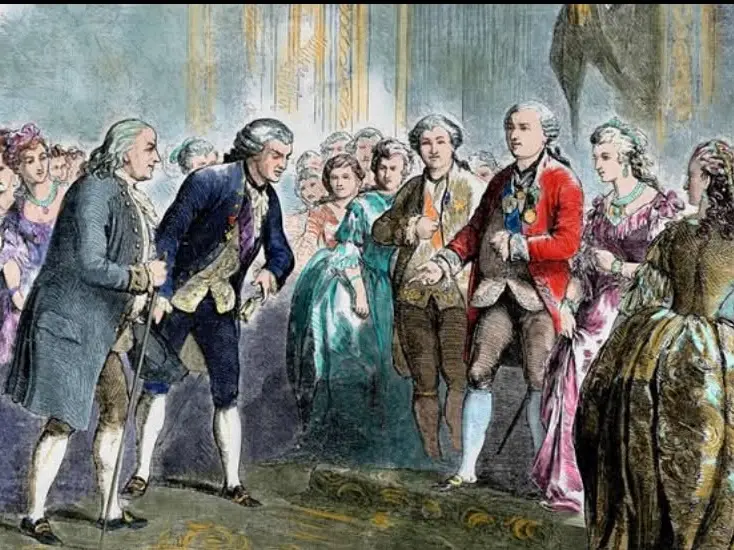
Do you still think that the American Revolutionary War was a singular victory of George Washington and his disorganised troops that alone helped the US to gain its Independence? The historical reality is far more complex, as without massive, coordinated military, naval, and financial interventions from France and Spain, the American rebellion would likely have been destroyed by the then global might of the British Empire.
French intervention: Direct military power
After the Americans won the Battle of Saratoga in 1777, France formally entered the war as an ally of America, turning a local colonial revolt into a bruising transatlantic war. After the intervention, France began to provide the struggling Continental Army with approximately 90 per cent of its gunpowder, uniform shipments and crucial cash loans.

Additionally, France deployed professional land and naval forces, where under the command of the Comte de Rochambeau, and thousands of French soldiers marched alongside Washington. The turning point of the entire war was the Battle of Yorktown in 1781, which helped the French to clinch the decisive victory. The result came when Washington’s troops surrounded British General Cornwallis on land, and the French navy under Comte de Grasse blockaded the Chesapeake Bay, completely cutting off British escape routes and reinforcements, forcing Cornwallis to surrender. This defeat effectively broke the political will of Britain to continue the conflict.
Spanish contribution: Asymmetric strategy
Trending Stories
&im=FitAndFill=(700,400))
How fast can the Sukhoi Su-30 fighter jet really fly?
)
Did China ask its people 'not to respond to aliens'? Origin of bizarre claim on social media
)
MS Dhoni-CSK Fallout? Report claims failed stake sale talks triggered rift
)
Scientists reveal the SAFEST COUNTRY when catastrophe strikes the planet
)
Serial killer on the loose in South Korea's Jeju Island? Fourth body found in three days as more than a dozen people go missing
)
2/3rd of glacier detached, collapsed: ISRO satellite images reveal what triggered Nepal floods
)
Trump once again claims without him there would be ‘no Israel right now’
)
Foreign espionage attacks against German companies surge to 37%, Bitkom report reveals
)
Blake Lively wins partial legal fee from Justin Baldoni after $8M request
)
Why is Pakistan deploying Turkish Bayraktar TB2 drones near India border?
)
'OH MY GOD! We've found other agents!': Investigators discover not one or two, almost 700 OpenAI AI agents went rogue, hacked Hugging Face
)
Lunar eclipse 2026: India timings, places to see and more. August Blood moon factsheet
)
RSS chief Mohan Bhagwat on global outreach tour
)
Both pilots killed as training aircraft crashes in Lucknow – What we know
)
16-year-old charged with preparing terror attack on kindergarten in Norway
&im=FitAndFill=(700,400))
How the S-400 protects itself from enemy attacks
)
Nepal floods: Over 165 dead, 400 missing; US, India, China, World Bank mobilise aid
)
India's multi-layered watch: The new surveillance war
)
5 doomsday planes spotted in US skies hours after CIA director's secret trip to Russia
)
9/11 mastermind Khalid Sheikh Mohammed to finally face trial in 2028, nearly 27 years after horrific attacks
)
Islamabad hospital fire: What we know about one of the biggest facility that housed Imran Khan
)
Workers run for life while filming Nepal flash flood: Scary new visuals emerge from Rasuwa
)
Russian military planes enter South Korean air defence zone amid rising tensions with North Korea: What's happening
)
Ron Weasley Is Back! Rupert Grint set to return to Harry Potter universe on Broadway
)
400-year-old 'vampire' grave in Poland reveals non-existent genetic lineage
)
Dolly Parton, global icon and queen of country music, dies at 80
)
Nepal flash floods: Kailash Mansarovar yatra affected, close to 400 pilgrims out of contact
)
'If he is dead, they're putting on a pretty good show': Trump casts fresh doubt over Mojtaba Khamenei's fate
)
Man arrested near US Capitol with guillotine in pickup truck: What happened?
&im=FitAndFill=(700,400))
Why the Su-30MKI cockpit is painted bright turquoise green
Along with France, Spain also joined Washington in the north, launching a highly effective proxy campaign in the south and west. Spain formally declared war on Great Britain in 1779. Rather than signing a direct alliance with the Americans, Spain focused on dismantling British strongholds along the Gulf Coast and the Mississippi River.
Under the command of the governor of Spanish Louisiana, a brilliant military strategist, Bernardo de Galvez, Spanish troops captured significant British forts at Baton Rouge, Natchez, and Mobile. In 1781, Gálvez led an audacious siege to capture Pensacola, the capital of British West Florida.
Spain's aggressive southern offensive completely forced the British military to divert thousands of troops, ships, and supplies away from Washington’s frontline, permanently fracturing Britain's focus. Furthermore, Spain secured critical supply routes along the Mississippi River, ensuring American patriots received continuous shipments of weapons and blankets. In fact, the final siege at Yorktown was directly kept alive by a massive emergency collection of silver and gold raised by Spanish citizens in Havana, Cuba, which paid for Washington's starving troops.
Ultimately, American independence was the byproduct of a global coalition. Washington was a master coordinator, but it was the vital muscle of French fleets and the strategic pressure of Spanish campaigns that broke the back of the British Empire.

