An ancient idea: World's longest suspension bridge will come up in Italy, spanning over 3.3 km, but it's still a bridge too far

&imwidth=600&imheight=450&format=webp&quality=medium "An ancient idea: World's longest suspension bridge will come up in Italy, spanning over 3.3 km, but it's still a bridge too far")
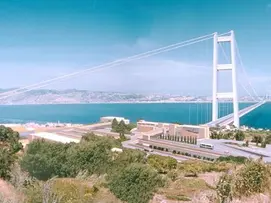
An artist's impression of the Messina bridge Photograph: (Others)
Italy will count the the bridge as a military expenditure, as part of NATO’s 5 per cent GDP defence spending target for the military alliance's members.
Italy has given the final go-ahead to the €13.5 billion ($15.6 billion) Messina Bridge project connecting Sicily to Calabria, which would be the world’s longest suspension bridge when finished. The bridge, spanning 3.3 km will be supported by two 400-metre towers. It will feature two railway lines and three traffic lanes in each direction.
World's longest suspension bridge, 50 years in making
The suspension bridge project has been 50 years in the making. It faced repeated delays and cancellations due to cost, environmental concerns, safety fears, and potential mafia involvement.
Prime Minister Giorgia Meloni called the bridge 'an investment in Italy’s present and future' adding, “We enjoy difficult challenges when they make sense.”
Transport Minister Matteo Salvini claimed the project would be completed between 2032 and 2033.
Italy's Messina Bridge to be counted as defence spending
Trending Stories
&imwidth=280&imheight=210&format=webp&quality=medium)
&im=FitAndFill=(700,400)&imwidth=280&imheight=210&format=webp&quality=medium)
&im=FitAndFill=(700,400)&imwidth=280&imheight=210&format=webp&quality=medium)
&imwidth=280&imheight=210&format=webp&quality=medium)
&imwidth=280&imheight=210&format=webp&quality=medium)
&imwidth=280&imheight=210&format=webp&quality=medium)
&imwidth=280&imheight=210&format=webp&quality=medium)
&imwidth=280&imheight=210&format=webp&quality=medium)
&imwidth=280&imheight=210&format=webp&quality=medium)
&imwidth=280&imheight=210&format=webp&quality=medium)
&imwidth=280&imheight=210&format=webp&quality=medium)
&imwidth=280&imheight=210&format=webp&quality=medium)
&imwidth=280&imheight=210&format=webp&quality=medium)
&imwidth=280&imheight=210&format=webp&quality=medium)
&imwidth=280&imheight=210&format=webp&quality=medium)
&imwidth=280&imheight=210&format=webp&quality=medium)
&imwidth=280&imheight=210&format=webp&quality=medium)
&imwidth=280&imheight=210&format=webp&quality=medium)
&imwidth=280&imheight=210&format=webp&quality=medium)
&imwidth=280&imheight=210&format=webp&quality=medium)
&imwidth=280&imheight=210&format=webp&quality=medium)
&im=FitAndFill=(700,400)&imwidth=280&imheight=210&format=webp&quality=medium)
&imwidth=280&imheight=210&format=webp&quality=medium)
&imwidth=280&imheight=210&format=webp&quality=medium)
&imwidth=280&imheight=210&format=webp&quality=medium)
&imwidth=280&imheight=210&format=webp&quality=medium)
&imwidth=280&imheight=210&format=webp&quality=medium)
&imwidth=280&imheight=210&format=webp&quality=medium)
&imwidth=280&imheight=210&format=webp&quality=medium)
&imwidth=280&imheight=210&format=webp&quality=medium)
&imwidth=280&imheight=210&format=webp&quality=medium)
&imwidth=280&imheight=210&format=webp&quality=medium)
&imwidth=280&imheight=210&format=webp&quality=medium)
Italy will count the the bridge as a military expenditure, as part of NATO’s 5 per cent GDP defence spending target for the military alliance's members.
The Italian government expects the bridge to create 120,000 jobs annually, and help stimulate economic growth in Sicily and Calabria.
Several hurdles remain for the world's longest suspension bridge
The project still needs approval from Italian Court of Auditors, as well as national and European Union environmental agencies. Legal challenges involving local residents who will have to part with their properties will also ensue.
Controversial and divisive: Opposition continues for world's longest suspension bridge project
Italian Senator Nicola Irto called the project 'controversial and divisive,' allegeing the government is diverting funding from essential public services.
Giusy Caminiti, mayor of Villa San Giovanni, said her town would be negatively impacted by the bridge.
A local group "No to the Bridge" dismissed the latest approval as a political stunt, criticising the lack of thorough technical assessment.
What is Strait of Messina Bridge?
The proposed Strait of Messina suspension bridge will will connect Sicily in Torre Faro to mainland Italy at Villa San Giovanni, directly linking the island with the peninsula. The brige will improve transport infrastructure as part of the Berlin–Palermo railway axis of the Trans-European Transport Networks or TEN-T.
Bridging Messina Strait to mainland was an ancient idea
Connecting the Strait of Messina with the mainland was an idea explored since ancient times. Roman, Charlemagne, and medieval rulers made plans which never came true. It's a technical challenges amid strong sea currents.
A century of studies
Modern engineering studies began in the 20th century. designs including tunnels and floating bridges were proposed. The current suspence bridge design was developed in the 1990s. In 2006, a plan was approved, containing four traffic lanes, two rail tracks, and pedestrian paths.