‘AI Cannibalism’: Anthropic accuses Chinese tech giant Alibaba of 29 million adversarial distillation attacks. What is it?

&imwidth=600&imheight=450&format=webp&quality=medium "‘AI Cannibalism’: Anthropic accuses Chinese tech giant Alibaba of 29 million adversarial distillation attacks. What is it?")
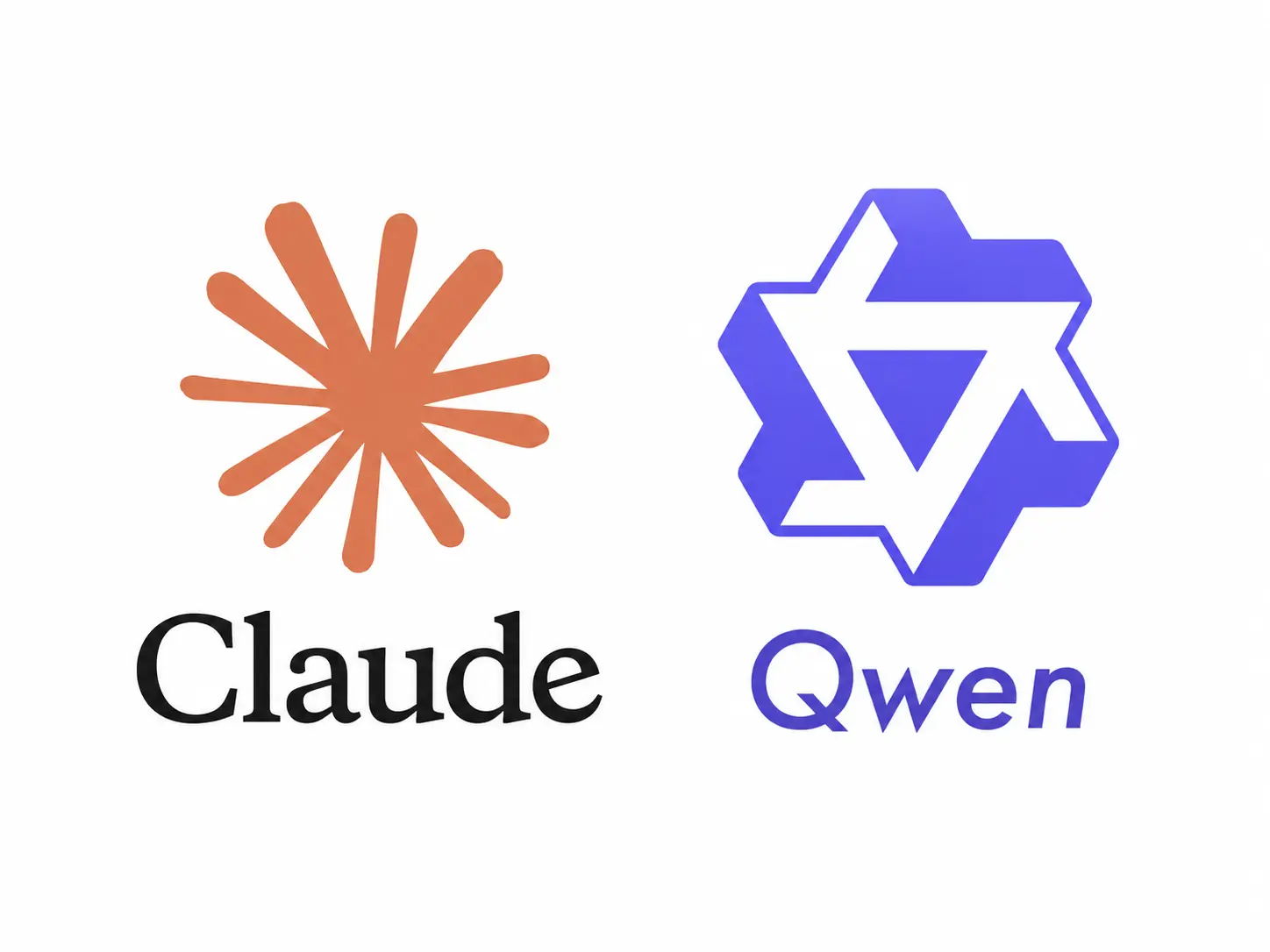
Logos of Athropic's Claude and Alibaba's Qwen Labs are shown here Photograph: (Others)
Anthropic accused Alibaba's Qwen AI lab of carrying out the largest known AI 'distillation attack' on its AI Claude model. Millions of interactions were used to extract advanced AI capabilities, it claimed. But what is a distillation attack?
What could be called 'artificial intelligence cannibalism' is allegedly being committed by Chinese AI firms targeting American AI company Anthropic. In a recent formal complaint, Anthropic publicly accused Chinese tech giant Alibaba's Qwen AI lab of conducting the largest known "adversarial distillation attack" to extract capabilities from its widely used Claude AI models. How does AI distillation work? Here is what you should know.
What is Anthropic accusing Alibaba of doing?
Ahead of the upcoming US Senate hearing on artificial intelligence, Anthropic sent a letter on June 10 to US Senators Tim Scott and Elizabeth Warren of the Senate Committee on Banking, Housing, and Urban Affairs, alleging that millions of ‘AI distillation’ attacks were carried out by Alibaba's AI wing on Claude.
The letter claimed that operators linked to Alibaba and its Qwen AI lab used approximately 25,000 fraudulent accounts to generate more than 28.8 million exchanges with Claude models. These exchanges consisted of interactions and prompts submitted to the AI model over a six-week period between 22 April and 5 June 2026. Anthropic described the attacks as an effort to "brazenly and illicitly" extract Claude's capabilities and called it the largest known distillation attack against the company to date.
What is an 'adversarial distillation attack'?
Trending Stories
)
)
)
)
)
)
)
)
)
)
)
)
)
)
)
)
)
)
)
)
)
&im=FitAndFill=(700,400))
)
)
)
)
)
)
)
)
)
)
)
)
)
)
)
)
)
An adversarial distillation attack is a technique in which a stronger AI model—in this case Claude—is queried at scale to collect high-quality responses and outputs from it. These responses are then used to train or improve weaker or less capable AI models. This method allows attackers to replicate advanced capabilities of large language models (LLMs), including reasoning, coding and agentic behaviour, at a fraction of the original training cost, without direct access to the model's weights or architecture.
AI model distillation is increasingly being used as a low-cost method by competitors, particularly those facing computing or AI chip-related sanctions, to narrow the gap with leading US AI laboratories such as Anthropic, OpenAI and Google. Anthropic has been increasingly vocal about these threats.
Alibaba allegedly targeted Anthropic's agentic reasoning, autonomous and coding capabilities
In the letter, Anthropic claimed that the alleged distillation campaign from China specifically targeted Claude's most valuable and commercially sensitive capabilities, including software engineering, coding, agentic reasoning, autonomous decision-making and task handling. According to the company, Claude's ability to perform long-horizon and complex tasks, as well as its advanced reasoning capabilities, were also targeted.
Anthropic said these actions violated its terms of service and geographic access restrictions, given that Claude is not officially available in China, while allegedly ignoring repeated US government warnings about AI intellectual property theft.
Past instances of AI distillation attacks targeting Anthropic
This is not the first time that American AI companies have faced alleged distillation attacks. In February 2026, Anthropic publicly identified similar, although smaller-scale, campaigns by other Chinese AI labs. The company allegedly recorded around 150,000 exchanges from DeepSeek, more than 3.4 million exchanges from Moonshot AI, and approximately 13 million exchanges from MiniMax. These campaigns were significantly smaller than Alibaba's alleged 28.8 million exchanges.
White House accusations of Chinese "industrial-scale" AI intellectual property theft
Shortly after Anthropic sent the letter, the US Department of Commerce, on June 12, imposed restrictions on access to the company's newest AI models, Mythos and Fable, citing concerns that they could be used by military and intelligence entities in China and other countries of concern. Anthropic subsequently disabled global access to those models.
Around the same time, Alibaba was added to the US Department of Defense's list of Chinese military companies, alongside several other Chinese firms. Alibaba is challenging that designation.
Anthropic has called for coordinated government-industry action, greater threat intelligence sharing and stronger penalties to protect US leadership in artificial intelligence.
The company has also expressed support for US government's efforts to combat AI intellectual property theft and reaffirmed its commitment to working with Congress and the administration on the issue. Alibaba's shares reportedly fell by around 3 per cent following news of the allegations, while the controversy renewed debate over national security, intellectual property protection and the global AI arms race.