First radio signal detected from 3I/ATLAS as it swiped past the Sun

&imwidth=600&imheight=450&format=webp&quality=medium "First radio signal detected from 3I/ATLAS as it swiped past the Sun")
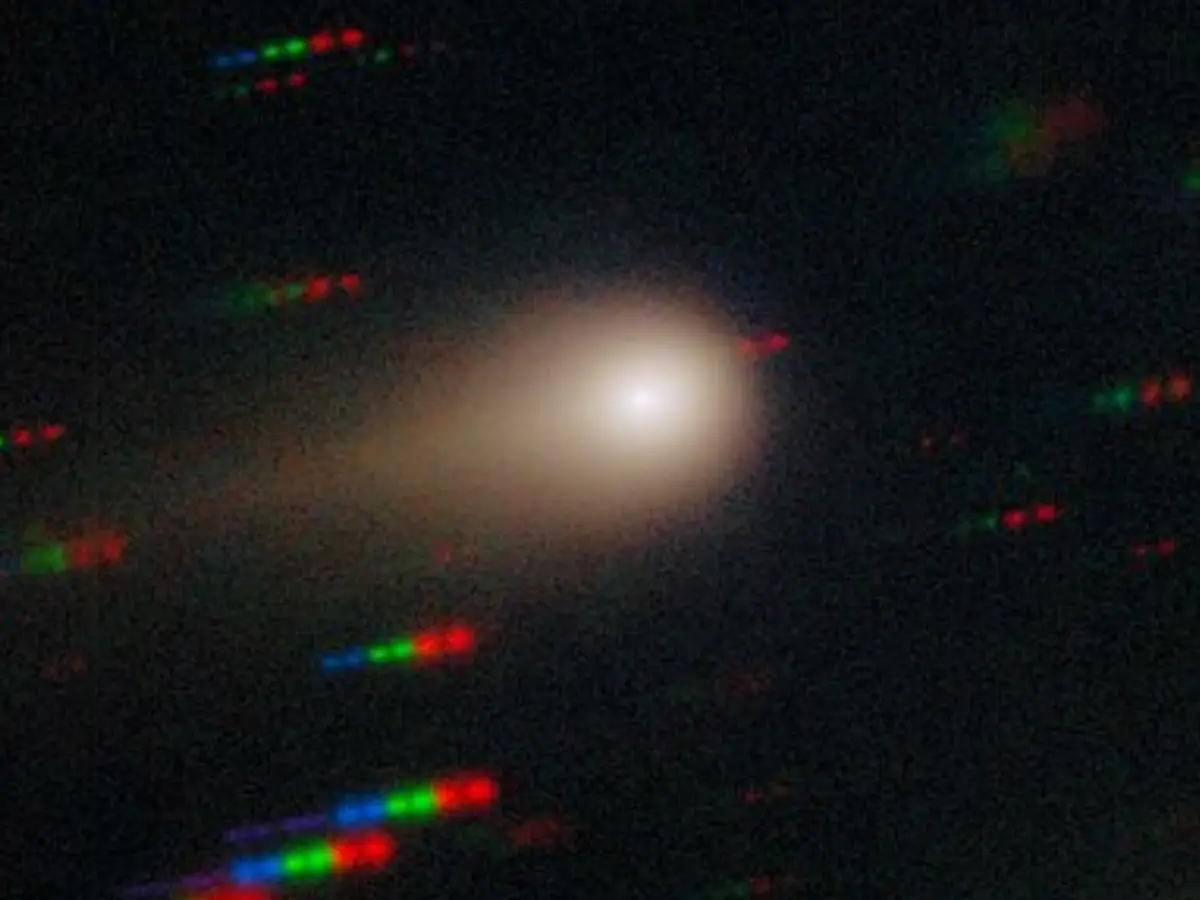
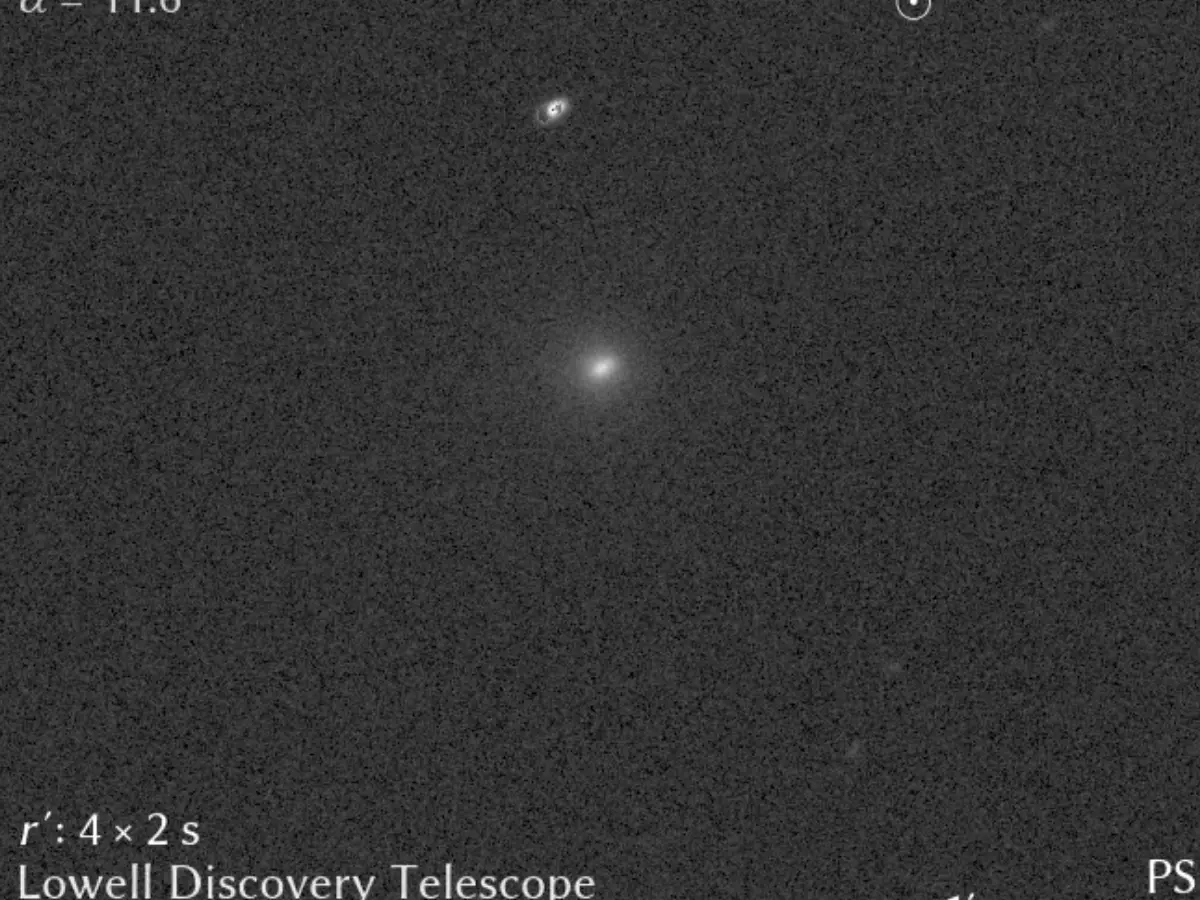
3I/ATLAS emits radio signal Photograph: (Qicheng Zhang/ Lowell Observatory)
3I/ATLAS emits first radio signal: The MeerKAT radio telescope at the South African Radio Astronomy Observatory has announced the detection of the first-ever signal from the interstellar object. The detection was made on October 24, after two failed attempts in September.
A South African observatory has detected a radio signal emitting from 3I/ATLAS. The MeerKAT radio telescope picked up radio absorption lines by hydroxyl radicals, namely OH molecules, from the interstellar object. The OH absorption signal was detected in two spectral lines at radio frequencies of 1.665 and 1.667 gigahertz. The South African Radio Astronomy Observatory had also tried to detect these lines on September 20 and 28, 2025, but the effort was in vain. It tasted success on October 24, 2025, when the angular separation of 3I/ATLAS from the Sun was 3.76 degrees. Harvard scientist Avi Loeb reported about the discovery in his blog, stating that "the Doppler shift of the OH absorption results from the full speed of 3I/ATLAS relative to Earth."
At this place, the distance between 3I/ATLAS and the Sun was 1.38 times that of Earth and Sun. "The resulting thermal speed of the OH molecules shed from the surface of 3I/ATLAS at a temperature of ~230 degrees Kelvin," Loeb wrote. This is the first radio detection from the interstellar object since it was discovered on July 1. Since then, it has displayed several oddities and anomalies that have stumped scientists. 3I/ATLAS virtually has no tail, and in fact, had an anti-tail initially.
Loen has previously raised the possibility that the Wow! Signal detected in 1977 could have been sent by 3I/ATLAS. Following his calculations, he reached out to radio observatories like MeerKAT to search for radio emission from the alien object. "So far, there was no report on a radio detection of 3I/ATLAS other than the OH absorption signal," Loeb said. However, he is hoping that when it is 53 million kilometres from Jupiter on March 16, 2026, "the Juno spacecraft will use its dipole antenna to search for a radio signal from 3I/ATLAS at low frequencies."
Wow! Signal and 3I/ATLAS
In September, Loeb said that his calculations showed that 3I/ATLAS was coming from almost the same direction in space as the epic Wow! Signal was detected in 1977. "The arrival direction of 3I/ATLAS coincided to within 9 degrees with the arrival direction of the Wow! Signal," he said.
Trending Stories
)
)
)
)
)
)
)
)
)
)
)
)
)
)
)
)
)
)
)
)
)
)
)
&im=FitAndFill=(700,400))
)
)
)
)
)
)
)
)
)
)
)
Loeb added that the "chance of two random directions in the sky being aligned to that level is about 0.6 per cent," so it is possible that 3I/ATLAS could have emitted the Wow! Signal. This strange signal remains unexplained to date. It was detected by SETI (Search for Extraterrestrial Intelligence) astronomer Jerry R. Ehman who was using the Ohio State University’s Big Ear radio telescope at the time. He was stumped to notice a sudden signal and simply wrote the words "Wow" on a piece of paper, thus lending it its name.