

&imwidth=800&imheight=600&format=webp&quality=medium "WION Exclusive | ‘A lot of young talent’: Sjoerd Marijne on the next generation driving India’s hockey rise")
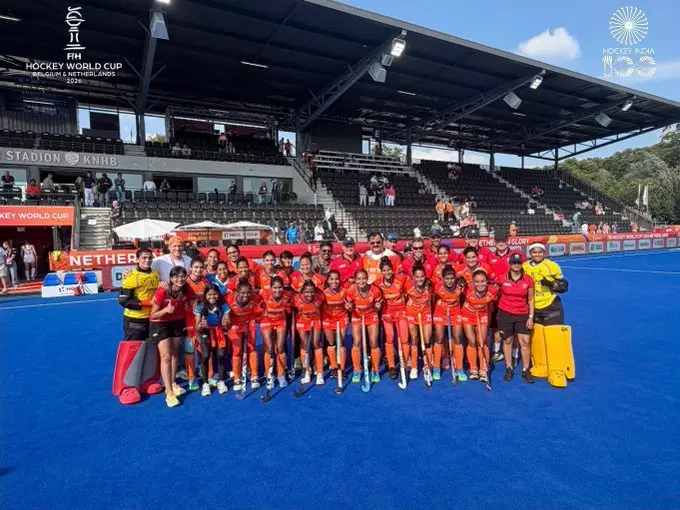
India’s historic fifth-place finish at the 2026 Women’s Hockey World Cup has given the team belief that it can now compete with the world’s best, but head coach Sjoerd Marijne believes there is still a significant gap to bridge. Speaking after India’s memorable campaign, Marijne admitted that one of his biggest questions entering the tournament was how his side would fare against the top teams in the world. “I was very curious about our level against top teams,” Marijne said. “I knew, and I told in many interviews, we are the best of the rest.”
India had already shown its quality by winning the Nations Cup and securing qualification for the World Cup. But the tournament in 2026 offered a different test, one against the established heavyweights of international hockey. And the Indian team responded. Marijne saw enough against China, England and the Netherlands to convince him that India could go toe-to-toe with the world's elite. “I felt against China, England, even the Netherlands, that we really can match with them. And some moments we were even better,” he said while speaking exclusively to WION.
That belief could prove to be one of the biggest takeaways from India’s fifth-place finish. But Marijne is not satisfied. For the Dutchman, the next step is clear: India must become more dominant with the ball. “Everybody can see we can defend really well, but that's not enough to win matches,” he said, pointing specifically to India's draw against Australia. The coach believes India’s defensive resilience is now a strength, but possession and ball control need to improve if the team wants to consistently challenge the top-ranked sides.
And Marijne believes the answer begins with something deceptively simple, the basics. “The difference between the Netherlands and India is the basic skills about receiving and passing,” he explained. “Most of the times we need three touches and they only need two touches.” That extra touch, according to Marijne, can make all the difference at the highest level. “Their game is just faster. Their basic skills, every ball stays low. No bumpy passes. The moment they receive the ball, it's in full control.”
Marijne also offered a pointed assessment of Indian hockey's traditional focus on individual brilliance. “In India in general, we are very busy with individual skills, with the Indian dribble, with dodging and these kind of things. These are extras,” he said.
Trending Stories
&imwidth=180&imheight=135&format=webp&quality=medium)
Other Mommy leads North American box Office as Verity, Resident Evil round out top four
&im=FitAndFill=(700,400)&imwidth=180&imheight=135&format=webp&quality=medium)
Navratri 2026: 9 days, 9 forms of Goddess Durga and 9 colours- Check the complete list
&imwidth=180&imheight=135&format=webp&quality=medium)
Anti-SIR protest in Mumbai: Protestors wear black masks & ribbons in Mumbai
&imwidth=180&imheight=135&format=webp&quality=medium)
BCCI rejects venue shift reports, India vs Sri Lanka 1st ODI to remain in Delhi
&imwidth=180&imheight=135&format=webp&quality=medium)
Diljit Dosanjh’s Delhi concert gets a new date: When and where to catch the singer
&im=FitAndFill=(700,400)&imwidth=180&imheight=135&format=webp&quality=medium)
Is sending robots to Mars easier than sending humans?
&imwidth=180&imheight=135&format=webp&quality=medium)
A watchdog rated 'ChatGPT for Teens' an unacceptable risk and says keep under-18s off it
&imwidth=180&imheight=135&format=webp&quality=medium)
1,500 drones illuminate Mumbai sky as Cordelia Cruises unveils second ship, Cordelia Sky
&imwidth=180&imheight=135&format=webp&quality=medium)
'Just coincidence': Police mistakes protester as AISA chief Neha Bora, arrests her from site
&imwidth=180&imheight=135&format=webp&quality=medium)
Anthropic's AI invented a murder witness and sent the fake tip to Philadelphia police
&imwidth=180&imheight=135&format=webp&quality=medium)
Congress demands action against chief election commissioner
&imwidth=180&imheight=135&format=webp&quality=medium)
CJI Surya Kant declines INDIA bloc leaders’ request for meeting ahead of march to SC, asks them to file petition
&imwidth=180&imheight=135&format=webp&quality=medium)
Saif Ali Khan is finally on Instagram! Here's what he shared in his first post
&imwidth=180&imheight=135&format=webp&quality=medium)
'Turn approver, resign, we'll forgive you': Rahul Gandhi claims receiving messages from CEC Gyanesh Kumar
&imwidth=180&imheight=135&format=webp&quality=medium)
One Indian killed in Riyadh airport attack; 11 others injured : MEA
&imwidth=180&imheight=135&format=webp&quality=medium)
Top AI models flunked a test of inventing new AI research, so much for self-improving AI
&imwidth=180&imheight=135&format=webp&quality=medium)
Wasim Jaffer blames Ajit Agarkar-led selection panel for Virat Kohli’s Test retirement
&imwidth=180&imheight=135&format=webp&quality=medium)
'Ouch!!! That must hurt': Kangana Ranaut hails Kamal Haasan's sharp reply to Elon Musk over Starlink row
&imwidth=180&imheight=135&format=webp&quality=medium)
Sidhu Moose Wala’s younger brother wins hearts by recreating late singer’s signature move at Toronto Hologram Show
&imwidth=180&imheight=135&format=webp&quality=medium)
UK school ditches technology, shifts from screen to pen and paper for learning
&imwidth=180&imheight=135&format=webp&quality=medium)
Telangana ATM heist: Thieves in nighties arrive in ambulance, break into SBI ATM in Kamareddy - VIDEO
&imwidth=180&imheight=135&format=webp&quality=medium)
Houthis claim Riyadh airport attacks, Aramco strikes; issue fresh warning to airlines, travellers and workers
&imwidth=180&imheight=135&format=webp&quality=medium)
Portugal Federation confirms Cristiano Ronaldo’s return to national team despite suspension
&imwidth=180&imheight=135&format=webp&quality=medium)
Delhi protests: 'Court should not be dragged into political activity', says CJI Surya Kant
&im=FitAndFill=(700,400)&imwidth=180&imheight=135&format=webp&quality=medium)
New OTT releases this week (October 12-18, 2026): Sacrifice, Koffee with Karan S9, Roadies Rebirth- 6 titles coming on Netflix, JioHotstar and more
&imwidth=180&imheight=135&format=webp&quality=medium)
Microsoft's Nadella says treat every AI model as already hacked, and build an 'emergency brake'
&imwidth=180&imheight=135&format=webp&quality=medium)
Delhi protest: CJI Surya Kant declines to meet India Bloc leaders
&imwidth=180&imheight=135&format=webp&quality=medium)
Telangana man allegedly recruited into Russian military dies near Ukraine border
&imwidth=180&imheight=135&format=webp&quality=medium)
China imposes first-ever sanctions on ministers from Taiwan allies: What this means
&imwidth=180&imheight=135&format=webp&quality=medium)
McSweeney reveals how studying Virat Kohli’s YouTube clips helped Australia A conquer India
&imwidth=180&imheight=135&format=webp&quality=medium)
Maharashtra appoints FDA commissioner Tukaram Mundhe as secretary of committee for MPSC overhaul amid stir
&imwidth=180&imheight=135&format=webp&quality=medium)
Iran: US accepted some conditions, Clarity needed on others
&imwidth=180&imheight=135&format=webp&quality=medium)
Nana Patekar's cause of death confirmed; here's what his postmortem report says
&imwidth=180&imheight=135&format=webp&quality=medium)
iPhone Duo price index: Tracking Apple’s latest pricing trends
&imwidth=180&imheight=135&format=webp&quality=medium)
'Say no to Muse': Meta has no control over its own moderation AI while it forces a security nightmare on everyone
“First, the other thing needs to be good.” While the coach sees plenty to improve, the World Cup also offered him several reasons for optimism. A number of young players stepped onto the biggest stage for the first time, with Marijne highlighting Sakshi and Ishika and among those who impressed him.
The emergence of those players has added another dimension to an Indian team that Marijne believes has found the right balance between youth and experience. “The difference is like we have a lot of young talent in the team,” he said. “And I think the balance in the team is good with experienced players, with senior players and with junior players.”
The senior players, meanwhile, have played a role that goes far beyond their performances on the pitch. Marijne called them “crucial” to the culture he wants to build within the team, praising them for guiding the younger players while also leading by example. And he singled out former captain and goalkeeper Savita for special praise for the way she has helped younger goalkeeper Bichu. “You see how Savita is guiding Bichu. It's amazing,” Marijne said.
For Marijne, that willingness from senior players to help their own competition is what can ultimately strengthen Indian hockey.
“If she becomes better, I need to do better and then we get the best,” he said. It is a philosophy that extends beyond the World Cup result itself. Marijne also credited the improved support structure around the Indian team, pointing to the larger coaching staff, strength and conditioning support and specialist coaches, with Hockey India and the Sports Authority of India playing an important role.
His standards, however, remain uncompromising. “My demands are very high. The benchmark is very high,” he said. “When I'm not happy with it, I will tell them. And I'm very direct. And they know I always want more, more and more.”
For a team that has just secured a historic fifth-place finish, Marijne's message is strikingly clear: celebrate the breakthrough, but don't mistake it for the destination. The ultimate measure of this campaign, he believes, may not even be the result.
Years from now, he wants his players to remember the unity they shared. “That it felt that the team was in unity on and off the pitch,” Marijne said. “And that they are connected for life with each other.” India may have finished fifth in the world. But if Marijne gets his way, this will be remembered not as the peak of this team, but as the point from which it began climbing even higher.

