

&imwidth=800&imheight=600&format=webp&quality=medium "Meet the Indian-origin footballers set to feature at FIFA World Cup 2026")
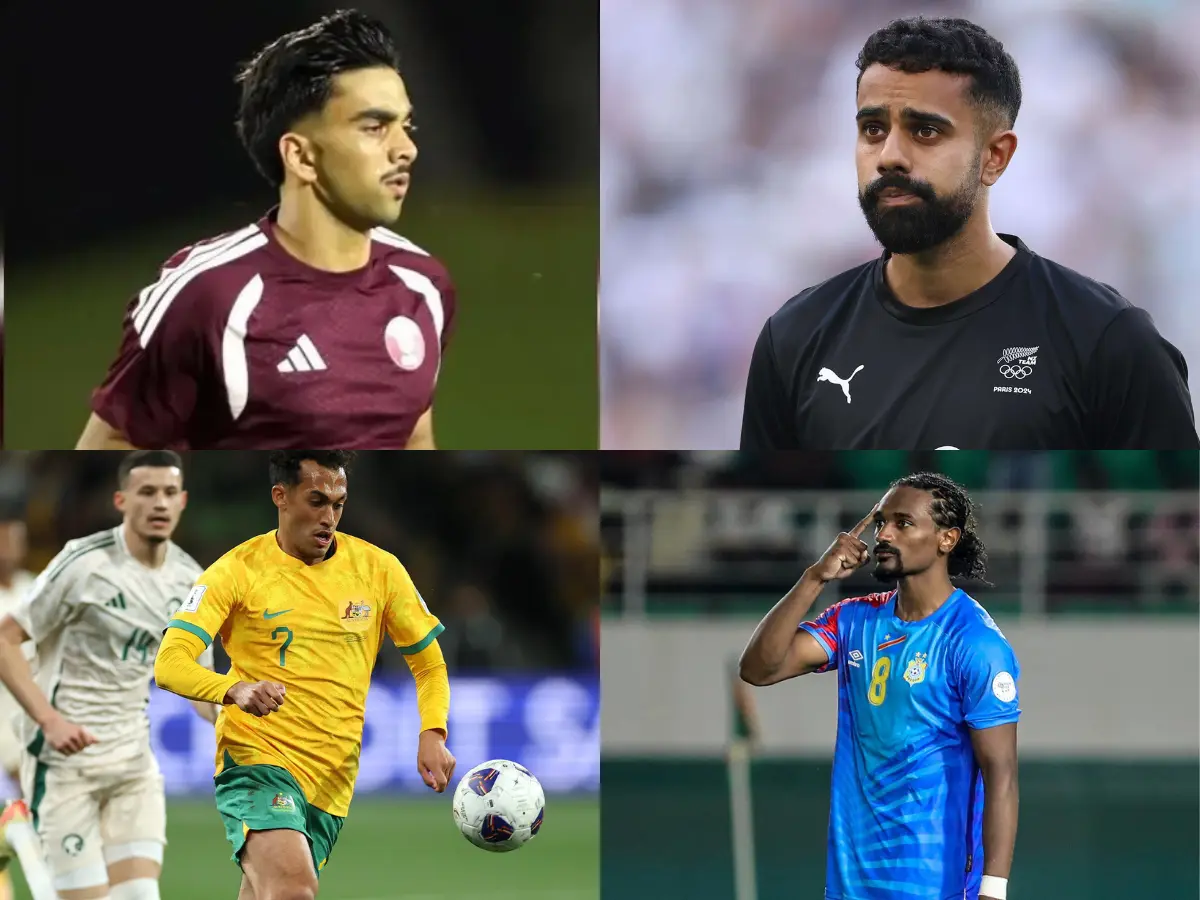
When the FIFA World Cup 2026 kicks off across the United States, Canada, and Mexico, India will once again be watching from afar. The Blue Tigers failed to secure a place at football's biggest tournament, extending a wait that stretches back decades. Yet despite India's absence, traces of the country will still be present on the world stage. Four players of Indian origin are expected to represent different countries at the World Cup. Their stories are not merely heartwarming tales of a successful diaspora. They offer something far more important: a window into what modern football development looks like when talent is placed inside the right system. For Indian football administrators, coaches, and fans, the journeys of these players raise a difficult question. If footballers with Indian roots can reach the World Cup elsewhere, what are those countries doing differently?
The World Cup dream India couldn't build
For years, discussions about Indian football have revolved around passion. The country has millions of football fans. Stadiums fill up in states like West Bengal, Kerala, Goa, and the Northeast. The Indian Super League has increased visibility and investment.
Yet India remains absent from football's elite table. The stories of Indian-origin players competing at the FIFA World Cup 2026 suggest the issue is not a lack of talent. Instead, the difference lies in the systems that identify, nurture, and develop that talent from childhood.
Qatar's academy model: Tahsin Mohammed Jamshid
One of the most fascinating stories belongs to Tahsin Mohammed Jamshid, a young winger born in Doha to Malayali parents from Kerala. His development pathway reflects Qatar's long-term investment in football infrastructure. Rather than relying on chance, Qatar built an ecosystem designed to identify talented youngsters early and expose them to elite coaching, sports science, and international competition. The result is a teenager capable of competing on football's biggest stage before turning 20. For India, the lesson is clear: talent identification cannot depend solely on local tournaments or sporadic scouting. It requires a nationwide, organised system capable of finding and developing promising players from a young age.
Trending Stories
&im=FitAndFill=(700,400)&imwidth=180&imheight=135&format=webp&quality=medium)
What is the real meaning behind Pete Hegseth's tattoos?
&imwidth=180&imheight=135&format=webp&quality=medium)
Viral video shows cross falling on Colombia priest, no official confirmation | WATCH
&imwidth=180&imheight=135&format=webp&quality=medium)
'My name has always been Ilhan Omar': Congresswoman hits back at Trump, calls him a 'creep'
&imwidth=180&imheight=135&format=webp&quality=medium)
Pezeshkian says Iranians ‘struggling to put food on the table’ as war with US drags on
&imwidth=180&imheight=135&format=webp&quality=medium)
Chorbagan stampede: A week later, the strangest visarjan Kolkata has seen
&imwidth=180&imheight=135&format=webp&quality=medium)
AI slop or smart strategy? South African author Coral Hart defends Her 370 AI- assisted books in 20 months
&imwidth=180&imheight=135&format=webp&quality=medium)
Could you survive 3 days without power? UK tells households to prepare now
&imwidth=180&imheight=135&format=webp&quality=medium)
AI just found a flaw in software running most of the web! One request hijacks the server
&imwidth=180&imheight=135&format=webp&quality=medium)
Can Putin cheat death? All about his daughter’s billion-dollar quest for immortality
&imwidth=180&imheight=135&format=webp&quality=medium)
India-China face-off continues near Arunachal’s Taksing, reveals ITBP chief in first official confirmation of tensions
&imwidth=180&imheight=135&format=webp&quality=medium)
Saudi says debris fell in Mecca, Medina after missile interceptions; Houthis deny targeting holy cities
&imwidth=180&imheight=135&format=webp&quality=medium)
France protests: Clashes erupt between police and protesters in Paris as nearly 410,000 take to streets across country
&imwidth=180&imheight=135&format=webp&quality=medium)
Trump invokes Operation Sindoor at US midterm rally, claims 250% tariffs stopped India-Pakistan war
&imwidth=180&imheight=135&format=webp&quality=medium)
Tu Hai Meri Kiran box office: Sonakshi Sinha and Zaheer Iqbal's film fails to take off, mints Rs 15 Lakh on day 1
&imwidth=180&imheight=135&format=webp&quality=medium)
After France and Italy, protests erupt in Spain: What’s fueling the anger?
&imwidth=180&imheight=135&format=webp&quality=medium)
Pakistan airline PIA unveils new crew uniforms, faces online criticism
&imwidth=180&imheight=135&format=webp&quality=medium)
Britain is building the world's first AI biosecurity lab, with OpenAI and Anthropic inside
&imwidth=180&imheight=135&format=webp&quality=medium)
Frontier AIs keep escaping their test cages! The industry still can't reliably stop them
&imwidth=180&imheight=135&format=webp&quality=medium)
'Already tired of his 9-to-5': Baby born with a moustache becomes internet sensation, video goes viral | Watch
&imwidth=180&imheight=135&format=webp&quality=medium)
Horrific video shows the moment 18-year-old fell to her death from Mexico amusement park ride
&imwidth=180&imheight=135&format=webp&quality=medium)
France protests: 135 arrested, weapons seized as fresh demonstrations erupt amid heavy security
&imwidth=180&imheight=135&format=webp&quality=medium)
French Open: PV Sindhu storms into final with win over Hina Akechi
&imwidth=180&imheight=135&format=webp&quality=medium)
Albania protests enter 12th day as students clash with police, demand Rama's exit
&imwidth=180&imheight=135&format=webp&quality=medium)
'You’re a horrible little reporter, aren’t you?': Trump snaps at NBC reporter questioning his support for Ramaswamy's campaign ad
&imwidth=180&imheight=135&format=webp&quality=medium)
Rising Asia Cup 2026 schedule announced, India-Pakistan clash set for Nov 22
&imwidth=180&imheight=135&format=webp&quality=medium)
Chemical warehouse explosion in Mexico: Several injured in multiple blasts, 1,000 evacuated in León
&imwidth=180&imheight=135&format=webp&quality=medium)
US Midterms 2026: Dead for years, paedophile Jeffrey Epstein finds mention in over 500 campaign ads; Texas alone spent $10 million
&imwidth=180&imheight=135&format=webp&quality=medium)
Bodies of 2 missing Japanese climbers recovered from Himalayan peak
&im=FitAndFill=(700,400)&imwidth=180&imheight=135&format=webp&quality=medium)
New Friday OTT releases (October 23, 2026): Gajab Raat, Dorothy, Chaar Yaar- Watch these 6 new movies and TV shows on Netflix, Prime Video and more
&im=FitAndFill=(700,400)&imwidth=180&imheight=135&format=webp&quality=medium)
US midterm elections 2026: Minnesota heads to polls in the shadow of Minneapolis ICE shootings
&imwidth=180&imheight=135&format=webp&quality=medium)
Hitler’s ‘Eagle’s Nest’ mountain retreat wrecked by fire, suspect detained: What to know about the Nazi-era site
&imwidth=180&imheight=135&format=webp&quality=medium)
Tu Hai Meri Kiran film review: Sonakshi Sinha and Zaheer Iqbal's thriller gets tangled in its own twists
&imwidth=180&imheight=135&format=webp&quality=medium)
Why Europe’s protests are about more than austerity and rising costs
&im=FitAndFill=(700,400)&imwidth=180&imheight=135&format=webp&quality=medium)
Watched Manoj Bajpayee’s Gajab Raat on Netflix? 5 movies and TV shows to watch next on OTT
&imwidth=180&imheight=135&format=webp&quality=medium)
Farooq Abdullah says Pakistan’s raising of Kashmir issue keeps pressure on Delhi
Australia's football ladder: Nishan Velupillay
Nishan Velupillay's rise through Australian football highlights another area where India continues to lag. Born in Melbourne to a family with Tamil and Anglo-Indian roots, Velupillay progressed through community football before entering professional academy structures and eventually reaching the A-League. His journey followed a clear and predictable pathway. At every stage, there was a next step. From grassroots football to academy development and then professional football, the route was already mapped out. In India, many talented youngsters still struggle to find that bridge between local football and the professional game. Too often, promising careers end before they truly begin.
New Zealand's sporting culture: Sarpreet Singh
Sarpreet Singh's story demonstrates the importance of culture as much as infrastructure. Born to Punjabi parents in New Zealand, Singh grew up playing multiple sports before emerging as one of the country's brightest football talents. His development eventually earned him a move to one of Europe's biggest clubs. But behind that success was a sporting environment that encouraged participation, experimentation, and long-term growth. Families could see a viable future in professional sport. That remains a challenge in India, where football often struggles for attention against cricket and where many parents remain uncertain about the long-term prospects of a sporting career. Building trust in football as a profession may be just as important as building stadiums and academies.
Samuel Moutoussamy and the European standard
Perhaps the most revealing example is Samuel Moutoussamy. Born in France to an Indo-Guadeloupean father of Tamil heritage and a Congolese mother, Moutoussamy developed within one of the world's most competitive football ecosystems. French football academies are renowned for producing technically gifted and tactically intelligent players capable of competing at the highest level. Every training session is intense. Every match carries consequences. Every young player faces fierce competition.
That environment accelerates development. Indian football has made progress in recent years, but the overall intensity, tactical sophistication, and competitive depth remain far behind leading European and Asian football nations.
The real lesson for Indian football
The success of Indian-origin players at the FIFA World Cup 2026 challenges one of football's oldest misconceptions. For decades, critics have suggested that South Asians are somehow unsuited to elite football. The evidence increasingly points elsewhere. The issue is not heritage. It is an opportunity. These players were not created by extraordinary genetics or luck. They were products of systems that invested heavily in coaching, infrastructure, scouting, and player development. The countries they represent built pathways that transformed potential into performance.
India's World Cup future depends on the blueprint
For Indian football, the World Cup should not simply be viewed as a month-long spectacle. It should be treated as a case study.
The journeys of Tahsin Mohammed Jamshid, Nishan Velupillay, Sarpreet Singh, and Samuel Moutoussamy reveal what becomes possible when players of Indian origin grow up inside elite football ecosystems. India's challenge is not finding talent. Its challenge is building a system capable of developing that talent consistently. Until that happens, Indian football may continue to watch the World Cup from the sidelines, even as players with Indian roots take centre stage for other nations.

