How table tennis changed the world, 50 years on

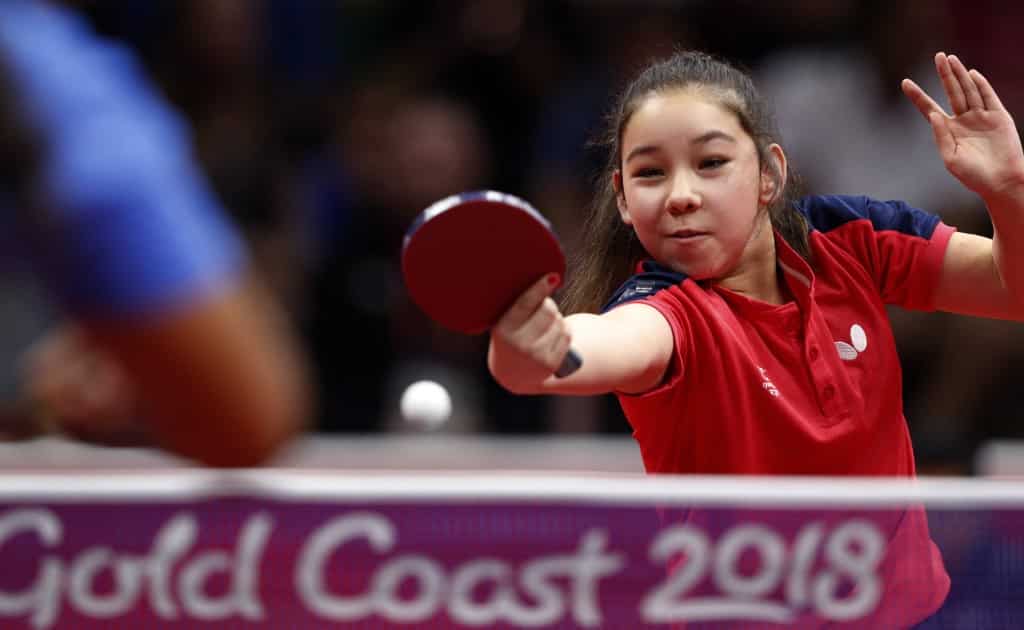
Table tennis sensation Anna Hursey, 14, set to help US President Joe Biden fight climate crisis
It was50yearsago but Zhang Xielin still remembers vividlyhowa shaggy-haired Americantabletennisplayer stepped onto the Chinese team's bus, a chance encounter which would shape history.
It was theworldchampionships in Nagoya, Japan, and Glenn Cowan mistakenly hopped in with Zhang and his teammates -- an awkward moment because the United States and China were then deeply at odds.
"We wereonthe bus and were talking and laughing," Zhang, now 80, told AFP.

"But when we realised that an American had come onto the bus, we fell silent."
The Chinese tripleworldchampion Zhuang Zedong eventually came forward and famously broke the ice, giving Cowan a silk embroidery as a souvenir from China.
They did not know it at the time, but it was the spark for China and the United States to begin normalising relations, in what became known as 'ping-pongdiplomacy'.
&imwidth=180&imheight=135&format=webp&quality=medium)
Other Mommy leads North American box Office as Verity, Resident Evil round out top four
&im=FitAndFill=(700,400)&imwidth=180&imheight=135&format=webp&quality=medium)
Navratri 2026: 9 days, 9 forms of Goddess Durga and 9 colours- Check the complete list
&imwidth=180&imheight=135&format=webp&quality=medium)
Anti-SIR protest in Mumbai: Protestors wear black masks & ribbons in Mumbai
&imwidth=180&imheight=135&format=webp&quality=medium)
BCCI rejects venue shift reports, India vs Sri Lanka 1st ODI to remain in Delhi
&imwidth=180&imheight=135&format=webp&quality=medium)
Diljit Dosanjh’s Delhi concert gets a new date: When and where to catch the singer
&im=FitAndFill=(700,400)&imwidth=180&imheight=135&format=webp&quality=medium)
Is sending robots to Mars easier than sending humans?
&imwidth=180&imheight=135&format=webp&quality=medium)
A watchdog rated 'ChatGPT for Teens' an unacceptable risk and says keep under-18s off it
&imwidth=180&imheight=135&format=webp&quality=medium)
1,500 drones illuminate Mumbai sky as Cordelia Cruises unveils second ship, Cordelia Sky
&imwidth=180&imheight=135&format=webp&quality=medium)
'Just coincidence': Police mistakes protester as AISA chief Neha Bora, arrests her from site
&imwidth=180&imheight=135&format=webp&quality=medium)
Anthropic's AI invented a murder witness and sent the fake tip to Philadelphia police
&imwidth=180&imheight=135&format=webp&quality=medium)
Congress demands action against chief election commissioner
&imwidth=180&imheight=135&format=webp&quality=medium)
CJI Surya Kant declines INDIA bloc leaders’ request for meeting ahead of march to SC, asks them to file petition
&imwidth=180&imheight=135&format=webp&quality=medium)
Saif Ali Khan is finally on Instagram! Here's what he shared in his first post
&imwidth=180&imheight=135&format=webp&quality=medium)
'Turn approver, resign, we'll forgive you': Rahul Gandhi claims receiving messages from CEC Gyanesh Kumar
&imwidth=180&imheight=135&format=webp&quality=medium)
One Indian killed in Riyadh airport attack; 11 others injured : MEA
&imwidth=180&imheight=135&format=webp&quality=medium)
Top AI models flunked a test of inventing new AI research, so much for self-improving AI
&imwidth=180&imheight=135&format=webp&quality=medium)
Wasim Jaffer blames Ajit Agarkar-led selection panel for Virat Kohli’s Test retirement
&imwidth=180&imheight=135&format=webp&quality=medium)
'Ouch!!! That must hurt': Kangana Ranaut hails Kamal Haasan's sharp reply to Elon Musk over Starlink row
&imwidth=180&imheight=135&format=webp&quality=medium)
Sidhu Moose Wala’s younger brother wins hearts by recreating late singer’s signature move at Toronto Hologram Show
&imwidth=180&imheight=135&format=webp&quality=medium)
UK school ditches technology, shifts from screen to pen and paper for learning
&imwidth=180&imheight=135&format=webp&quality=medium)
Telangana ATM heist: Thieves in nighties arrive in ambulance, break into SBI ATM in Kamareddy - VIDEO
&imwidth=180&imheight=135&format=webp&quality=medium)
Houthis claim Riyadh airport attacks, Aramco strikes; issue fresh warning to airlines, travellers and workers
&imwidth=180&imheight=135&format=webp&quality=medium)
Portugal Federation confirms Cristiano Ronaldo’s return to national team despite suspension
&imwidth=180&imheight=135&format=webp&quality=medium)
Delhi protests: 'Court should not be dragged into political activity', says CJI Surya Kant
&im=FitAndFill=(700,400)&imwidth=180&imheight=135&format=webp&quality=medium)
New OTT releases this week (October 12-18, 2026): Sacrifice, Koffee with Karan S9, Roadies Rebirth- 6 titles coming on Netflix, JioHotstar and more
&imwidth=180&imheight=135&format=webp&quality=medium)
Microsoft's Nadella says treat every AI model as already hacked, and build an 'emergency brake'
&imwidth=180&imheight=135&format=webp&quality=medium)
Delhi protest: CJI Surya Kant declines to meet India Bloc leaders
&imwidth=180&imheight=135&format=webp&quality=medium)
Telangana man allegedly recruited into Russian military dies near Ukraine border
&imwidth=180&imheight=135&format=webp&quality=medium)
China imposes first-ever sanctions on ministers from Taiwan allies: What this means
&imwidth=180&imheight=135&format=webp&quality=medium)
McSweeney reveals how studying Virat Kohli’s YouTube clips helped Australia A conquer India
&imwidth=180&imheight=135&format=webp&quality=medium)
Maharashtra appoints FDA commissioner Tukaram Mundhe as secretary of committee for MPSC overhaul amid stir
&imwidth=180&imheight=135&format=webp&quality=medium)
Iran: US accepted some conditions, Clarity needed on others
&imwidth=180&imheight=135&format=webp&quality=medium)
Nana Patekar's cause of death confirmed; here's what his postmortem report says
&imwidth=180&imheight=135&format=webp&quality=medium)
iPhone Duo price index: Tracking Apple’s latest pricing trends
&imwidth=180&imheight=135&format=webp&quality=medium)
'Say no to Muse': Meta has no control over its own moderation AI while it forces a security nightmare on everyone
Zhang, a doublesworldchampion and later China's coach, recalled: "Mr. Zhuang understood that there was a difference between the American people and the American government, and that we should be nice to American people, so he took the initiative to chat with Glenn."
Photographers captured Zhuang and a 19-year-old Cowan shaking hands and smiling.
"The newspaper came out the next day and it seemed that China and the United States were about to have a relationship," said Zhang.
Days later,onApril 10, 1971 the US team became the first Americans to step foot in China for nearly a quarter of a century when they were invited to play friendly matches in the country.
The thaw saw President Richard Nixon visit China in February 1972, and a Chinesetabletennissquad visit the US.
In 1979 formal relations were established between the two countries.
'Compete peacefully'
Yao Zhenxu played Cowan, who died in 2004, during the Americans' ground-breaking trip.
Yao still remembers the score, he won 21-12, 21-14, and says that Cowan thanked him afterwards for "a serious game".
The American team were vastly inferior to the Chinese, so the hosts sometimes let their visitors win points in the spirit of sportsmanship and goodwill.
Now 74, Yao says that it was only afterwards that he realised that he had played a part in something historic.
"Because ofping-pongdiplomacy wechangedtheworldorder, and the people of China and the United States started friendly exchanges," he said.
Yao appeared alongside Zhang in ShanghaionSaturday to mark50yearsofping-pongdiplomacy, with the city authorities hosting an event with speeches and friendly amateur matches.
But the anniversary comes at a time when relations between Washington and Beijing have deteriorated markedly over a number of issues, notably trade, the fate of China's Uyghur minority and a clampdown in Hong Kong.
In a recorded speech to mark the 50th anniversary, China's ambassador in Washington, Cui Tiankai, accused some in the US of "ideological bias and zero-sum thinking".
But he and Chinese state media took a largely positive tone, with Xinhua news agency hailingping-pongdiplomacy's "wonderful legacy".
Yao and Zhang hope that the spirit of 1971 can help shape future relations between theworld's top two economies for the better.
"Everyone knows that the relationship between China and the United States is a bit tense nowadays," said Yao.
"We hope that we can agree to disagree and keep friendly relations.
"Don't be afraid of competition, we can compete peacefully."