

&imwidth=800&imheight=600&format=webp&quality=medium "From body shaming to breaking records: Inside Krishna Jayasankar Menon's redemption year and Asian Games dream")
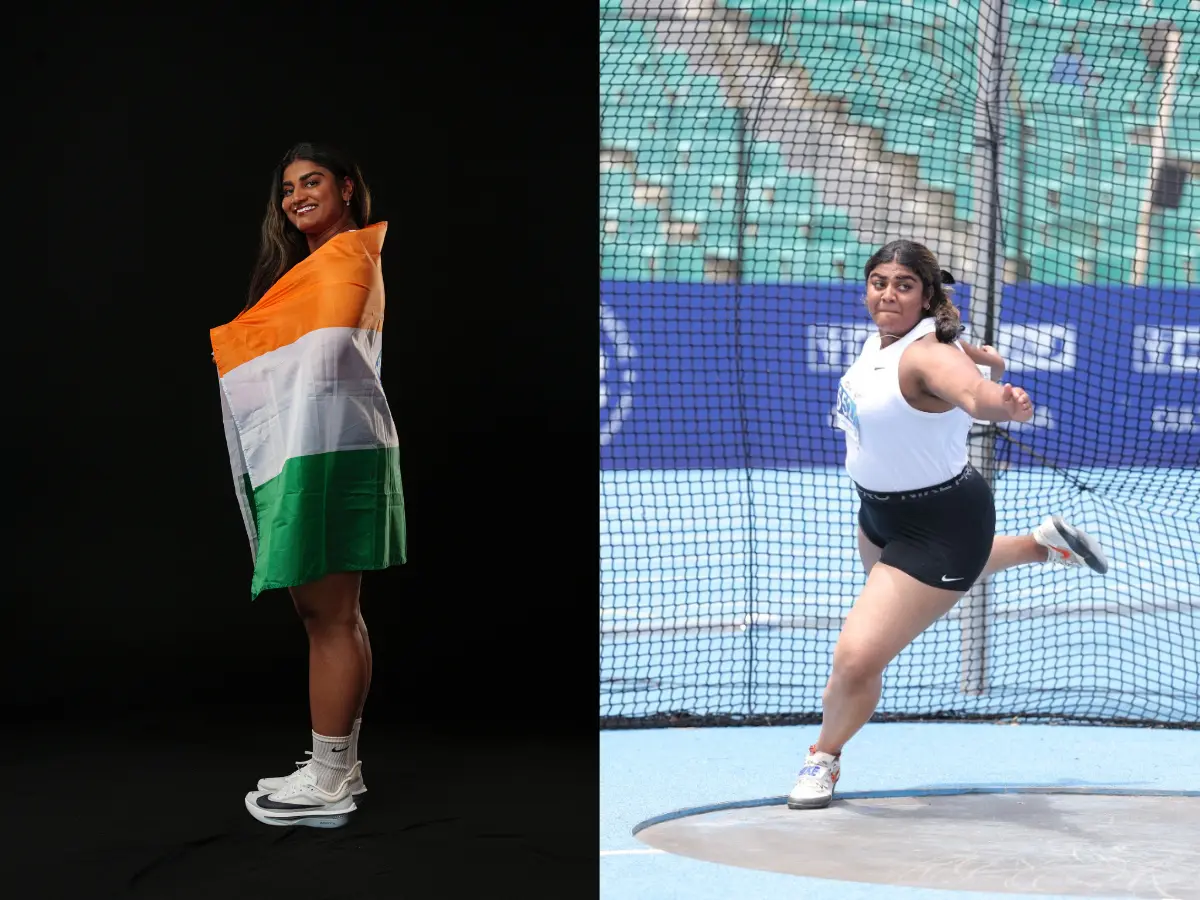
At 23, Krishna Jayasankar Menon is not merely breaking records; she is reshaping the imagination of what Indian women in heavy athletics can become. The Chennai-born shot putter has emerged as one of the biggest stories in Indian track and field in 2026 after rewriting the Indian indoor national record three times in a matter of months. Her latest throw of 17.09m made her the first Indian woman ever to breach the 17-metre barrier indoors. Yet behind the statistics and medals lies a story built on resilience, reinvention, and relentless obsession.
Krishna calls her relationship with throwing ‘complicated’. Some days she loves it. Other days, she wants to ‘kill it’. But perhaps that emotional tug-of-war is what has shaped the athlete she is becoming, someone willing to confront failure head-on instead of hiding from it. Born into a deeply sporting family, Krishna was introduced to elite competition almost before she understood it. Her parents, Jayasankar Menon and Prasanna Jayasankar, both captained India’s basketball teams, and sport became the foundation of the family’s identity and livelihood. “Sports were the breadwinner for our family,” she recalls. “My parents came from Kerala to Tamil Nadu through sports and built a life.”
Krishna’s own journey into athletics started in the fifth grade when a physical education teacher spotted her potential at school in Chennai. What started as a scouting decision in 2012 eventually transformed into a 15-year commitment to one of athletics’ most technically demanding disciplines. But the road from Chennai school competitions to the NCAA circuit in the United States was far from smooth. For Krishna, 2024 became the defining turning point of her career, not because of triumph, but because of collapse.
A fractured hand, recurring injuries, and a season without competition shattered her Olympic dreams and forced her into one of the darkest phases of her sporting life. After months away from competition, she entered the Mountain West Championships hoping for a breakthrough, only to foul every throw in discus. That moment changed her. “I told myself I was done preaching to be mediocre,” Krishna says bluntly. “That’s not why I left my country. That’s not why I left my family.” The transformation that followed was not purely technical. It was psychological. Krishna stopped blaming circumstances, stopped waiting for luck, and started taking ownership of every aspect of her training and mindset. She entered 2025 determined not simply to participate, but to dominate. And the results came quickly.
Also Read: Who won yesterday's IPL 2026 match between Gujarat Titans vs Chennai Super Kings? Check result
She became the first Indian female thrower to qualify for the NCAA Championships in discus throw, broke long-standing university records at the University of Nevada, Las Vegas, and carried that momentum into 2026, where she attacked the Indian indoor record repeatedly. But even Krishna admits she did not anticipate how quickly the progression would happen. Breaking the 17m barrier was a dream she had written in her diary, but not something she expected to accomplish in such emphatic fashion. “When I finally did it, I cried,” she says. “You fantasise about people throwing 17 metres. Then suddenly you realise you’re one of them.”
Trending Stories
&imwidth=180&imheight=135&format=webp&quality=medium)
Brendan Taylor overtakes Andy Flower to become Zimbabwe’s leading ODI run-scorer
&im=FitAndFill=(700,400)&imwidth=180&imheight=135&format=webp&quality=medium)
What is the real meaning behind Pete Hegseth's tattoos?
&imwidth=180&imheight=135&format=webp&quality=medium)
Kenyan cult leader found guilty over starvation deaths of nearly 200 children
&imwidth=180&imheight=135&format=webp&quality=medium)
France is burning. Trump blames immigrants. But who is answering Europe's real questions? | The Verdict
&imwidth=180&imheight=135&format=webp&quality=medium)
Shastri backs Shami comeback; lauds Bhuvi and warns Bumrah on format workload ahead of World Cup
&imwidth=180&imheight=135&format=webp&quality=medium)
Netanyahu rival Benny Gantz quits Israel election race, vows to push for unity government
&imwidth=180&imheight=135&format=webp&quality=medium)
US Midterm 2026: What do opinion polls and prediction markets say less than two weeks before voting
&imwidth=180&imheight=135&format=webp&quality=medium)
WATCH | Albania protesters set Supreme Court on fire as anti-Rama riots escalate
&imwidth=180&imheight=135&format=webp&quality=medium)
Trump Commerce Secretary Howard Lutnick’s family fortune more than doubles to $7.3 billion, outpacing his boss
&im=FitAndFill=(700,400)&imwidth=180&imheight=135&format=webp&quality=medium)
Ghaziabad is world's fastest-growing city; Surat, Patna, Rajkot also feature on list
&imwidth=180&imheight=135&format=webp&quality=medium)
‘Spare India from anarchy’: Over 400 Indian-origin academics from MIT, Oxford condemn anti-CEC protests
&imwidth=180&imheight=135&format=webp&quality=medium)
Haunting of a New York brewery: Apparition caught on camera at 160-year-old establishment
&imwidth=180&imheight=135&format=webp&quality=medium)
Pakistan betrays Iran, shuts border, trade as Trump moves towards new war
&imwidth=180&imheight=135&format=webp&quality=medium)
PCB omits Atherton, Hussain from tri-series commentary panel over Imran Khan interview row
&imwidth=180&imheight=135&format=webp&quality=medium)
US Congressman Raja Krishnamoorthi describes foiled temple attack as ‘divine intervention’, criticises Vance and MAGA rhetoric
&imwidth=180&imheight=135&format=webp&quality=medium)
9/11 case: US Supreme Court rejects plea deal appeal by alleged mastermind Khalid Sheikh Mohammed
&imwidth=180&imheight=135&format=webp&quality=medium)
Girl 'dead' for 8 hours wakes up at her own funeral, dad insists she wasn't breathing
&imwidth=180&imheight=135&format=webp&quality=medium)
Pujara says 'Samson and Vaibhav cannot be in Playing XI' for India on NZ tour
&imwidth=180&imheight=135&format=webp&quality=medium)
One dead after shooting near mosque in Columbus, Ohio. Here's what we know so far
&imwidth=180&imheight=135&format=webp&quality=medium)
Watch: Trump predicts Netanyahu’s victory, says ‘You’re the man I want by my side’
&im=FitAndFill=(700,400)&imwidth=180&imheight=135&format=webp&quality=medium)
New OTT releases this week (October 19-25, 2026): Gajab Raat to Chaar Yaar-8 titles to watch during Dussehra week on Netflix, Prime Video and more
&imwidth=180&imheight=135&format=webp&quality=medium)
Baby orangutan rescued in India returns to Indonesia
&imwidth=180&imheight=135&format=webp&quality=medium)
India moves to buy 10,000 more AI chips for a national compute pool open to startups
&imwidth=180&imheight=135&format=webp&quality=medium)
'Whatever I can do to end this war': Trump floats China Summit with Putin and Xi, questions Zelensky's role in peace talks
&imwidth=180&imheight=135&format=webp&quality=medium)
WATCH | Viral video shows woman jogging past burning barricade amid Paris unrest, sparks online debate
&imwidth=180&imheight=135&format=webp&quality=medium)
'Paris is going to be a Muslim city very soon': Trump blames immigration for France unrest, urges Macron to tighten border policies
&imwidth=180&imheight=135&format=webp&quality=medium)
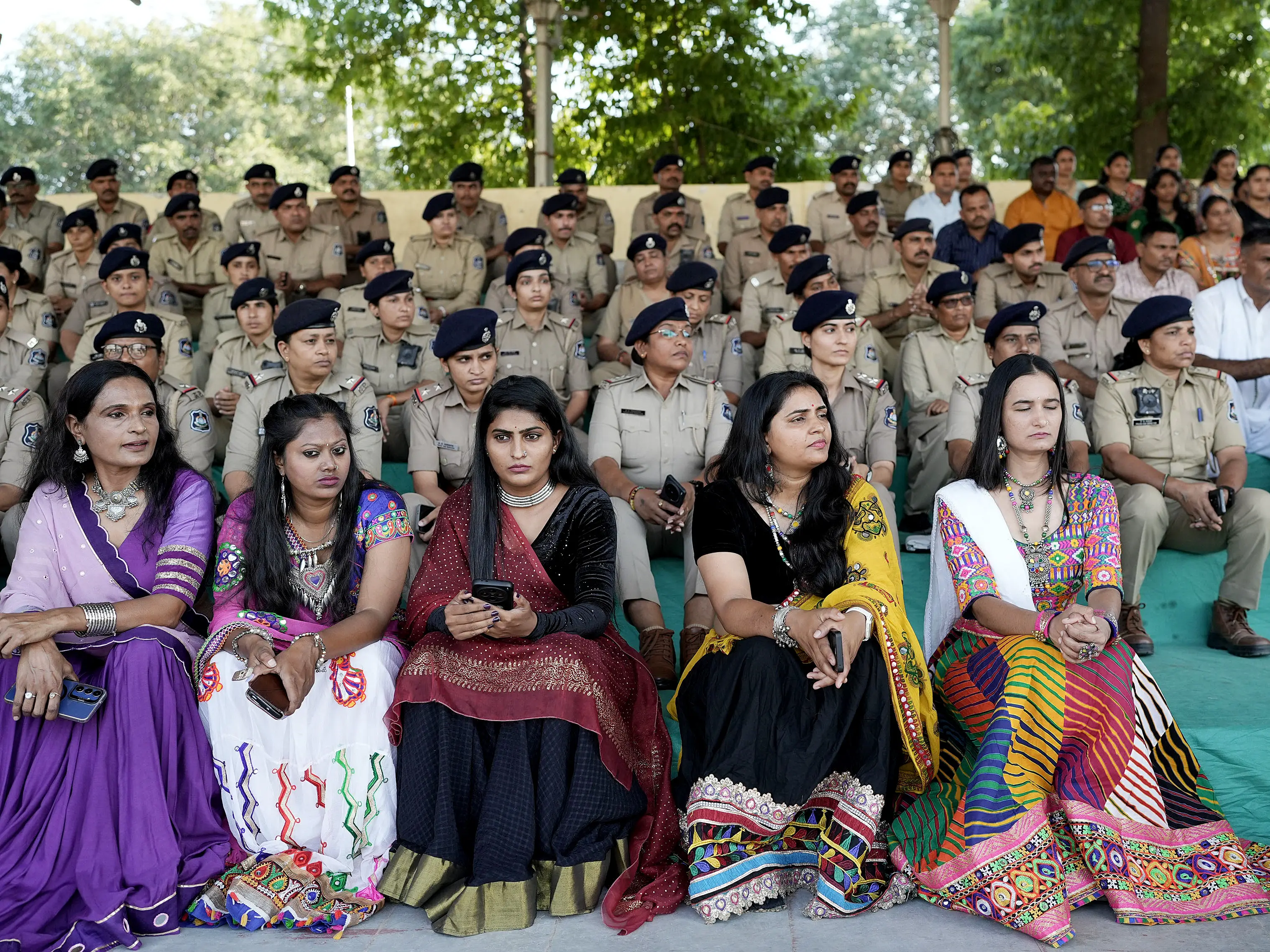
'We feel like Mr India': Gujarat’s undercover SHE team guard garba nights at Navratri
&imwidth=180&imheight=135&format=webp&quality=medium)
Cattle-feed bran in biscuits, detergent in milk: FSSAI acts against 3 companies
&imwidth=180&imheight=135&format=webp&quality=medium)
'It's a joy to see the makers bring it on such a grand scale': SS Rajamouli on Ramayana
&imwidth=180&imheight=135&format=webp&quality=medium)
Priest dies after crucifix falls on his head during livestreamed Mass in Ecuador | VIDEO
&imwidth=180&imheight=135&format=webp&quality=medium)
Ramayana advance booking: Ranbir Kapoor, Yash's film cross $500K ahead of Diwali release
&imwidth=180&imheight=135&format=webp&quality=medium)
US midterm elections 2026: Early voting picks up pace ahead of November 3 polls
‘I had to leave India to understand my worth’
Her rise also carries a deeper personal significance. Growing up in Chennai, Krishna often faced body shaming and struggled with self-confidence. For years, she viewed her body through the lens of criticism instead of strength. That changed dramatically during her move to Jamaica at 18, a decision that would redefine her outlook on womanhood and identity. “I had to leave India to understand my worth,” she says. “In Jamaica, I saw women carry themselves with confidence and pride. That changed the way I looked at myself.” Jamaica became more than a training destination. It became the place where Krishna learned independence, self-belief, and emotional resilience. Living alone for the first time, navigating uncertainty, and adapting to a completely different culture forced her to mature rapidly.
That experience later helped her transition into the gruelling NCAA system, a world she believes many Indians underestimate. “People think NCAA is easy,” she says. “But most athletes there are Olympians, world medallists, and national record holders.” The demands are relentless. Krishna’s season often stretches from January to October with barely any breaks between competitions, training blocks, travel, and academic responsibilities. As a Master’s student at the University of Nevada, she balances lectures, assignments, recovery sessions, gym work, and elite competition almost every week. It is precisely why she calls herself a “16-year-old grandma.” “All I think about is track and field 24/7,” she laughs.
‘I believe in manifestation’
Now entering the outdoor season, Krishna has fixed her eyes firmly on India’s outdoor national record of 18.41m, a number she says she sees every morning on a sticker placed deliberately in her room. “I believe in manifestation,” she says. “My coach believes it’s achievable. My team believes in me. And I believe in the work we are putting in.” But records alone are not enough anymore.
For Krishna, 2026 is a “year of redemption” because there remains one dream she has not fulfilled: standing on a podium while representing India. Despite years of competing at the senior level, she has often finished agonisingly close to medals without ever fully breaking through internationally for the national team. “I’ve never had the chance to wear India on my back on a podium,” she says. “That’s the fire that wakes me up every single day.”
That hunger now fuels her preparations for the 2026 Asian Games, where she believes Indian athletics is ready to make a global statement. “I think Indian athletics is on the horizon,” Krishna says, referencing athletes like Neeraj Chopra, Tejaswin Shankar, and Jyothi Yarraji who have elevated India’s credibility internationally.
And perhaps what makes Krishna especially compelling is the way she speaks about shot put itself. To outsiders, it appears brute and straightforward — raw power applied to a steel ball. Krishna sees something far more artistic. “Throwing is basically sprinting inside a seven-foot ring,” she signed off. “We’re trying to generate the same speed and force as sprinters, but in a tiny confined space while rotating.”

