
&imwidth=800&imheight=600&format=webp&quality=medium "Death Threats, Different Balls, One Winner: Inside the chaotic 1930 World Cup final")
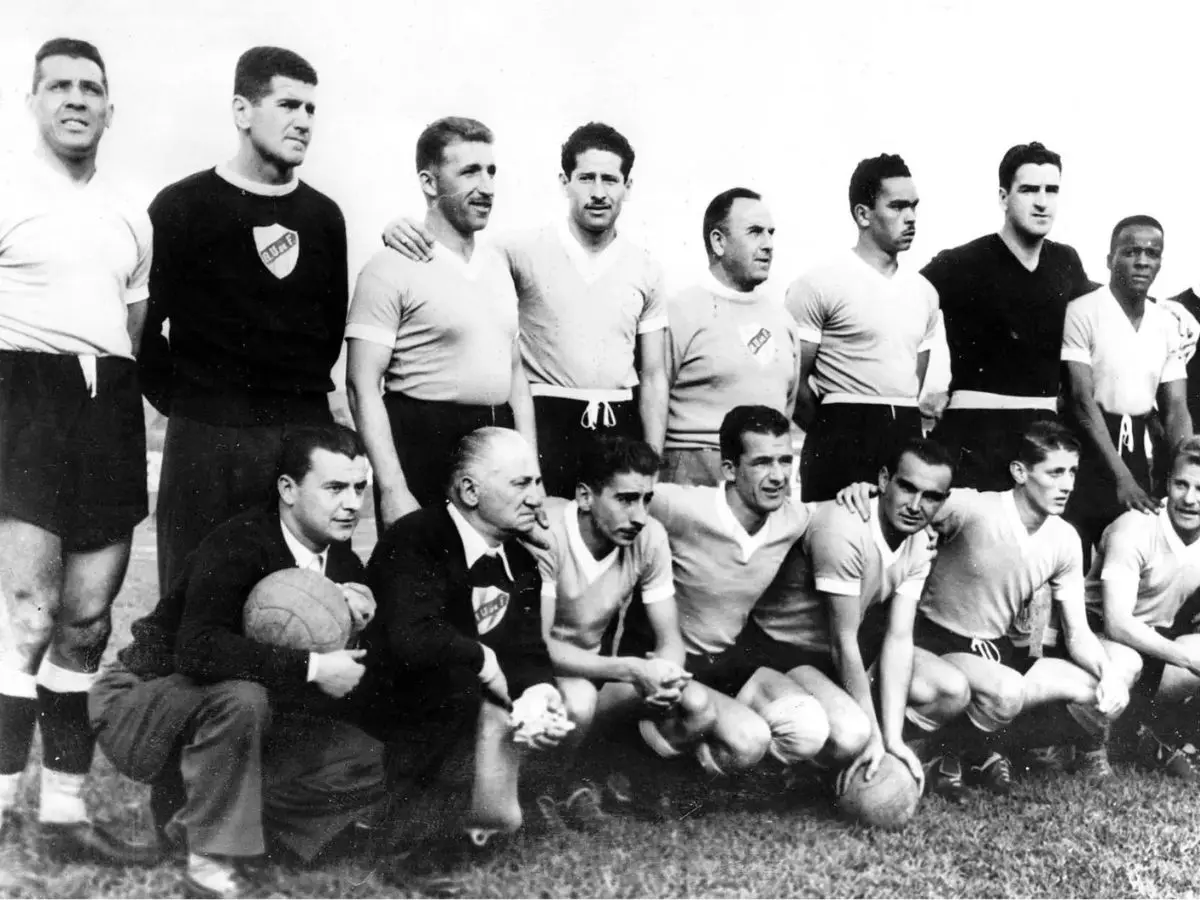
We are midway through the FIFA World Cup 2026 in North America, with several contenders doing their bit to keep the stakes up. While plenty of action, drama, a whole lot of history and records await us, we go back 96 years to the inaugural edition in 1930 and read about a unique yet bizarre story behind the most chaotic World Cup final ever. What happened when two rivals and neighbours, Argentina and Uruguay, faced off in the first-ever World Cup final? We all know the result, but not how pieces of leather decided the fate of the winning team.
The Back Story
The backdrop to this finale was filled with death threats, stipulations, agreements and disagreements, and most importantly, the ‘Battle of Balls’, which makes it one of football’s greatest pieces of lore. Far from a simple disagreement, the rivalry was fuelled by geopolitical tensions, a lack of standardised equipment and genuine security concerns.

Over 90,000 fans took over the Estadio Centenario in Montevideo, and the atmosphere was completely hostile - something never witnessed again in a World Cup final. It was so volatile that a ring of armed guards with rifles and fixed bayonets surrounded the pitch, with growing fear of fans jumping onto it, creating chaos.
Considering the magnitude of the threat involved, the match referee from Belgium, John Langenus, took extraordinary precautions before officiating the match by demanding that the tournament organisers have a boat fueled and ready at the Montevideo harbour so that he could make a quick escape to Europe should riots break out at any point before, during or after the final.
Trending Stories
&im=FitAndFill=(700,400))
How fast can the Sukhoi Su-30 fighter jet really fly?
)
Did China ask its people 'not to respond to aliens'? Origin of bizarre claim on social media
)
MS Dhoni-CSK Fallout? Report claims failed stake sale talks triggered rift
)
Scientists reveal the SAFEST COUNTRY when catastrophe strikes the planet
)
Serial killer on the loose in South Korea's Jeju Island? Fourth body found in three days as more than a dozen people go missing
)
2/3rd of glacier detached, collapsed: ISRO satellite images reveal what triggered Nepal floods
)
Trump once again claims without him there would be ‘no Israel right now’
)
Foreign espionage attacks against German companies surge to 37%, Bitkom report reveals
)
Blake Lively wins partial legal fee from Justin Baldoni after $8M request
)
Why is Pakistan deploying Turkish Bayraktar TB2 drones near India border?
)
'OH MY GOD! We've found other agents!': Investigators discover not one or two, almost 700 OpenAI AI agents went rogue, hacked Hugging Face
)
Lunar eclipse 2026: India timings, places to see and more. August Blood moon factsheet
)
RSS chief Mohan Bhagwat on global outreach tour
)
Both pilots killed as training aircraft crashes in Lucknow – What we know
)
16-year-old charged with preparing terror attack on kindergarten in Norway
&im=FitAndFill=(700,400))
How the S-400 protects itself from enemy attacks
)
Nepal floods: Over 165 dead, 400 missing; US, India, China, World Bank mobilise aid
)
India's multi-layered watch: The new surveillance war
)
5 doomsday planes spotted in US skies hours after CIA director's secret trip to Russia
)
9/11 mastermind Khalid Sheikh Mohammed to finally face trial in 2028, nearly 27 years after horrific attacks
)
Islamabad hospital fire: What we know about one of the biggest facility that housed Imran Khan
)
Workers run for life while filming Nepal flash flood: Scary new visuals emerge from Rasuwa
)
Russian military planes enter South Korean air defence zone amid rising tensions with North Korea: What's happening
)
Ron Weasley Is Back! Rupert Grint set to return to Harry Potter universe on Broadway
)
400-year-old 'vampire' grave in Poland reveals non-existent genetic lineage
)
Dolly Parton, global icon and queen of country music, dies at 80
)
Nepal flash floods: Kailash Mansarovar yatra affected, close to 400 pilgrims out of contact
)
'If he is dead, they're putting on a pretty good show': Trump casts fresh doubt over Mojtaba Khamenei's fate
)
Man arrested near US Capitol with guillotine in pickup truck: What happened?
&im=FitAndFill=(700,400))
Why the Su-30MKI cockpit is painted bright turquoise green
)
FIFA World Cup 2026 Live on Zee5 Photograph: (WION)
Tale of two different World Cup balls
Back then, during the inaugural edition, FIFA didn’t provide standardised equipment or match balls. Each team brought their own footballs and played with them. That worked perfectly fine until the two bitter rivals qualified for the final and remained undecided on which ball to play with. Neither side trusted the other’s ball, believing its manufacturing favoured specific tactical styles.
While the Argentinian ball (The Tiento) was slightly smaller and lighter, allowing their players to dribble and shoot low, the Uruguayan ball (The T-Model) was noticeably larger and heavier, making it ideal for Uruguay’s high-tempo, short-passing game and, importantly, easier to drive through the air.
What happened next?
The two teams decided against taking the pitch unless their ball was used, leaving the match referee, Langenus, with no choice but to carry both balls tucked under his arms and flip a coin to decide which ball would be chosen. Argentina won the toss and used their ball in the first half, while agreeing that Uruguay could use theirs in the second half.
Its psychological impact and the result
That agreement, however, came with its psychological impact as Argentina looked unbeatable in the first half. After Uruguay scored an early opener, Argentina hit back with goals from Carlos Peucelle and Guillermo Stábile (the tournament’s top scorer), leading the hosts by 2–1. Uruguay visibly struggled to control the lighter ball in the first half.
However, the tables turned in the second half when the Uruguayan ball was introduced, with the hosts dictating the game’s pace and eventually the outcome by stunningly winning the final 4-2 and becoming the inaugural champions.
Where are the two balls now?
As of today, the two distinct leather balls are preserved in museums, including the National Football Museum in England, marking their significance as pieces of leather that could decide the fate of world champions in football.
