Pakistan deploys new vaccine against 'superbug' typhoid outbreak

vaccine
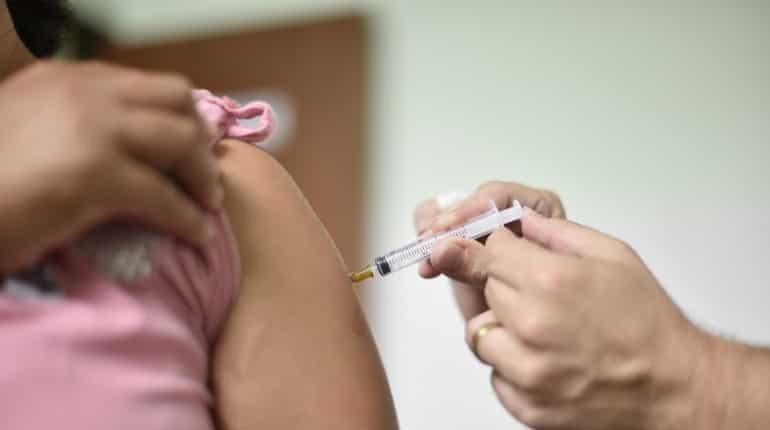
Pakistanbegan vaccinating millions of childrenagainsttyphoidon Friday to try to control a drug-resistant superbugoutbreakof the fever that has already infected some 11,000 people since 2016 and risks spreading internationally.
The immunisation campaign, using anewly-developed shot designed to preventtyphoidfever infection for up to five years, starts in the southern Sindh province and is targeted at children between 9 months and 15 years old, officials said.
By 2021, it will become a nationwide programme and part of routine childhood vaccination schedules.

"Beginning the vaccination in urban areas is critical in preventing the disease among the communities most at risk," Azra Fazal Pechuho, Sindh's provincial minister for health, said in a statement.Typhoidalso disproportionately affects children.
Typhoidis caused by Salmonella Typhi bacteria and spreads through contaminated food and water. It causes fever, nausea, stomach pain and pink spots on the chest, and in severe cases can lead to complications in the gut and head that can be fatal.
A Global Burden of Disease Study by the USInstitute for Health Metrics and Evaluation estimates that in 2017 there were 11 milliontyphoidcases and 116,000typhoiddeaths worldwide.
)
The Early Spring is proof not everyone can talk about their real feelings, and it is perfectly OK
)
UN votes to ‘correct the map’ as India backs fairer world view
)
Nigerian Navy discovers 99,000 litres of suspected stolen, illegally refined products as it intensifies anti-crude oil theft operations
)
Who is Aditi Paudel? 17-year-old becomes Japan's first literacy ambassador
)
Bengaluru: Officials find 40 kg expired chilli at chairman's club
)
Jaishankar rejects trade link to ending Ukraine war
)
Israeli strikes on Lebanon kill three, injure 23 despite truce
)
Alpine glacier was covered with sheep wool sheets to prevent melting. It worked
)
South Korea mulls deploying military assets to Strait of Hormuz
)
World's fifth-largest economy, British army can't afford to train
)
Breaking | Vance takes the podium: First White House briefing since Leavitt's exit
)
Taiwan raises 'concerns' over China's missile test
)
BRICS 2026: $1 trillion sovereign capital set to converge in Delhi for first iBRICS Summit
)
What is Iran's Pickaxe Mountain that Trump has again threatened to bomb?
)
UN votes to correct world map that visually shrank Africa for 450 years
)
Former NewJeans member Danielle launches YouTube channel, hints at new solo journey
)
Bangladesh batter Towhid Hridoy creates history with 350 not out in South Africa
)
Brendan Fraser’s transformation fuels The Mummy 4 excitement as fans welcome back Rick O’Connell
&im=FitAndFill=(700,400))
Krishna Janmashtami 2026: From Dhaniya Panjiri to Makhana Kheer- 5 best sweet dishes perfect for celebrating Lord Krishna’s birth
)
Donald Trump plans to travel to Ireland on Qatari-donated jet amid security concerns
)
Nazi-looted art to return to Jewish heirs
)
Eight killed in Kerala’s Thrissur after car rams into lorry parked on highway
&im=FitAndFill=(700,400))
Why Russian fighter jets use bulky, low-pressure tyres compared to US jets
)
FBI-wanted fraud accused arrested in Jalandhar over $600,000 scam
&im=FitAndFill=(700,400))
Why US tanks weigh over 20 tons more than Russian tanks
&im=FitAndFill=(700,400))
New Friday OTT releases (September 4, 2026): GDN, Dhamaal 4, Jagamae Sangeetham- Watch 6 new movies and TV shows on Netflix, Prime Video and more
)
Killing the Himalayas slowly: Human urine is melting a glacier on Mount Everest
ThetyphoidoutbreakinPakistanis caused by a bacterial strain that has evolved extensive drug resistance and becomes a so-called "superbug". It started in 2016 and has so far infected around 11,000 people, with a death rate of around 1 per cent.
The strain is resistant to all but one antibiotic used to treattyphoid. If it develops resistance to this final antibiotic treatment, disease experts say, death rates among those infected could rise dramatically to as much as 20 per cent.
Thenewtyphoidvaccinewas approved in 2018 by the World Health Organization. Its roll-out is funded by the Geneva-based GAVIvaccinealliance, a body backed by the Bill & Melinda Gates Foundation, the WHO, the World Bank, UNICEF and others, which arranges bulk buys to lowervaccinecosts for poor countries.
"This was a terrifying disease in the past," GAVI's chief executive, Seth Berkley, said in a telephone interview. "(And) the rise of extreme drug-resistanttyphoidrisks bringing us back to levels of mortality not seen since the 19th century - posing a risk to all of us."
Cases of have already been spread in travellers toPakistanfrom the United States, Australia, Britain, Canada, Denmark and Taiwan, who have brought the disease to their home countries.