Bhutan halves tourist fee to $100 per night in bid to boost economy

Bhutan slashes tourist fee
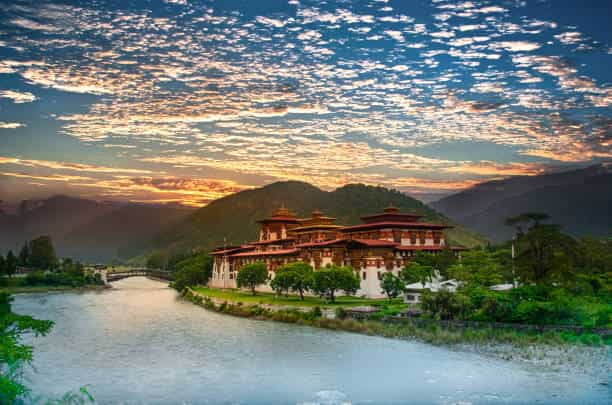
Bhutan, the world’s first carbon-negative country, is slashing the tourist fee to boost its economy by attracting as many visitors as possible. It is all set to halve the $200 daily fee from September this year, in a bid to revive the country’s tourism sector still reeling after COVID-19.
Bhutan ended its Covid restrictions two years ago but introduced a tourist fee of $200 per visitor per night under its "Sustainable Development Fee" programme. It justified the increase by saying that the money would go to offset the carbon generated by visitors.
New tourist fee model in Bhutan

As reported by Reuters, the new rate of $100 per night would come into effect from September and last for four years.
A government statement issued Friday (August 25) said, “This is in view of the important role of the tourism sector in generating employment, earning foreign exchange ... and in boosting overall economic growth."
Bhutan’s long-term goals
)
No Pandya as Auqib Nabi earns maiden ODI call-up; Mayank returns for WI T20Is| check full squads
)
FBI Director Kash Patel grilled over change of hiring rules on bestiality
)
Sydney Sweeney defends provocative ad choice, the internet is still not impressed
)
War will be ‘completely different and very short’ if Europe attacks Russia, warns Lavrov
)
Shahzad Bhatti Network declared terrorist organisation under UAPA: Govt order
)
US, China dominate global economy: Where does India rank among the world's biggest economies?
)
Finnish president Stubb calls Trump 'good for NATO' as allies increase defense expenditure
)
Hockey: Pakistan urges AHF to move Asian Champions Trophy out of India over security concerns
)
Bigg Boss 20: Mahhi Vij reveals she lost Yuva role to Kareena Kapoor; 'didn’t work out in my favour'
)
All Indian goods to get duty-free access to New Zealand
)
Alex Saab, ally of Venezuela's Maduro, pleads guilty in US corruption case
)
Lionel Messi for 2026 Ballon d’Or over Mbappe and Yamal, says Diego Simeone
)
Veteran actor Anant Nag honoured with Indian cinema’s highest award
)
800 million years old - Scientists discover 'fingerprints' of supercontinent Gondwana in ancient rocks
)
Who was Eliana Moreno? NBC LA aerial reporter killed in Chatsworth crash
)
Trump backs PM Modi’s anti-opium push even as India remains on US illicit drug-producing list
)
Pakistan naval vessel returns to harbour with 'severe damage' after collision with Indian warship in Arabian Sea
)
Fed raises rates for first time in 3 years, Kevin Warsh defies Trump as inflation mounts
)
What is Article 10 of the 1991 treaty at the centre of Pakistan Navy's 'unprofessional conduct'
)
Ex-CIA officer caught with gold bars worth $40 million seeks plea deal | Gravitas
)
Daayra movie review: Kareena Kapoor, Prithviraj Sukumaran shine in Meghna Gulzar’s cop-versus-cop crime thriller
)
Pakistan: Imran Khan's sons Kasim & Sulaiman claim their father is 'tortured' in jail
&im=FitAndFill=(700,400))
New OTT releases this week (September 14-20, 2026): Lust Stories 3, Waiting Hai, Irumudi- 5 new titles coming on Netflix, Prime Video and more
)
Trump's Iran war faces fresh House rebuke; 7 Republicans join Democrats in push to end conflict ahead of midterms
)
PNS Hunain: All you need to know about Pakistani vessel that hit Indian Navy warship
)
US Treasury rallies global financial institutions for Op Economic Outcast to isolate Iran
)
Saudi vs Houthis: Riyadh claims to have shot Houthi drone targeting Mecca
)
Riyadh warns of ‘red line’ after Mecca targeted; Houthis claim downing Saudi fighter jet – What’s happening?
&im=FitAndFill=(700,400))
Suriya and Jyothika say ‘I do’ again after 20 years! See their dreamy wedding pics
)
Abhishek Sharma rises to No. 2 in T20Is; ENG’s Robinson 3rd after record Pakistan Tests
)
Extreme warming in Indian Ocean added 695 billion tons of ice to Antarctica ice sheet
)
BRICS success stuns White House, Trump targets India with 100% tariff | Gravitas
)
Meghan Markle's phone number leaked from children's WhatsApp group, couple switches Archie and Lilibet's school
)
The Early Spring season 2 is happening, but fans have one request - 'don't change the actors'
Bhutan is working to completely overhaul its tourism sector. It wants to increase the contribution of tourism to its $3 billion economy to 20 per cent from the current 5 per cent.
Dorji Dhradhul, director general of the Department of Tourism, said the halving of the fee could boost arrivals in the September-December peak tourist period, which includes many religious and cultural events in the mainly Buddhist country.
Watch:Bhutan-China: New Tango? | Bhutan moving away India's embrace?
In June, the government relaxed regulations for tourists seeking to stay longer in the country, yet there has not been a rapid increase in arrivals.
According to Dhradhul, Bhutan has welcomed over 56,000 tourists since January. However, around 42,000 of them are Indian nationals, subject to a fee of just 1,200 Indian rupees ($14.5) per day.
The tourism sector in Bhutan employs approximately 50,000 locals. It used to generate about $84 million annually in foreign exchange before the pandemic struck.
Why Bhutan charges tourist fee?
In an effort to protect the integrity of its mountains, Bhutan has refrained from permitting mountain climbing, underscoring its long-standing concern about the consequences of mass tourism.
Consequently, the tourist fee has restricted the influx of visitors to those willing to spend more, thus forming only a small fraction of the volume seen in neighbouring Nepal.
WATCH WION LIVE HERE