

&imwidth=800&imheight=600&format=webp&quality=medium "Underwater volcano erupting for weeks could birth a new island in the Pacific")
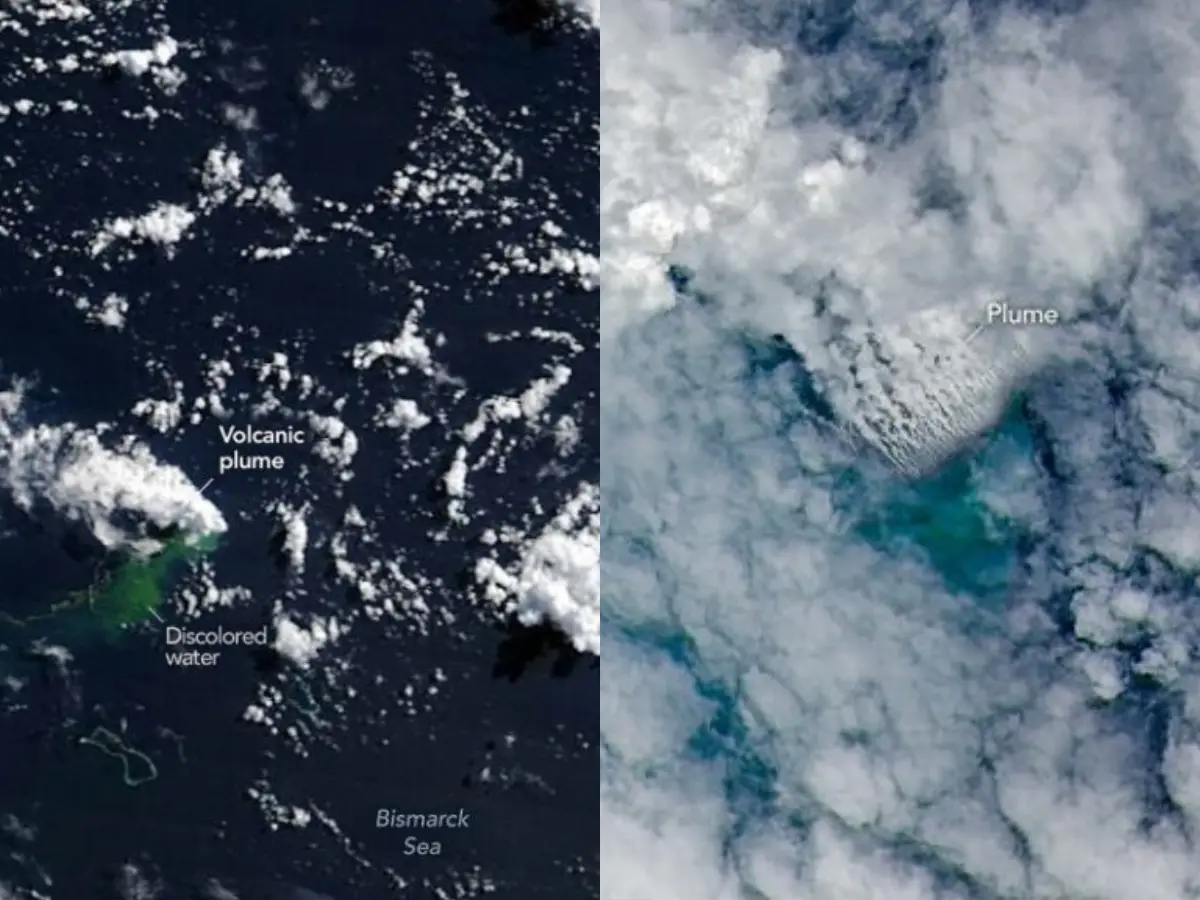
An underwater volcano has been erupting in the southwestern Pacific Ocean since early May, sending giant steamy-white plumes 10,000 feet above the ocean surface. The volcano sits in the Bismarck Sea, along the Titan Ridge just off the north coast of Papua New Guinea. It is also releasing a volcanic rock called pumice that is floating out into the sea. Scientists say this could lead to the formation of a new island, a geological occurrence rarely ever seen in satellite images. They first suspected volcanic activity in this region on May 8 after seismometers detected several earthquakes.
Later, satellite images by NASA’s Aqua and Terra showed volcanic plumes rising above the sea. There is no set rule for how long underwater volcano eruptions could last. In 1972, one eruption 16 kilometres away from the current one lasted only four days, and another one in 1957 in the same sea went on for nearly four years.
This underwater zone in the Pacific is believed to be quite deep, as shown by bathymetry. However, experts say that looking at the current volcanic activity, it seems it is quite shallow. Simon Carn, a volcanologist at Michigan Tech, told EarthSky, “There must be a lot of hot material near the surface to generate so many thermal anomalies. This suggests a fairly shallow eruption vent, much shallower than what’s implied by the existing bathymetry.”
New island could form in the Pacific
Recent satellite images suggest that this event is changing the underwater landscape, and there is a high chance that a new island will emerge from the eruption. Jim Garvin, the chief scientist at NASA’s Goddard Space Flight Center, said, they are "eagerly waiting to see if a new island is about to be born" as this is something they have "only rarely been able to observe with satellites as it happens." This would be an opportunity to see how plants and animals take over the new island.
Trending Stories
&imwidth=180&imheight=135&format=webp&quality=medium)
Pakistan to head IMF, World Bank boards after 74 years amid persistent economic crisis
&imwidth=180&imheight=135&format=webp&quality=medium)
'We are not sitting in ivory towers, we are aware': SC issues notice to Rahul Gandhi, Akhilesh Yadav
&imwidth=180&imheight=135&format=webp&quality=medium)
‘I have very severe problems’: Trump fuels health speculation during address to firefighters
&imwidth=180&imheight=135&format=webp&quality=medium)
SC panel launches portal to submit evidence of July Jantar Mantar violence
&imwidth=180&imheight=135&format=webp&quality=medium)
AI decodes Napoleon-era secret letter unsolved for more than 200 years. What was hidden in the ciphers?
&imwidth=180&imheight=135&format=webp&quality=medium)
Lizard people? Ex-US Army sniper claims soldier killed by 'reptilian beings' in battle near Area 51
&imwidth=180&imheight=135&format=webp&quality=medium)
Ankita Bhandari murder case: Parents meet CBI, seek impartial investigation
&imwidth=180&imheight=135&format=webp&quality=medium)
Bangladesh resort fire kills 10 tourists, including a 5-year-old child
&imwidth=180&imheight=135&format=webp&quality=medium)
At least 19 killed in stampede-like situation after part of Kolkata Durga Puja pandal collapses
&imwidth=180&imheight=135&format=webp&quality=medium)
IMF chief warns inflation hurts poor countries, AI optimism risks market correction
&imwidth=180&imheight=135&format=webp&quality=medium)
Iranian woman, 23, handed death sentence for ‘blasphemy’ in social media post; appeals for help
&imwidth=180&imheight=135&format=webp&quality=medium)
Rain washes out 5th T20I as India-West Indies share honours 2-2
&imwidth=180&imheight=135&format=webp&quality=medium)
'Reason UN has lost credibility': Amid SIR protests India hits out at report alleging 'youth repression'
&imwidth=180&imheight=135&format=webp&quality=medium)
Abhijeet Dipke released after fresh arrest, signs peace bond for second time
&imwidth=180&imheight=135&format=webp&quality=medium)
‘My president, I mean my husband’: Trump's new press secretary Katie Zacharia's first briefing goes off the rails in 14 minutes
&imwidth=180&imheight=135&format=webp&quality=medium)
China responds to Trump's Press Secretary Katie Zacharia after toilet remark: 'Visit China more often'
&imwidth=180&imheight=135&format=webp&quality=medium)
COVID-19 pandemic led to increase in divorce cases, observes Madras High Court
&imwidth=180&imheight=135&format=webp&quality=medium)
At least 400 arrested as protests turn violent in France; PM blames far left
&imwidth=180&imheight=135&format=webp&quality=medium)
2026 midterms, 2028 ambitions: Five politicians in focus
&imwidth=180&imheight=135&format=webp&quality=medium)
Israel examines Russia's Shahed-type drones sent by Ukraine to combat Iran | Gravitas
&imwidth=180&imheight=135&format=webp&quality=medium)
WATCH | iPhones, luxury perfumes floating in Hormuz? Iranian fishermen make bizarre discovery
&imwidth=180&imheight=135&format=webp&quality=medium)
China’s ‘dark tourism’ boom: Why are young travelers paying to experience simulated disasters?
&imwidth=180&imheight=135&format=webp&quality=medium)
WATCH | Zelensky gives cheeky response when asked if Trump is making him a scapegoat ahead of US midterms
&im=FitAndFill=(700,400)&imwidth=180&imheight=135&format=webp&quality=medium)
Durga Puja 2026: Kajol, Jaya Bachchan, Mouni Roy and other celebs bring festive glam to pandals
&imwidth=180&imheight=135&format=webp&quality=medium)
US business activity grows in June, but tariffs and inflation cloud outlook
&imwidth=180&imheight=135&format=webp&quality=medium)
No Ravindra Jadeja, Yashasvi Jaiswal in India’s 2027 ODI World Cup plans: Report
&imwidth=180&imheight=135&format=webp&quality=medium)
Kolkata Durga Puja stampede: PM Modi announces Rs 2 lakh ex-gratia for kin of dead, Amit Shah to visit injured
&im=FitAndFill=(700,400)&imwidth=180&imheight=135&format=webp&quality=medium)
Inside Tesla's Roadster: 10 features of Elon Musk's 'flying car' that push the limits of electric vehicles | In Pics
&imwidth=180&imheight=135&format=webp&quality=medium)
Anirudh Ravichander-Kavya Maran wedding: Telangana CM reveals Chennai reception date
&imwidth=180&imheight=135&format=webp&quality=medium)
India’s naval priorities: Ex-Navy Chief calls for third aircraft carrier, more warships and submarines
&imwidth=180&imheight=135&format=webp&quality=medium)
One species, two lineages: Why Sri Lanka’s spectacled cobra differs genetically from Indian variant
&imwidth=180&imheight=135&format=webp&quality=medium)
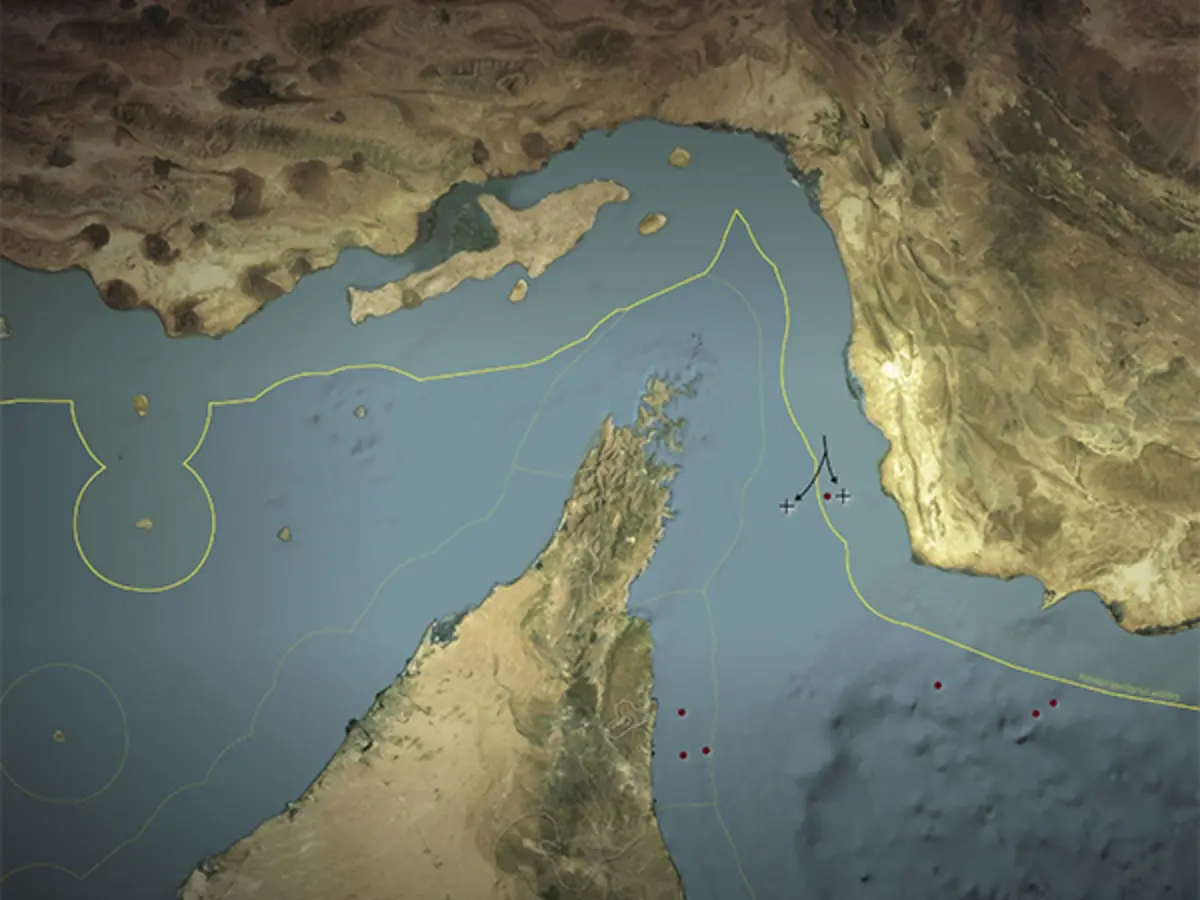
Oil tanker carrying over 2M barrels of crude hits mine in Strait of Hormuz, catches fire, says Iran
&imwidth=180&imheight=135&format=webp&quality=medium)
'We feel like Mr India': Gujarat’s undercover SHE team guard garba nights at Navratri
&imwidth=180&imheight=135&format=webp&quality=medium)
Cattle-feed bran in biscuits, detergent in milk: FSSAI acts against 3 companies

US ends automatic work permit extensions; Indian workers lose 540-day safety net: What it means
&imwidth=180&imheight=135&format=webp&quality=medium)
US lawmaker Pramila Jaypal writes to Rubio, urges to raise handling of CJP protest with India
Submarine volcanoes
Oceans continue to remain a mystery since humans have only explored and studied about 5 per cent to 10 per cent of the underwater areas. Only about 28.7 per cent of the global seafloor has been mapped. The majority is it still harbours species and formations that we have yet to see. Underwater or submarine volcanoes make up for roughly 75 per cent of Earth's magma output, and outnumber the ones on land.

