Twitter Blue, paywall, advertisers: How Musk plans to bring in more money

Elon Musk photo and Twitter logo
Ever since Elon Musk took over Twitter, he has been devising ways to bring in more money. He has lost several advertisers and on Wednesday addressed them about the plans he has for Twitter and how he plans to moderate content, fake news and hate speech. To make more money, the $8 for the blue verification tick is his biggest plan and he might even be considering putting the entire site behind a paywall.
According to a regulatory filing, Musk sold at least another $3.95 billion worth of shares in his electric car company Tesla after closing the Twitter deal.
How does he plan to earn back all that money?

Twitter Blue
The biggest change Musk has brought about is the pay-for-verification system. Under the updated Twitter Blue subscription, a user pays $7.99 to get the blue tick next to name. Earlier, the service cost $4.99 per month, and the $3 hike was brought in by Musk hurriedly, asking the staff to work day and night to roll out the new feature by November 7, or face action. Initially, he had planned on making it a $20 service.
The blue and white verification badge has been till now limited to celebrities, politicians and other public figures. But Musk wants everyone to have access to it and calls it "the great leveller."
&imwidth=180&imheight=135&format=webp&quality=medium)
Rahul Gandhi's plea against Election Commission delayed as Supreme Court registry flags 14 ‘defects’
&im=FitAndFill=(700,400)&imwidth=180&imheight=135&format=webp&quality=medium)
Navratri 2026: 9 days, 9 forms of Goddess Durga and 9 colours- Check the complete list
&imwidth=180&imheight=135&format=webp&quality=medium)
Korean peninsula tensions escalate as North Korea launches multiple ballistic missiles, PACOM says 'no threat to US personnel'
&imwidth=180&imheight=135&format=webp&quality=medium)
Trump weighs firing Kimberly Guilfoyle as US ambassador to Greece amid misconduct allegations: Report
&imwidth=180&imheight=135&format=webp&quality=medium)
Anti-SIR protest in Mumbai: Protestors wear black masks & ribbons in Mumbai
&imwidth=180&imheight=135&format=webp&quality=medium)
UK PM Andy Birnham renews claims of Russian meddling in Brexit vote
&imwidth=180&imheight=135&format=webp&quality=medium)
BCCI rejects venue shift reports, India vs Sri Lanka 1st ODI to remain in Delhi
&imwidth=180&imheight=135&format=webp&quality=medium)
'Absolutely disgusting': Australia slams US plan to livestream Nidal Hasan's execution; Mike Johnson raises concerns, warns of terrorist propaganda
&imwidth=180&imheight=135&format=webp&quality=medium)
1,500 drones illuminate Mumbai sky as Cordelia Cruises unveils second ship, Cordelia Sky
&imwidth=180&imheight=135&format=webp&quality=medium)
Houthis warns US of 'painful response' if Washington joins Saudi war in Yemen as airlines suspend flights to Saudi Arabia
&imwidth=180&imheight=135&format=webp&quality=medium)
Congress demands action against chief election commissioner
&imwidth=180&imheight=135&format=webp&quality=medium)
Robot gropes girl, makes thrusting movements in bizarre crime in Germany
&imwidth=180&imheight=135&format=webp&quality=medium)
'Turn approver, resign, we'll forgive you': Rahul Gandhi claims receiving messages from CEC Gyanesh Kumar
&imwidth=180&imheight=135&format=webp&quality=medium)
'I will not be silenced': Ilhan Omar alleges political intimidation after federal officers search her Washington home
&imwidth=180&imheight=135&format=webp&quality=medium)
Pakistan's government blames PTI for rise of terrorism in Khyber Pakhtunkhwa
&imwidth=180&imheight=135&format=webp&quality=medium)
‘This is just the start’: Maaya Rajeshwaran on historic ITF title, confidence boost and future goals
&imwidth=180&imheight=135&format=webp&quality=medium)
I.N.D.I.A. Bloc lists 10 requests to Supreme Court
&im=FitAndFill=(700,400)&imwidth=180&imheight=135&format=webp&quality=medium)
IMF World Economic Outlook: 10 economies to watch for growth in FY27 and FY28 - Where does India stand?
&im=FitAndFill=(700,400)&imwidth=180&imheight=135&format=webp&quality=medium)
How does a robot decide what to do next?
&imwidth=180&imheight=135&format=webp&quality=medium)
Is the AI chip boom already over? Global semiconductor stocks slide as investors question unbridled spending
&imwidth=180&imheight=135&format=webp&quality=medium)
L Murugan resigns as Union Minister, expresses wish to return to grassroots
&imwidth=180&imheight=135&format=webp&quality=medium)
Trump says he 'may' meet North Korean leader Kim Jong Un during upcoming Asia trip
&imwidth=180&imheight=135&format=webp&quality=medium)
'Ouch!!! That must hurt': Kangana Ranaut hails Kamal Haasan's sharp reply to Elon Musk over Starlink row
&imwidth=180&imheight=135&format=webp&quality=medium)
Sidhu Moose Wala’s younger brother wins hearts by recreating late singer’s signature move at Toronto Hologram Show
&imwidth=180&imheight=135&format=webp&quality=medium)
Girl 'dead' for 8 hours wakes up at her own funeral, dad insists she wasn't breathing
&imwidth=180&imheight=135&format=webp&quality=medium)
UK school ditches technology, shifts from screen to pen and paper for learning
&imwidth=180&imheight=135&format=webp&quality=medium)
Opposition’s 10 demands in Supreme Court petition range from stay on SIR to audit of voter rolls
&imwidth=180&imheight=135&format=webp&quality=medium)
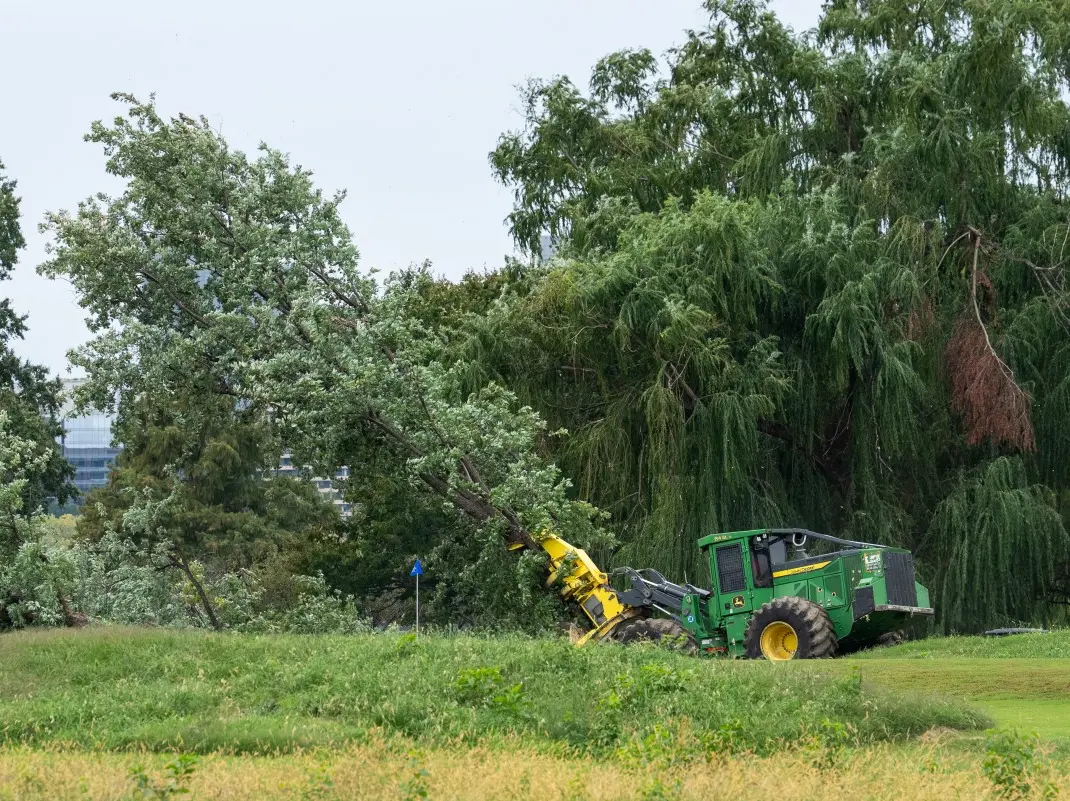
'I am thoroughly unamused': Judge slams Trump administration after 400 trees cut at Washington golf course
&im=FitAndFill=(700,400)&imwidth=180&imheight=135&format=webp&quality=medium)
New OTT releases this week (October 12-18, 2026): Sacrifice, Koffee with Karan S9, Roadies Rebirth- 6 titles coming on Netflix, JioHotstar and more
&imwidth=180&imheight=135&format=webp&quality=medium)
China’s gold rush puts billion in focus
&imwidth=180&imheight=135&format=webp&quality=medium)
India's Ajit Doval, Iran's Mohsen Rezaei hold talks amid escalating West Asia tensions, discuss 'issues of mutual interest'
&imwidth=180&imheight=135&format=webp&quality=medium)
New Cold War: Why is China buying more gold? Explained
&imwidth=180&imheight=135&format=webp&quality=medium)
Anupam Kher joins Ranbir Kapoor's Ramayana as Jatayu, new poster unveiled
&imwidth=180&imheight=135&format=webp&quality=medium)
'Almost certainly': UK Prime Minister Andy Burnham says Iran's IRGC behind RAF Fairford threat
&imwidth=180&imheight=135&format=webp&quality=medium)
Elon Musk pumps $276 million into Republican campaigns ahead of US midterm elections
The purpose of the blue tick was to avoid people from impersonating a famous person. But, now that everyone has access to it, some people have started impersonating others. There is no vetting and such accounts are now seeing a boost in their content. American professional basketball player LeBron James has fallen victim to it as a fake account shows James demanding a trade from the Lakers.
Clicking on the badge tells you whether the account belongs to a public figure or a Twitter Blue user. Those misusing their accounts are spreading fake news and it is becoming tough to vet them. However, many of these accounts have been suspended.
Musk also introduced an "official" grey label for government and media organisations, and big companies, but scrapped it within hours, saying that Twitter will do "lots of dumb things in coming months".
Appealing to advertisers
Several companies have already paused paid advertising following Musk's takeover. Allianz SE, General Motors Co, Stellantis NV, Volkswagen AG are among companies who have said they want to see the direction Twitter will go in under Musk. Then there are others who have concerns about hate speech and stopped advertisements until they get a detailed lowdown about how the company plans to moderate content.
Mondelez International Inc CEO Dirk Van de Put, the maker of Oreo cookies, said, "What we’ve seen recently since the change on Twitter has been announced, is the amount of hate speech increase significantly. We felt there is a risk our advertising would appear next to the wrong messages."
Following all this, Musk directly addressed advertisers on Twitter's Spaces featureon Wednesday. He told them he aims to turn the social media platform into a force for truth and stop fake accounts. He said that the $8 charge will act as a remedy against bot accounts and spoke of the possibility of someday offering money market accounts.
He went on to blame Twitter's "massive drop in revenue" on a coalition of civil rights groups that has ramped up pressure on advertisers, demanding they suspend ads globally after he laid off roughly half of the staff.
Musk also told advertisers Twitter would move aggressively to suspend accounts that "engaged in trickery" or deception.
He also promised a faster evolution of the Twitter service, opening the possibility of allowing peer-to-peer payments, money market accounts and eventually a debit card.
Paywall
Somereports suggest that Musk's ultimate goal is to put the entire platform behind a paywall to boost revenues. Although he isn't clear on how to exactly design and roll it out, reports suggest he might let users scroll for a limited period of time each month and then pay a fee to keep surfing. This would be a add-on service and not part of the Twitter Blue subscription, which means more money in Twitter's pockets.
The flip side
Musk's new Twitter Blue service also aims to reduce ad load in the app by half. This means that the company will lose about $6 in ad revenue per user in the United States. When seen in conjunction with Apple and Google’s share of the $8 monthly subscription, the entire thing might end up losing money more than it makes.
(With inputs from agencies)

