No, all humans didn't come from one place in Africa, claims new study

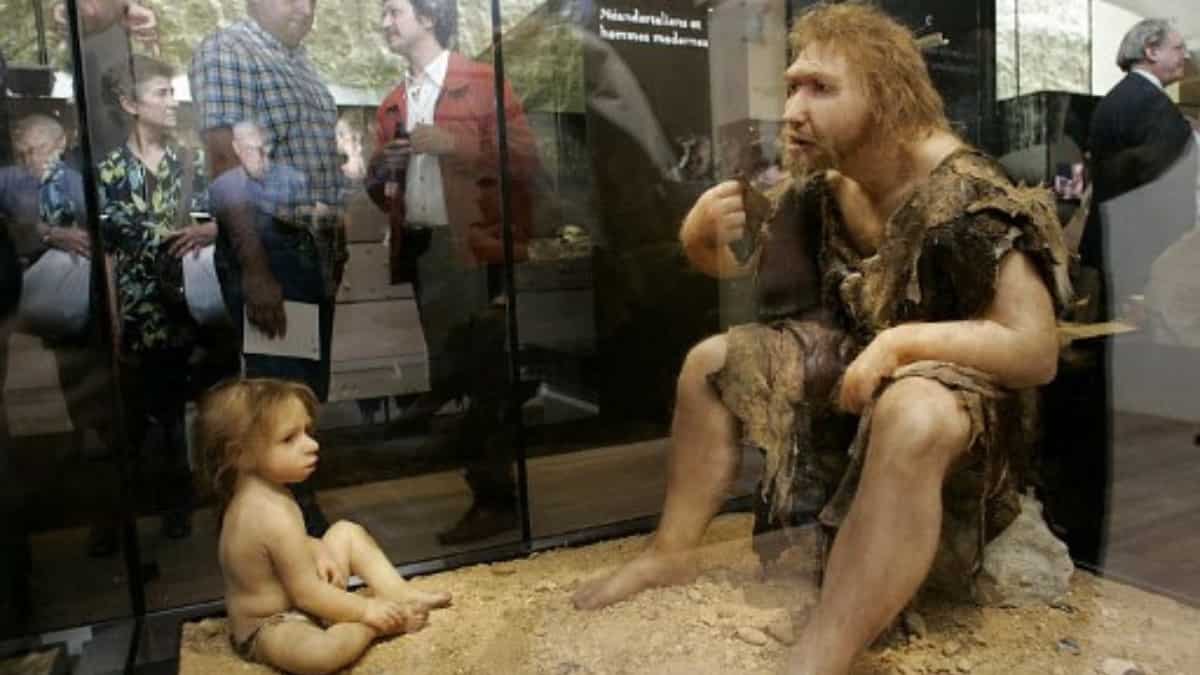
Humans and Neanderthals
Scientists have broadly agreed that our species, Homo sapiens, originated in Africa and that modern humans also arose from one place on that continent in time. However, the findings published in the journal Nature, on Wednesday (May 17), say otherwise. The study finds that only humans lived in different regions of Africa but also migrated from one region to another.
A study led by McGill University in Canada and the University of California-Davis in the United States, suggests that modern humans descended from two populations that coexisted in Africa for a million years before merging in several independent groupsacross the continent.
It was this migration and DNA mixing with one another over a period of hundreds of thousands of years that made modern humans, finds the study, which now counters some of the dominant theories about human origins in Africa.
Previous research
“At different times, people who embraced the classic model of a single origin for Homo sapiens suggested that humans first emerged in either East or Southern Africa,” said co-lead author on the research and population geneticist in the Department of Anthropology at the University of California, Davis, Brenna Henn.

Over the years, paleoanthropologists and geneticists have found evidence that points to Africa as the origin of our species as some of the oldest fossils which may have belonged to modern humans have been unearthed there.
Additionally, “limited fossil and archaeological records of human occupation from sites as far afield as Morocco, Ethiopia, and South Africa show that Homo sapiens were to be found living across the continent as far back as at least 300,000 years ago,” said Henn.
What did Henn and her team find?
)
Arvind Kejriwal, family members, Delhi CM Rekha Gupta get SIR notices
)
Sikh bus driver assaulted, bus stolen and rammed into cars in England; video surfaces
)
EXCLUSIVE | Singer Hanita Bhambri on her Toxic debut, working with Vishal Mishra and more
)
Kampala-Ankara rift deepens: Uganda suspends military ties, seeks Fred Lumbuye's extradition
&im=FitAndFill=(700,400))
‘Not the US or China’: These are the countries leading the world in arable land
&im=FitAndFill=(700,400))
Meet top 5 Indian batters with fastest T20I centuries
)
Raphinha hat-trick powers Barcelona to 3-1 win over Sevilla in La Liga
&im=FitAndFill=(700,400))
Before Extraordinary Minami Minami, these popular K-dramas got Japanese versions
)
Russia's deadly Ukraine strikes kill 2 in Sumy, hit Dnipro mall
)
Gaza under attack: Health chief's son killed in IDF strikes
)
Russia holds first parliamentary elections since the beginning of the Ukraine war
)
Russia-Europe tensions: Polish PM warns Russian attacks could test NATO's unity
)
China may have gained access to US's classified F-35 jets; parts meant for repairs diverted to Hong Kong, sparking Pentagon inquiry
)
West Indies Squad for India Series: Hetmyer included for T20Is, Holder rested
)
US-Iran war: Tehran sets seven conditions to re-engage in talks with US
)
Several petrol pumps, other businesses to refuse UPI payments above Rs 2,000 from Oct 16: Is it legal?
)
Trump announces ‘AI Force’ as debate grows over AI risks and regulation
)
Reacher star Alan Ritchson opens up about alleged blackmail, suicide attempt during difficult period
)
Saudi vs Houthis: Houthis claim missiles & drones used in attack on key Saudi sites
)
Man breaks open wall hiding hundreds of books since 15 years
66 years of the Indus Waters Treaty: How India and Pakistan settled a bitter river dispute
&im=FitAndFill=(700,400))
How many F-35s does Britain, Japan and Israel have?
)
S Jaishankar, former Army chief among high-profile names issued Delhi SIR notices
)
Trump defends AI amid growing alarm, announces new 'AI force' and promises an 'AI czar'
)
Trump says he'll build an 'AI Force' and appoint a czar, for 'high IQ' people only
)
Nigeria: Protesters take to the streets, police fire shots
)
Ed Sheeran addresses Macklemore's removal, Gaza conflict during Philadelphia concert: 'I cannot hide how I feel'
)
Harry Brook targets long reign at top of T20I rankings after Sri Lanka sweep
)
Aravana prasadam shortage at Sabarimala temple in Kerala triggers protests, TDB questioned
)
'Were you here to sell chickpeas?': Wasim Akram criticises Babar Azam's captaincy
)
China now makes advanced memory chips without the machines it was banned from buying
)
9 women found dead near Johannesburg: South Africans rally, demand 'enough' to femicide
)
‘Will go to any extent’: Pakistan vows to defend Saudi Arabia amid Houthi attacks
)
The Verdict | When precision fails: US commits war crime in Minab school strike, UN finds
)
‘End of my career...’: NSA Doval recalls tense Sikkim mission when China captured Indian intelligence team
)
Iran sets 7 conditions to end war with US: What are Tehran’s demands?
)
US-Iran war: Tehran draws red lines — seven demands before any peace talks
)
Report: Iran rebuilding Taleghan 2, nuclear site tied to past weapons research, hit twice by Israel
)
AI actress Tilly Norwood glitches mid-interview, switches from English to Chinese | Watch
)
Mark Carney mimics Trump in hilarious moment over C$70 billion clean-energy investment; room erupts in laughter
)
The research team analysed the genomes of 290 living people from four geographically and genetically diverse African groups. The systemic test was done in order to trace the similarities and differences between the populations over the past million years and gain insight into the genetic interconnections and human evolution across the continent.
Henn and her colleagues also developed software to run large-scale simulations of human history. They also created multiple scenarios of different populations existing in Africa over different periods of time to observe which one could have produced the diversity of DNA found in people alive today.
They studied the DNA from a range of African groups like Nama (Khoe-San) a group of hunter-gatherers from South Africa, the Mende who are farmers living in Sierra Leone, the Gumuz who are recent descendants of a hunter-gatherer group from Ethiopia; and the Amhara and Oromo (agriculturalists from eastern Africa).
Notably, living Africans have a vast amount of genetic diversity compared with other people since humans had lived and evolved there for hundreds of thousands of years with a relatively small gene pool before they began expanding to other continents.
“We used a new algorithm to rapidly test hundreds of possible scenarios,” said Simon Gravel, co-senior author of the paper and Associate Professor in the Department of Human Genetics at McGill University. He added that the algorithm was initially written to understand the risk of genetic disease and how it varies across populations, “and it led us to this deep dive into human origins.”
The researchers also included some Eurasian genetic material to include traces of colonial incursions and mixing in Africa and also looked at the genome of a 50,000-year-old Neanderthal found in Croatia. According to Henn and her colleagues, the ancestors of our species existed in two distinct populations which, for the purposes of this research, were called Stem1 and Stem2.
The study showed that some 600,000 years ago, a small group of humans with their origins from Stem1 went on to become the Neanderthals. On the other hand, Stem1 endured in Africa for hundreds of thousands of years after that, as did Stem2. The study also found that the two populations were not all that different.
Therefore, the researchers concluded that people moved between Stem1 and Stem2 and paired off to have children and thus mixing their DNA. However, their model does not reveal if Stem1 and Stem2 people lived in Africa but speculated that the groups moved a lot over time.
The researchers also found despite these mergers 120,000 years ago, when humans also supposedly experienced a dramatic shift in African history, as the model indicates, people with solely Stem1 or solely Stem2 ancestry appear to have survived.
WATCH WION LIVE HERE
You can now write for wionews.com and be a part of the community. Share your stories and opinions with us here.