Scientists now know what happened to a chunk of Earth’s crust missing for millions of years

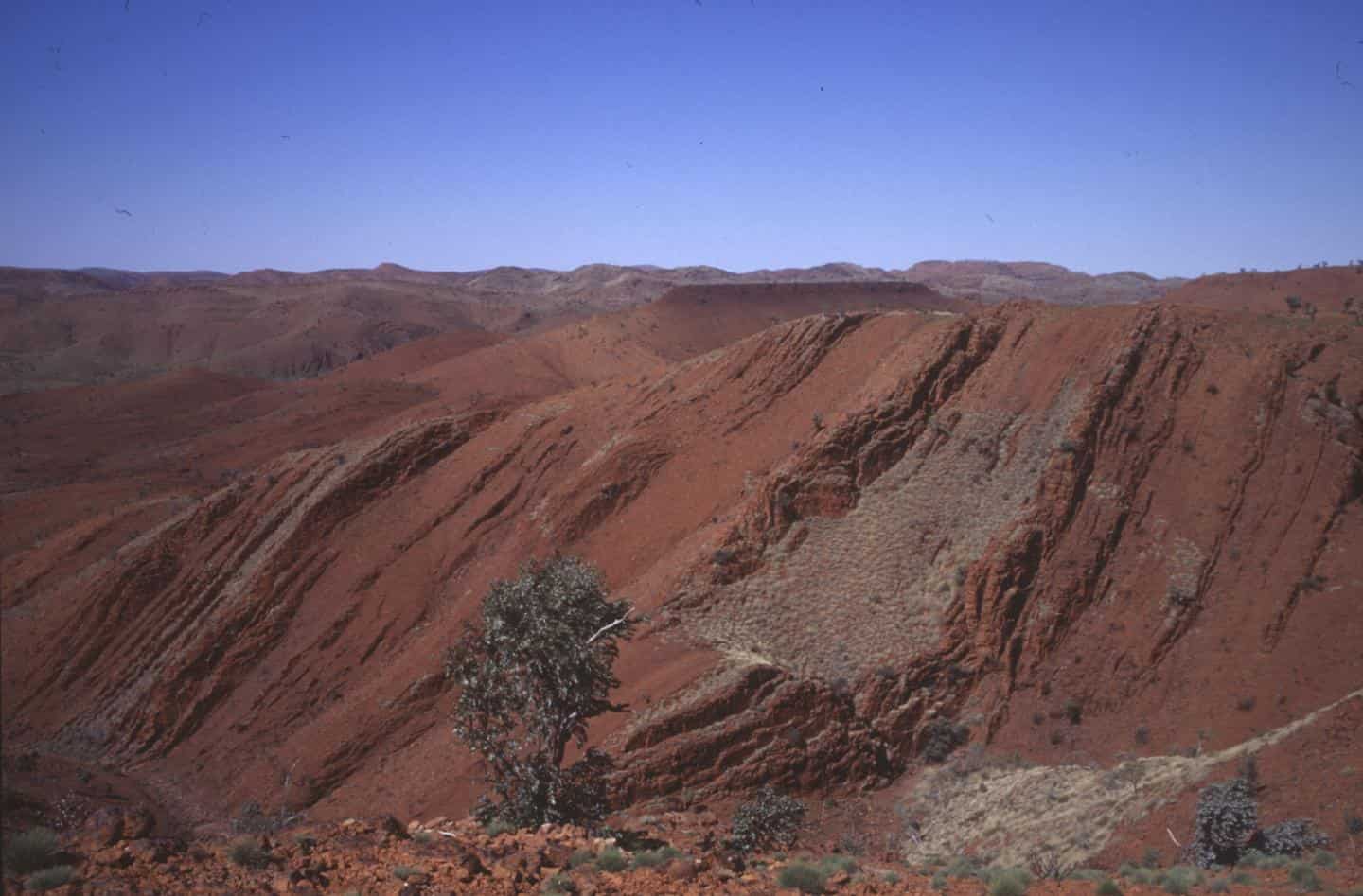
Photo shows ancient rocks (Representative image)
Scientists have recently unravelled the mystery of "The Great Unconformity," a phenomenon where large sections of the Earth's crust are missing from the geological record.
Experts have now concluded that this gap most likely emerged from the intense glacial erosion during a period known as "Snowball Earth," when much of the planet was covered in ice.
Glacial erosion led to gap in sedimentary record

The process of glacial erosion, occurring during this ancient time, led to a significant removal of rocks, creating a gap in the sedimentary record.
This geological oddity was first observed in 1869 at the Grand Canyon in Arizona when experts noticed a sudden change in the age of rocks, a pattern found in various locations globally.
A recent study estimated that an astonishing 3-5 kilometres of rock globally were eroded due to glacial activity, leaving a billion cubic kilometres of pre-Cambrian material missing from records.
&im=FitAndFill=(700,400)&imwidth=180&imheight=135&format=webp&quality=medium)
What is the real meaning behind Pete Hegseth's tattoos?
&imwidth=180&imheight=135&format=webp&quality=medium)
Viral video shows cross falling on Colombia priest, no official confirmation | WATCH
&imwidth=180&imheight=135&format=webp&quality=medium)
Gravitas | US attack could trigger WW III: Russian planes in Tehran, Israeli jets, US warships in action
&imwidth=180&imheight=135&format=webp&quality=medium)
Bigg Boss 20: Panchayat's Aasif Khan had a massive heart attack at 34, wife reveals why he lied and called it acid reflux
&imwidth=180&imheight=135&format=webp&quality=medium)
'This is humiliation': Vijay Deverakonda under fire over controversial marriage proposal remark on Koffee With Karan 9
&imwidth=180&imheight=135&format=webp&quality=medium)
US Navy, Marine Corps boards defy Trump's transgender military ban, vote to retain troops
&imwidth=180&imheight=135&format=webp&quality=medium)
Will the US attack Iran this weekend? Trump's envoy says, 'absolutely'
&im=FitAndFill=(700,400)&imwidth=180&imheight=135&format=webp&quality=medium)
Why do army tanks have different types of armour?
&imwidth=180&imheight=135&format=webp&quality=medium)
India-China face-off continues near Arunachal’s Taksing, reveals ITBP chief in first official confirmation of tensions
&imwidth=180&imheight=135&format=webp&quality=medium)
Prime Minister Modi to attend final day of "Wings Over Ganges" display
&imwidth=180&imheight=135&format=webp&quality=medium)
Om Prakash Mathur sworn in as 29th Governor of Keralam, sparks row over vegetarian-only kitchen at Lok Bhavan
&imwidth=180&imheight=135&format=webp&quality=medium)
Pakistan airline PIA unveils new crew uniforms, faces online criticism
&imwidth=180&imheight=135&format=webp&quality=medium)
Did Neha Bora call for Bangladesh-like GenZ protest, 'anarchy' in India? WION Fact-checks viral claim
&imwidth=180&imheight=135&format=webp&quality=medium)
'Completely insane, never happened': Trump's son-in-law denies allegations of secret dealings with Saudi, UAE
&imwidth=180&imheight=135&format=webp&quality=medium)
India’s 2022 CWG silver medallist Sabbhineni Meghana announces international retirement
&imwidth=180&imheight=135&format=webp&quality=medium)
Horrific video shows the moment 18-year-old fell to her death from Mexico amusement park ride
&imwidth=180&imheight=135&format=webp&quality=medium)
IND-W vs ZIM-W, 1st ODI: Rawal, Charani star in India’s nine-wicket win over Zimbabwe
&imwidth=180&imheight=135&format=webp&quality=medium)
IND vs NZ: Kumar Kushagra named as cover for Ishan Kishan in India’s T20I squad
&imwidth=180&imheight=135&format=webp&quality=medium)
US midterms 2026: Viral video claims Lindsey Graham paid underage men for sex; clip released weeks before his sister's Senate race
&imwidth=180&imheight=135&format=webp&quality=medium)
US start-up claims it turned Mercury into Gold, beats CERN’s 2025 record
&im=FitAndFill=(700,400)&imwidth=180&imheight=135&format=webp&quality=medium)
New Friday OTT releases (October 23, 2026): Gajab Raat, Dorothy, Chaar Yaar- Watch these 6 new movies and TV shows on Netflix, Prime Video and more
&imwidth=180&imheight=135&format=webp&quality=medium)
US midterms 2026: Trump administration sues to block Alaska Senate election certification if Republican Dan Sullivan loses. What's happening?
&imwidth=180&imheight=135&format=webp&quality=medium)
First Lady Melania Trump secures ceasefire between Russia, Ukraine in Oleshky: White House
&imwidth=180&imheight=135&format=webp&quality=medium)
One man, 8 months of work, and a river dirty again: Why Bittu Tabahi may quit
&imwidth=180&imheight=135&format=webp&quality=medium)
Jenna Ortega plans TV break after Wednesday: ‘I want to leave time for new things’
&imwidth=180&imheight=135&format=webp&quality=medium)
Meghan Markle ‘deeply distressed’ by allegations against estranged father, says she was aware since 2018
&imwidth=180&imheight=135&format=webp&quality=medium)
Delhi High Court rejects AISA chief Neha Bora’s plea against peace bond notice
&imwidth=180&imheight=135&format=webp&quality=medium)
Emmanuel Macron calls Paris suburb shooting a 'racist terrorist attack' after one killed, several injured
The pre-Cambrian refers to the earliest part of Earth's history.
Watch:China: Scientists develop powerful hydrogen therapy that could reverse ageing
Dr Brenhin Keller, the lead author of the study, highlighted the colossal scale of rock loss.
His theory proposes that more extensive erosion occurred before the Phanerozoic era than previously believed.
The Phanerozoic is the current and the latest of the four geologic eons in the Earth's geologic time scale, covering the time period from 538.8 million years ago to the present.
Evidence, including isotopes of hafnium and oxygen found in crystals from that era, supports the idea that these materials were eroded from old rock and deposited at low temperatures.
Their theory also suggests this is why there are many asteroid craters less than 700 million years old and only two that are dated older than that.
Current whereabouts of the missing rock
The researchers argue that glaciers responsible for eroding sedimentary rocks also carried them to the sea, providing a possible explanation for the current whereabouts of the missing rocks.
This discovery sheds light on Earth's ancient history and the dynamic processes that have shaped its geological landscape.
(With inputs from agencies)