Scientists find 3I/ATLAS is as old as the universe. But there is a chance it is faking it

&imwidth=600&imheight=450&format=webp&quality=medium "Scientists find 3I/ATLAS is as old as the universe. But there is a chance it is faking it")
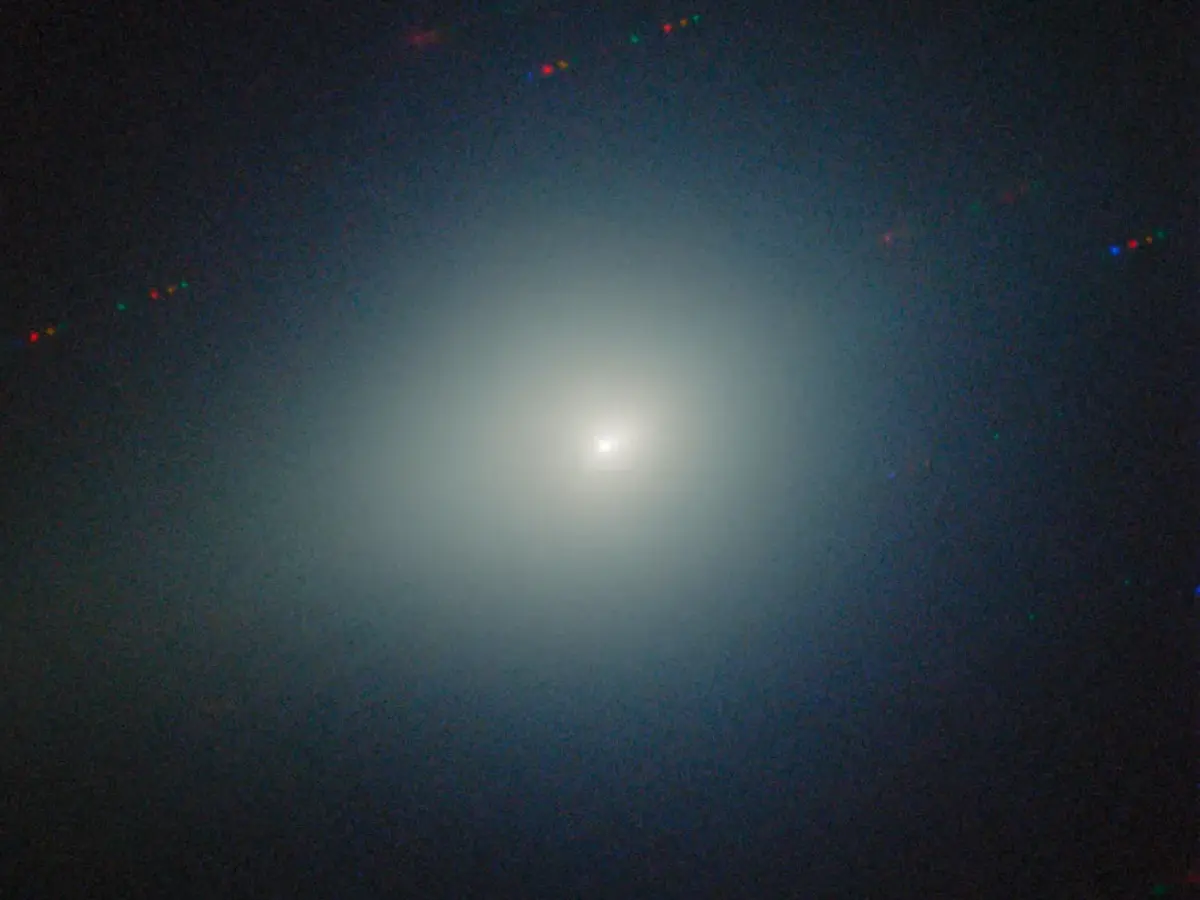
Interstellar comet 3I/ATLAS was born in a very cold region of space. Photograph: (Gemini North Telescope)
3I/ATLAS, the third interstellar comet after ‘Oumuamua and 2I/Borisov, has revealed itself to be as old as the universe. It formed when the Milky Way was still young. However, it is possible that it simply appears old.
3I/ATLAS, the third interstellar comet, has been roaming the universe for 12 billion years, according to a new analysis published in Nature Astronomy. A team led by molecular astrophysicist Martin Cordiner of NASA Goddard Space Flight Center has discovered that it was born in a very cold, and primordial region of the universe, and could be nearly 12 billion years. Researchers used the James Webb Space Telescope to study the ratios of hydrogen and carbon isotopes in the comet, which revealed that it is "not only distinct, but also likely much older than our Solar System." Researchers say 3I/ATLAS is currently nearing Saturn, and will pass Pluto in 2029 and exit the heliosphere in 2035.
3I/ATLAS first grabbed headlines after being discovered on July 1, 2025. Calculations showed that it was 7 to 11 billion years old. The comet also displayed several anomalies, such as a lack of tail for a very long time. However, later it was observed to be releasing water like a hose into space. It was a strange visitor that defied the basic rules of a comet. Now with the latest observations, scientists are asking, "What can this unique object tell us about the history of our galaxy?"
Isotope ratio in 3I/ATLAS different from any seen in solar system bodies
Cordiner and his team tried to learn the chemistry taking place in the comet's coma through infrared observations from JWST and radio observations from ALMA. Ratios of isotopes of hydrogen and carbon were the primary details being studied as they offer a window into 3I/ATLAS's past. An unusual amount of heavy hydrogen, or deuterium, was found in the water located in the coma. The researchers measured a deuterium-to-hydrogen ratio of 0.98 per cent, more than 10 times higher than that found in bodies in our solar system. The carbon isotopes present in it were also different from those seen in comets, planets and meteorites in our solar system. In fact, they have never even been observed in the nearest star-forming regions. Also Read: NASA's TESS captures 3I/ATLAS once again. But some data is missing. Here's what happened
Such extreme deuterium enrichment can only happen when water forms at temperatures below -243 degrees Celsius. This suggests that the comet's water was formed in an extremely cold region. "The detection of such strong deuterium-bearing water is astonishing, as it is so different from any other primitive solar system object, and challenges our understanding of how ices are formed in space," Cordiner said. Also Read: Why wait 60 years? Sun can help us reach 3I/ATLAS in the year 2085, if we launch in 2035
Trending Stories
&imwidth=280&imheight=210&format=webp&quality=medium)
&imwidth=280&imheight=210&format=webp&quality=medium)
&imwidth=280&imheight=210&format=webp&quality=medium)
&imwidth=280&imheight=210&format=webp&quality=medium)
&imwidth=280&imheight=210&format=webp&quality=medium)
&imwidth=280&imheight=210&format=webp&quality=medium)
&imwidth=280&imheight=210&format=webp&quality=medium)
&imwidth=280&imheight=210&format=webp&quality=medium)
&im=FitAndFill=(700,400)&imwidth=280&imheight=210&format=webp&quality=medium)
&imwidth=280&imheight=210&format=webp&quality=medium)
&imwidth=280&imheight=210&format=webp&quality=medium)
&imwidth=280&imheight=210&format=webp&quality=medium)
&imwidth=280&imheight=210&format=webp&quality=medium)
&imwidth=280&imheight=210&format=webp&quality=medium)
&imwidth=280&imheight=210&format=webp&quality=medium)
&im=FitAndFill=(700,400)&imwidth=280&imheight=210&format=webp&quality=medium)
&imwidth=280&imheight=210&format=webp&quality=medium)
&imwidth=280&imheight=210&format=webp&quality=medium)
&imwidth=280&imheight=210&format=webp&quality=medium)
&imwidth=280&imheight=210&format=webp&quality=medium)
&imwidth=280&imheight=210&format=webp&quality=medium)
&imwidth=280&imheight=210&format=webp&quality=medium)
&imwidth=280&imheight=210&format=webp&quality=medium)
&imwidth=280&imheight=210&format=webp&quality=medium)
&imwidth=280&imheight=210&format=webp&quality=medium)
&imwidth=280&imheight=210&format=webp&quality=medium)
&imwidth=280&imheight=210&format=webp&quality=medium)
&imwidth=280&imheight=210&format=webp&quality=medium)
&imwidth=280&imheight=210&format=webp&quality=medium)
&imwidth=280&imheight=210&format=webp&quality=medium)
&imwidth=280&imheight=210&format=webp&quality=medium)
&imwidth=280&imheight=210&format=webp&quality=medium)
&imwidth=280&imheight=210&format=webp&quality=medium)
&imwidth=280&imheight=210&format=webp&quality=medium)
The unusually high ratios of carbon-12 to carbon-13 showed that the material it was made of was untouched by dying stars, since heavier elements came to exist in the universe only after several generations of stars had been born and passed away. This information was compared with models showing how the Milky Way's chemistry had changed. This led them to conclude that 3I/ATLAS was born when the galaxy was young and is likely 11 to 12 billion years old.
However, there is also the possibility that it was born in a region where dust from dead stars had not reached, which leads the material in it to appear older than it actually is.

