Researchers discover first proof of wild female chimpanzees experiencing menopause

Researchers discover first proof of wild female chimpanzees experiencing menopause
A handful of mammals, including humans and toothed whales, are known to have extended lifespans in females beyond their reproductive years.
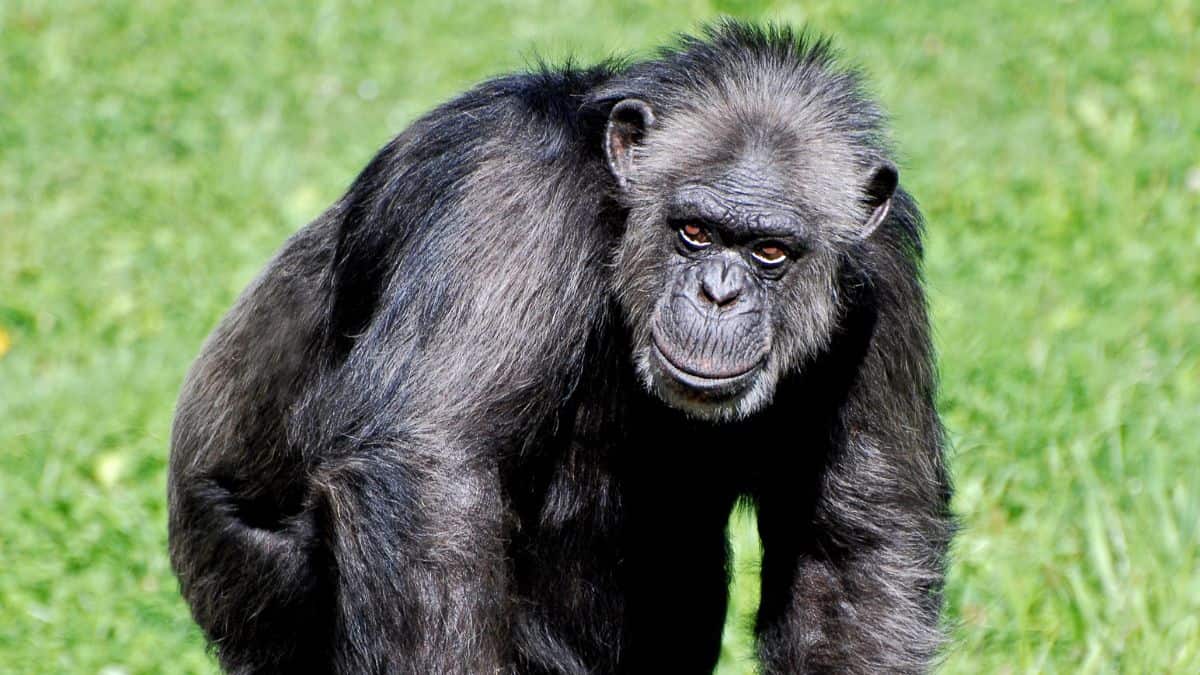
However, a recent study has uncovered the very first pieces of evidence of female wild chimpanzees experiencing menopause and having a post-fertile life, which has been very rare in the animal kingdom.
"Chimpanzees have been studied in the wild for a long time, and you might think there's nothing left to learn about them," senior author Kevin Langergraber of Arizona State University told news agency AFP. "I think this research shows us that's not true."

Just like humans and other chimpanzee populations, a team of researchers from the University of California Los Angeles found out that fertility in western Uganda’s Ngogo community of wild chimpanzees declined after the age of 30, with no births observed after they aged 50.
After studying the mortality and fertility rates of 185 female chimpanzees at the Kibale National Park from the demographic data gathered from 1995 to 2016, the research team estimated the fraction of adult life spent in a post-reproductive state for all the females that were surveyed.
The hormone levels in the urine samples, collected from 66 female chimps were also measured by the researchers, linking it with the human menopause. It included an increase in the levels of follicle-stimulating and ovulating hormones, as well as decreasing levels of ovarian steroid hormones including estrogens and progestins. The chimps were of inconsistent reproductive levels and ages, varying from 14 to 67 years.
&imwidth=180&imheight=135&format=webp&quality=medium)
Viral video shows cross falling on Colombia priest, no official confirmation | WATCH
&imwidth=180&imheight=135&format=webp&quality=medium)
Rafale Marine fighter begins flight trials in Goa ahead of Indian Navy induction
&imwidth=180&imheight=135&format=webp&quality=medium)
Ranbir Kapoor apologises for Dussehra speech slip, clarifies remark at Ramayana event
&imwidth=180&imheight=135&format=webp&quality=medium)
Meta slapped with $25 billion fine in New Mexico over Facebook data practices, company plans appeal
&imwidth=180&imheight=135&format=webp&quality=medium)
WATCH: Woman IPS officer fires several rounds of AK-47, ignites debate online
&imwidth=180&imheight=135&format=webp&quality=medium)
EU probes Booking.com under Digital Services Act
&imwidth=180&imheight=135&format=webp&quality=medium)
Pakistan signs another defence pact even as Makkah Alliance shows no teeth. This time, it's with Qatar, Indonesia, Turkey
&imwidth=180&imheight=135&format=webp&quality=medium)
Ilhan Omar breaks silence over alleged marriage to her brother; Trump thinks it's 'really good answer'
&imwidth=180&imheight=135&format=webp&quality=medium)
US-Iran war: Bibi, Trump gamble on new Iran war to save themselves in polls
&imwidth=180&imheight=135&format=webp&quality=medium)
From Agni-V to Project Kusha: How are India’s indigenous missile systems and defence shield reshaping modern warfare
&imwidth=180&imheight=135&format=webp&quality=medium)
Will Rohit and Kohli play ODI World Cup 2027? BCCI president Manhas says board 'not in a position to comment'
&imwidth=180&imheight=135&format=webp&quality=medium)
Why websites around the world are suddenly going offline? What you need to know about PHP
&imwidth=180&imheight=135&format=webp&quality=medium)
US midterms 2026: What polls and prediction markets indicate about Congress
&imwidth=180&imheight=135&format=webp&quality=medium)
'You are a dummy, you are a stupid person': Trump loses temper with CNN, ABC reporters after questions about Russia sanctions
&imwidth=180&imheight=135&format=webp&quality=medium)
China's dancing robot turns violent bodyguard, lifts cars and fights intruders - Watch
&imwidth=180&imheight=135&format=webp&quality=medium)
16-foot doomsday fish in Chile triggers fears that the next earthquake is coming
&imwidth=180&imheight=135&format=webp&quality=medium)
US to get 850 F-35 stealth fighter jets under 10-year Pentagon-Lockheed deal
&imwidth=180&imheight=135&format=webp&quality=medium)
Are the US and Israel preparing for another major attack on Iran? Here's what report claims
&imwidth=180&imheight=135&format=webp&quality=medium)
Priyanka Chopra celebrates Dussehra 2026 with Nick Jonas and daughter Malti Marie | See pics
&im=FitAndFill=(700,400)&imwidth=180&imheight=135&format=webp&quality=medium)
New OTT releases this week (October 19-25, 2026): Gajab Raat to Chaar Yaar-8 titles to watch during Dussehra week on Netflix, Prime Video and more
&imwidth=180&imheight=135&format=webp&quality=medium)
‘I caution the president...’: Trump’s ex-press secretary warns after Zacharia’s exit
&imwidth=180&imheight=135&format=webp&quality=medium)
'Father of all bombs' vs 'mother of all bombs': Iran threatens US with new weapon as Trump hints at MOAB strike
&imwidth=180&imheight=135&format=webp&quality=medium)
Diljit Dosanjh's Oct 30 Delhi show hits roadblock, Delhi Police denies permission
&imwidth=180&imheight=135&format=webp&quality=medium)
Australia police arrest former national 100m champ Jake Doran for alleged child abuse
&imwidth=180&imheight=135&format=webp&quality=medium)
'Gyanu must go': CJP's Saurav Das, Ashutosh Ranka after release, despite Jantar Mantar protest undertaking
&imwidth=180&imheight=135&format=webp&quality=medium)
Kolkata airport: CISF detects ₹1.13 crore in US dollars hidden in bags of 2 Bangkok-bound passengers
&imwidth=180&imheight=135&format=webp&quality=medium)
Feds obtain DNA evidence that could prove Ilhan Omar married her brother: Report
&imwidth=180&imheight=135&format=webp&quality=medium)
US midterms 2026: Trump's approval rating hits record low as Democrats gain ground
Ngogo females underwent a menopausal shift equivalent to that of humans, starting around the age of 50, said the researchers in their study published in the journal Science.
“The results show that under certain ecological conditions, menopause and post-fertile survival can emerge within a social system that’s quite unlike our own and includes no grandparental support,” said Brian Wood, UCLA associate professor of anthropology, referring to the grandmother hypothesis.
The researchers further found that just like humans, it was not distinctive for these female chimpanzees to live past the age of 50.
A female who reached adulthood at age 14 was post-reproductive for about one-fifth of her adult life, about half as long as a human hunter-gatherer, they said.
“We now know that menopause and post-fertile survival arise across a broader range of species and socio-ecological conditions than formerly appreciated, providing a solid basis for considering the roles that improved diets and lowered risks of predation would have played in human life history evolution,” said Wood.
(With inputs from agencies)
WATCH WION LIVE HERE
You can now write for wionews.com and be a part of the community. Share your stories and opinions with us here.