'Eyeball Earth' older than our planet and leaking helium reveals an atmosphere

&imwidth=600&imheight=450&format=webp&quality=medium "'Eyeball Earth' older than our planet and leaking helium reveals an atmosphere")
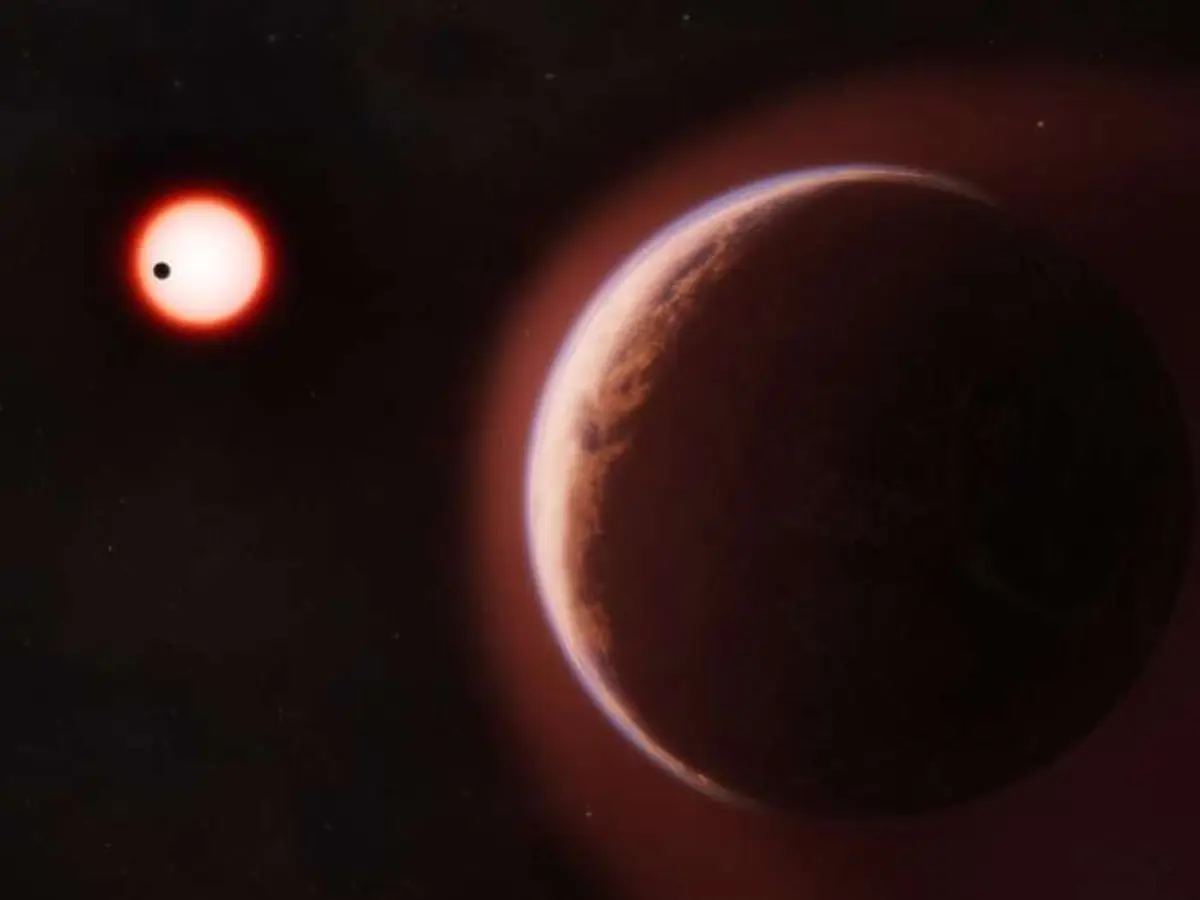
LHS 1140 b is 48 light-years from Earth and is nearly 5 billion years old.
An exoplanet that is nearly five billion years old has sustained an atmosphere all this time. Astronomers detected helium leaking into space, a clear sign that it has been replenishing itself on its own. This is the first ever exoplanet to reveal an atmosphere.
A planet with an atmosphere has been detected 48 light-years from Earth, in the first-of-its-kind discovery. "An atmosphere is essential for a planet to support life as we know it," lead author Collin Cherubim said. LHS 1140 b is an Earth-like, rocky planet orbiting a red dwarf within the habitable zone. The discovery is evidence that it is possible that other planets outside the solar system could harbour conditions for life. Astronomers have till now, found more than 6000 planets orbiting other stars, but never has one displayed a stable atmosphere.
The research was published in Science. "This is the first time anyone has found an atmosphere on a rocky planet in the habitable zone of another star," Cherubim said. The study notes that the rocky planet is leaking helium gas into space, which shows it has held on to its atmosphere even billions of years after it was born.
"The exciting part about this paper, and why I think it was accepted into Science, was that this is the first time that we're seeing a rocky, Earth-like planet that could still have an atmosphere," University of Florida Assistant Professor of Astronomy Jason Dittmann, who first discovered the planet in 2016, said.
The Magellan Clay telescope at Las Campanas Observatory detected helium escaping from the planet. Cherubim and the theoretical model created by his team predicted that LHS 1140 b has an upper atmosphere rich in helium. Dittmann says the rocky world should have a temperature similar to Earth's. There is a second planet in the system, LHS 1140c. It is located outside the system's habitable zone and doesn't have an atmosphere.
LHS 1140 b atmosphere is over three billion years old
Trending Stories
&im=FitAndFill=(700,400)&imwidth=280&imheight=210&format=webp&quality=medium)
&imwidth=280&imheight=210&format=webp&quality=medium)
&imwidth=280&imheight=210&format=webp&quality=medium)
&imwidth=280&imheight=210&format=webp&quality=medium)
&imwidth=280&imheight=210&format=webp&quality=medium)
&imwidth=280&imheight=210&format=webp&quality=medium)
&imwidth=280&imheight=210&format=webp&quality=medium)
&imwidth=280&imheight=210&format=webp&quality=medium)
&imwidth=280&imheight=210&format=webp&quality=medium)
&imwidth=280&imheight=210&format=webp&quality=medium)
&imwidth=280&imheight=210&format=webp&quality=medium)
&imwidth=280&imheight=210&format=webp&quality=medium)

&imwidth=280&imheight=210&format=webp&quality=medium)
&imwidth=280&imheight=210&format=webp&quality=medium)
&imwidth=280&imheight=210&format=webp&quality=medium)
&imwidth=280&imheight=210&format=webp&quality=medium)
&im=FitAndFill=(700,400)&imwidth=280&imheight=210&format=webp&quality=medium)
&im=FitAndFill=(700,400)&imwidth=280&imheight=210&format=webp&quality=medium)
&imwidth=280&imheight=210&format=webp&quality=medium)
&im=FitAndFill=(700,400)&imwidth=280&imheight=210&format=webp&quality=medium)
&imwidth=280&imheight=210&format=webp&quality=medium)
&imwidth=280&imheight=210&format=webp&quality=medium)
&imwidth=280&imheight=210&format=webp&quality=medium)
&imwidth=280&imheight=210&format=webp&quality=medium)
&imwidth=280&imheight=210&format=webp&quality=medium)
&imwidth=280&imheight=210&format=webp&quality=medium)
&im=FitAndFill=(700,400)&imwidth=280&imheight=210&format=webp&quality=medium)
&imwidth=280&imheight=210&format=webp&quality=medium)
&imwidth=280&imheight=210&format=webp&quality=medium)
&imwidth=280&imheight=210&format=webp&quality=medium)
&im=FitAndFill=(700,400)&imwidth=280&imheight=210&format=webp&quality=medium)
&imwidth=280&imheight=210&format=webp&quality=medium)

&imwidth=280&imheight=210&format=webp&quality=medium)
&imwidth=280&imheight=210&format=webp&quality=medium)
&im=FitAndFill=(700,400)&imwidth=280&imheight=210&format=webp&quality=medium)
Several rocky exoplanets have been discovered in the past. However, all of them lost their atmosphere at some point in time. But not LHS 1140 b. It has been around for nearly five billion years, but the helium has persisted. All of it would have been lost had it not been replenishing its own supply, clearly a sign that an atmosphere is present on this world. Cherubim now wants to study the complete composition of this planet and later investigate whether it has surface oceans or other signs that it could support life.

