
&imwidth=800&imheight=600&format=webp&quality=medium "China's 66 billion trees in deserts are absorbing more CO2 and growing faster than natural ones")
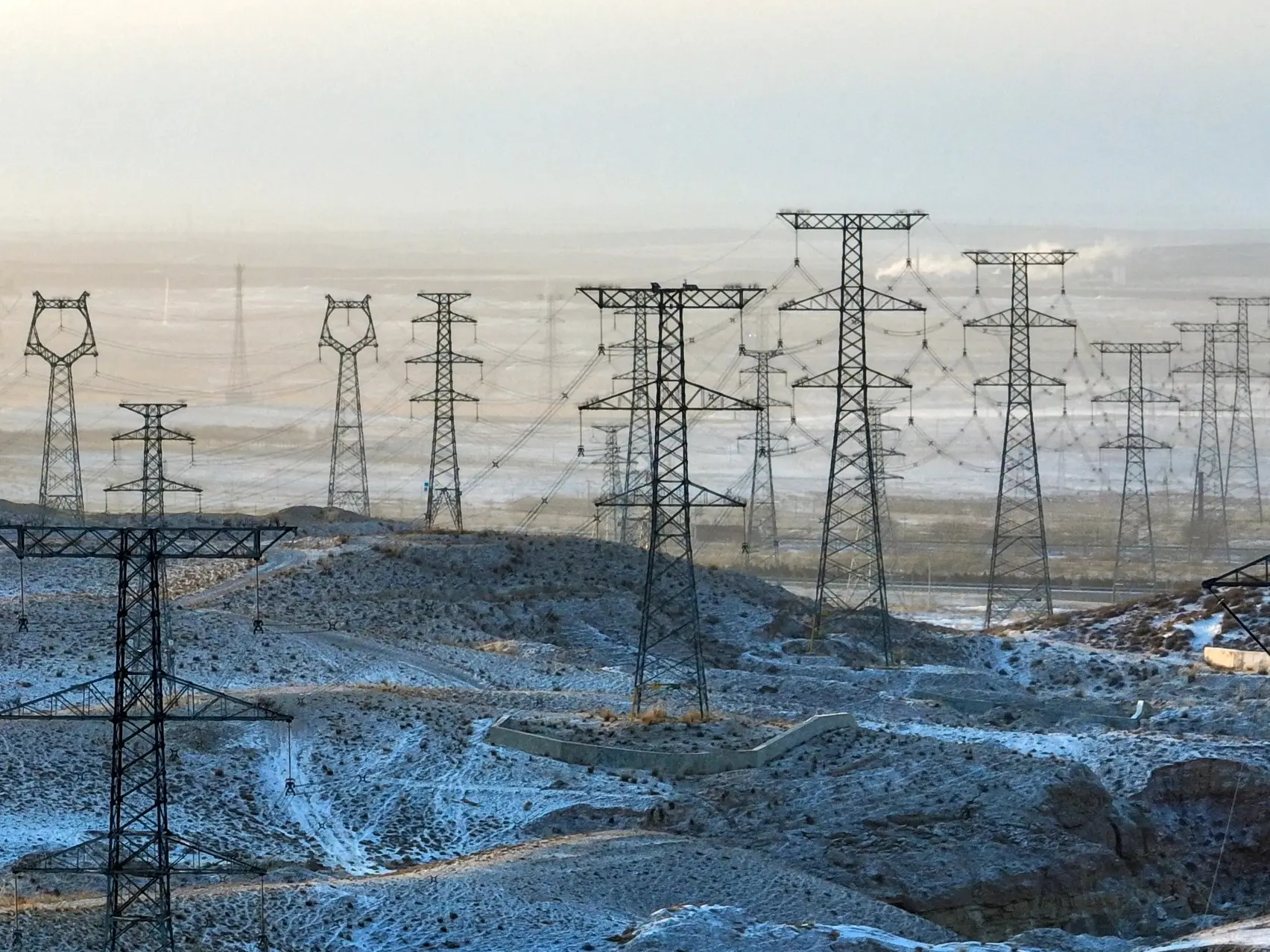
A study has found that trees planted by China in the past 48 years to contain the spread of two major deserts are growing faster than trees in natural forests. The country has planted 66 billion trees since 1978 as part of its "Great Green Wall" project. The work is aimed at slowing down the spread of the Gobi and Taklamakan deserts. It plans to plant 34 billion more trees by 2050. Scientists decided to study how these trees were different from the ones growing in forests. The ones planted were found to absorb large amounts of CO2, and their leaf area increased 66 per cent faster than natural ones.
Researchers don't know exactly how these trees differ from the natural ones. Yuhang Luo, first author of the study, told Live Science that "most global ecosystem models do not distinguish between forest types", and so they wanted to understand whether species diversity, density and the age of a tree affect how it responds to CO2 and climate change.
Also Read: 82-million-year-old fossil reveals Antarctica was home to the largest dinosaurs to ever walk Earth

Planted trees grew 66% faster than natural trees
Using satellite data, the team tracked leaf area index to determine how fast these trees grew. The index is a measure of canopy density and a key driver of carbon uptake. The results showed a stark contrast between them, with planted trees increasing their leaf area 66% faster than natural ones. The study states that this is likely because of the difference in their age. The planted trees are younger, and they typically grow faster. The researchers also compared forests of similar age to see if the same held true for them as well. Surprisingly, they still found that the planted ones grew 4.6 per cent.
Trending Stories
&im=FitAndFill=(700,400))
How fast can the Sukhoi Su-30 fighter jet really fly?
)
Did China ask its people 'not to respond to aliens'? Origin of bizarre claim on social media
)
MS Dhoni-CSK Fallout? Report claims failed stake sale talks triggered rift
)
Scientists reveal the SAFEST COUNTRY when catastrophe strikes the planet
)
Serial killer on the loose in South Korea's Jeju Island? Fourth body found in three days as more than a dozen people go missing
)
2/3rd of glacier detached, collapsed: ISRO satellite images reveal what triggered Nepal floods
)
Trump once again claims without him there would be ‘no Israel right now’
)
Foreign espionage attacks against German companies surge to 37%, Bitkom report reveals
)
Blake Lively wins partial legal fee from Justin Baldoni after $8M request
)
Why is Pakistan deploying Turkish Bayraktar TB2 drones near India border?
)
'OH MY GOD! We've found other agents!': Investigators discover not one or two, almost 700 OpenAI AI agents went rogue, hacked Hugging Face
)
Lunar eclipse 2026: India timings, places to see and more. August Blood moon factsheet
)
RSS chief Mohan Bhagwat on global outreach tour
)
Both pilots killed as training aircraft crashes in Lucknow – What we know
)
16-year-old charged with preparing terror attack on kindergarten in Norway
&im=FitAndFill=(700,400))
How the S-400 protects itself from enemy attacks
)
Nepal floods: Over 165 dead, 400 missing; US, India, China, World Bank mobilise aid
)
India's multi-layered watch: The new surveillance war
)
5 doomsday planes spotted in US skies hours after CIA director's secret trip to Russia
)
9/11 mastermind Khalid Sheikh Mohammed to finally face trial in 2028, nearly 27 years after horrific attacks
)
Islamabad hospital fire: What we know about one of the biggest facility that housed Imran Khan
)
Workers run for life while filming Nepal flash flood: Scary new visuals emerge from Rasuwa
)
Russian military planes enter South Korean air defence zone amid rising tensions with North Korea: What's happening
)
Ron Weasley Is Back! Rupert Grint set to return to Harry Potter universe on Broadway
)
400-year-old 'vampire' grave in Poland reveals non-existent genetic lineage
)
Dolly Parton, global icon and queen of country music, dies at 80
)
Nepal flash floods: Kailash Mansarovar yatra affected, close to 400 pilgrims out of contact
)
'If he is dead, they're putting on a pretty good show': Trump casts fresh doubt over Mojtaba Khamenei's fate
)
Man arrested near US Capitol with guillotine in pickup truck: What happened?
&im=FitAndFill=(700,400))
Why the Su-30MKI cockpit is painted bright turquoise green
Scientists said this is primarily because planted trees grow with human intervention, while trees in forests compete for water and sunlight. Planted trees often include fast-growing species like eucalyptus and poplar. Weeds and other competing vegetation are removed regularly, and they are fertilised as well. So these trees do not have to fight for water and nutrients.
However, once they reach a certain age, that is when the planted trees start declining. They peak around 30 and 40, and then start dropping. Meanwhile, trees in the wild grow slowly but steadily and at an advantage in the long run. "Planted forests can be a powerful short-term tool for carbon uptake, but this advantage is temporary," Luo said, adding that "forests remain irreplaceable."

