

&imwidth=800&imheight=600&format=webp&quality=medium "82-million-year-old fossil reveals Antarctica was home to the largest dinosaurs to ever walk Earth")
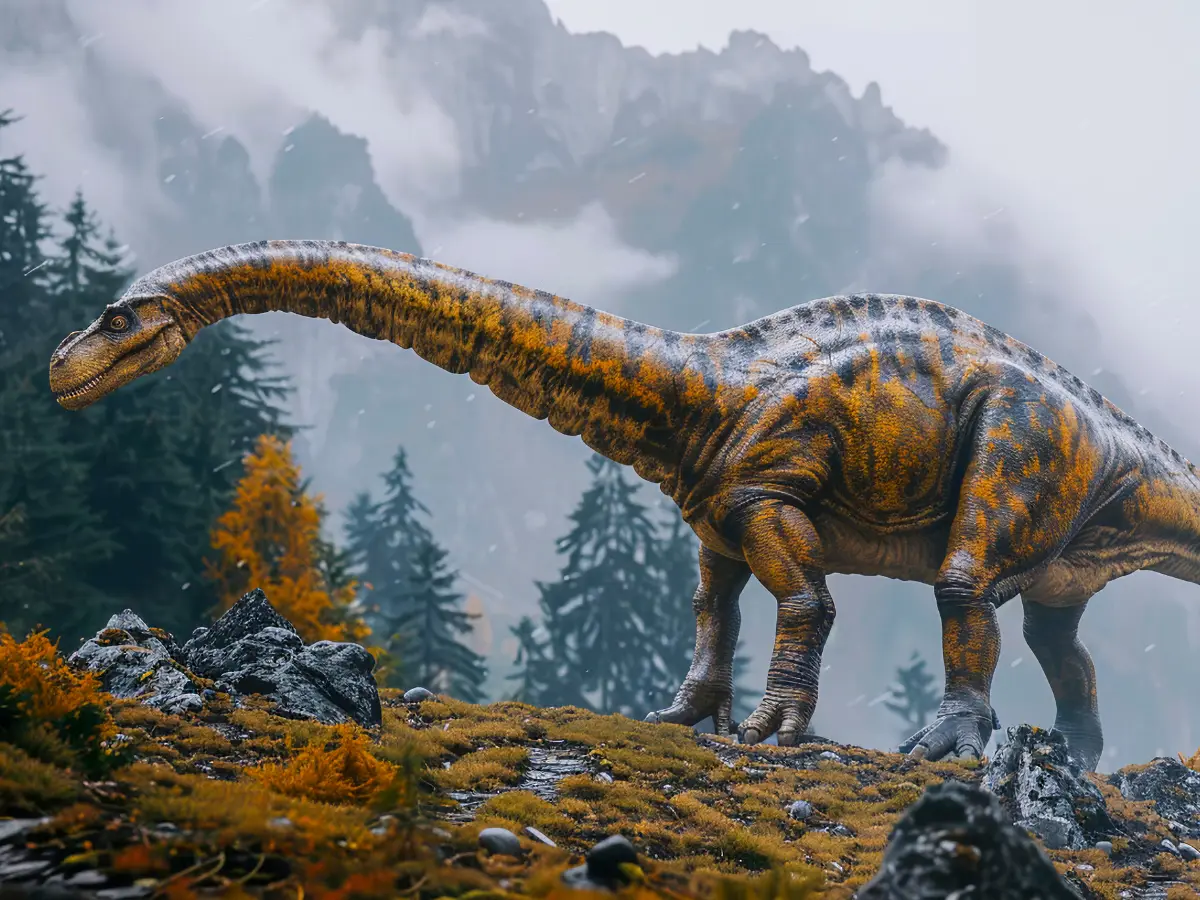
Antarctica was home to the biggest dinosaurs ever to walk Earth, and for the first time, a fossil of this giant has been recovered. Surprisingly, it had been sitting in a drawer for 40 years and remained completely unnoticed. A study published on June 29 in the journal Acta Palaeontologica Polonica states that this 82-million-year-old fossilised tail vertebra belonged to a titanosaur. The fossil was collected from Antarctica in 1985, and scientists at the time believed it came from a marine creature. Geologist Mike Thomson and members of the British Antarctic Survey (BAS) were on an expedition to map rock layers on James Ross Island when they made the discovery. It was sent to the UK and became part of a collection of fossils, where it remained all this time.
However, study co-author Mark Evans, a palaeontologist, suspected that this tail bone belonged to a dinosaur. He reached out to Paul Barrett, a palaeontologist at the Natural History Museum in London. As soon as he saw it, he knew it came from a titanosaur. It measured ten centimetres long and had a hollow on one end and a round bump on the other, which revealed where it fit in comparison to other vertebrae in a line of ball-and-joint sockets. "This is a combination of features that’s completely unique to these types of dinosaurs," Barrett notes.
The scientists are yet to identify the species it belonged to because the fossil is too incomplete. Their initial analysis reveals that this creature was only about 23 feet long and probably died when it was still young. “Maybe it was a juvenile dinosaur, or maybe it was a genuinely small one—one that was actually bucking the trend for the rest of the group as a smaller adult,” Barrett told the BBC. The fossil was found in a marine rock formation, indicating that after the dinosaur died, its remains drifted into the sea and sank.
Antarctica was a lush green land millions of years ago, providing a habitat suited to dinosaurs. It had high carbon dioxide levels and intense volcanic activity. But it has since become a frozen continent with roughly 98% of it buried under miles of ice. This has led to any fossils in the region to be buried, making finding them extremely difficult.

