100-million-year-old insect discovered in Myanmar named after K-pop band Stray Kids. Here's why

&imwidth=600&imheight=450&format=webp&quality=medium "100-million-year-old insect discovered in Myanmar named after K-pop band Stray Kids. Here's why")
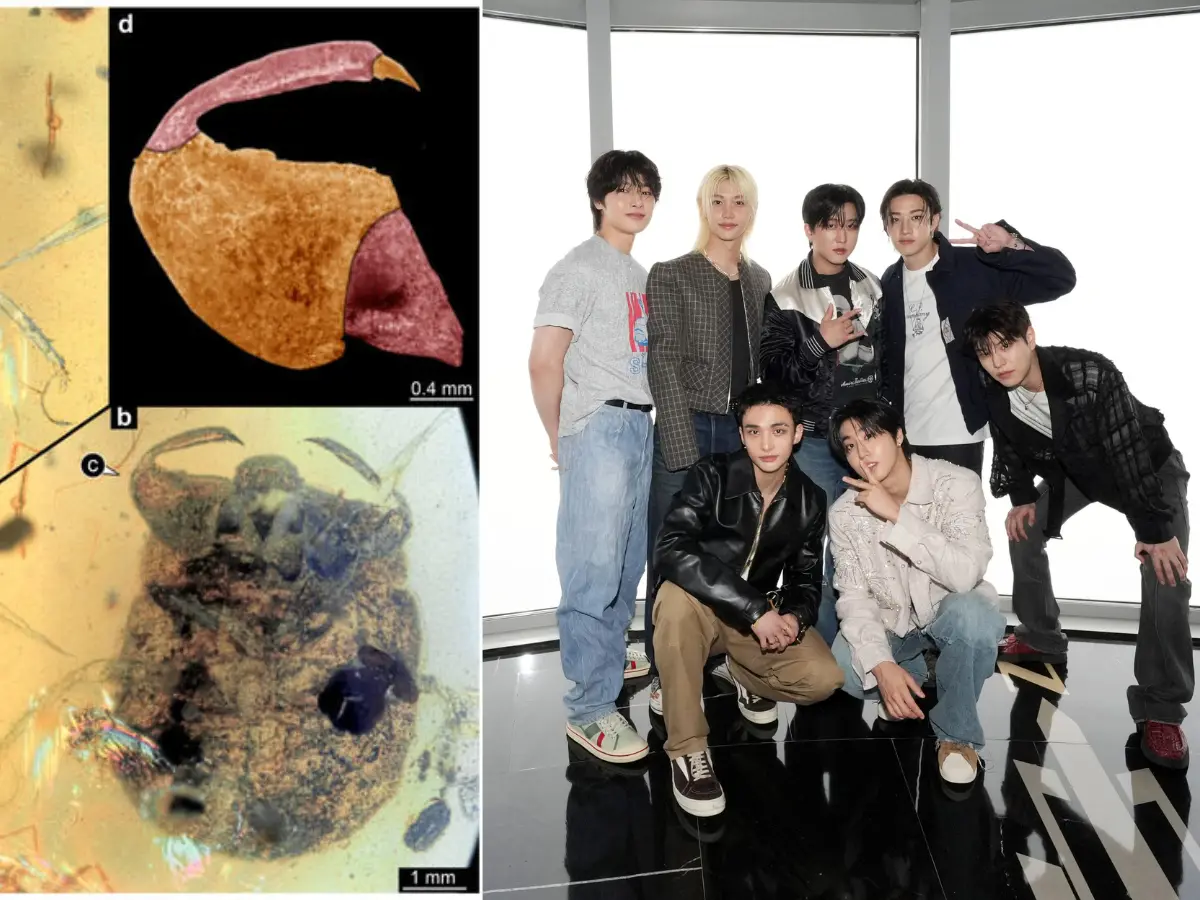
Insect named after K-pop boy band Stray Kids. Photograph: (Carolin Haug/Ludwig Maximilian University of Munich - AFP)
An insect that lived 100 million years ago has been discovered fossilised in amber in Myanmar. It has forceps like claws similar to crabs in the front, which led to it being named after the popular K-pop band Stray Kids.
Scientists have discovered an insect fossil in Myanmar with large claws on its front legs, like forceps, an extremely rare feature in these creatures. It was found embedded in amber from the Kachin region, where lies the Cretaceous fauna of a 100-million-year-old forest ecosystem. The pincer-like feature looks like the grasping appendage of crabs, the study by scientists from Ludwig Maximilian University of Munich states. Since this unique feature resembles the trademark pose of a popular K-pop band, Stray Kids, it has been named after it. "Previously, such chelae were known from only three insect groups. This fossil therefore represents the fourth known case of these structures evolving independently in insects," Privatdozentin Carolin Haug, zoologist at LMU's Faculty of Biology, said.
The study has been published in the journal Insects. To examine the fossil, the team worked with researchers from the University of Rostock and the University of Oulu in Finland. Micro-computed tomography helped visualise all structures of its anatomy in 3D. Analyses of the shapes of more than 2,000 grasping claws across various species revealed something unexpected: the claws of a fossilised true bug looked nothing like those of other insects. Instead, this ancient insect shared a striking resemblance with more distant relatives in the arthropod family, specifically crustaceans like crabs, lobsters, and shrimp.
K-pop and science come together
Interestingly, the forcep or pincer found on this bug led to it being named after a popular Korean pop group. The fossil has been placed in a new genus of its own and given the scientific name Carcinonepa libererrantes. Carcino is the Latinised Greek word for crab, while nepa is a reference to the group of true water bugs known as Nepomorpha. Meanwhile, the species name "libererrantes" is a Latinisation of the K-pop group Stray Kids. "The name seemed fitting because the posture of the fossil's chelae strongly resembles the group's trademark pose. Stray Kids, I should add, is the favourite band of one of the paper's authors, Fenja Haug," she explained.
The bug most likely used the chelae on its front legs for catching small insects. Its body structure shows similarities to living representatives of the group Gelastocoridae, commonly known as toad bugs, which have turned into terrestrial predators over the years.
&imwidth=280&imheight=210&format=webp&quality=medium)
&imwidth=280&imheight=210&format=webp&quality=medium)
&im=FitAndFill=(700,400)&imwidth=280&imheight=210&format=webp&quality=medium)
&imwidth=280&imheight=210&format=webp&quality=medium)
&imwidth=280&imheight=210&format=webp&quality=medium)
&imwidth=280&imheight=210&format=webp&quality=medium)
&im=FitAndFill=(700,400)&imwidth=280&imheight=210&format=webp&quality=medium)
&imwidth=280&imheight=210&format=webp&quality=medium)
&imwidth=280&imheight=210&format=webp&quality=medium)
&imwidth=280&imheight=210&format=webp&quality=medium)
&imwidth=280&imheight=210&format=webp&quality=medium)
&imwidth=280&imheight=210&format=webp&quality=medium)
&imwidth=280&imheight=210&format=webp&quality=medium)
&imwidth=280&imheight=210&format=webp&quality=medium)
&imwidth=280&imheight=210&format=webp&quality=medium)
&imwidth=280&imheight=210&format=webp&quality=medium)
&imwidth=280&imheight=210&format=webp&quality=medium)
&imwidth=280&imheight=210&format=webp&quality=medium)
&im=FitAndFill=(700,400)&imwidth=280&imheight=210&format=webp&quality=medium)
&imwidth=280&imheight=210&format=webp&quality=medium)
&imwidth=280&imheight=210&format=webp&quality=medium)
&imwidth=280&imheight=210&format=webp&quality=medium)
&imwidth=280&imheight=210&format=webp&quality=medium)
&imwidth=280&imheight=210&format=webp&quality=medium)
&imwidth=280&imheight=210&format=webp&quality=medium)
&imwidth=280&imheight=210&format=webp&quality=medium)
&imwidth=280&imheight=210&format=webp&quality=medium)
&imwidth=280&imheight=210&format=webp&quality=medium)
&imwidth=280&imheight=210&format=webp&quality=medium)
&imwidth=280&imheight=210&format=webp&quality=medium)
&imwidth=280&imheight=210&format=webp&quality=medium)
&imwidth=280&imheight=210&format=webp&quality=medium)
&imwidth=280&imheight=210&format=webp&quality=medium)
&imwidth=280&imheight=210&format=webp&quality=medium)
&imwidth=280&imheight=210&format=webp&quality=medium)
&imwidth=280&imheight=210&format=webp&quality=medium)

