
&imwidth=800&imheight=600&format=webp&quality=medium "Trump, self-proclaimed ‘peace president’, wages wars on multiple fronts")
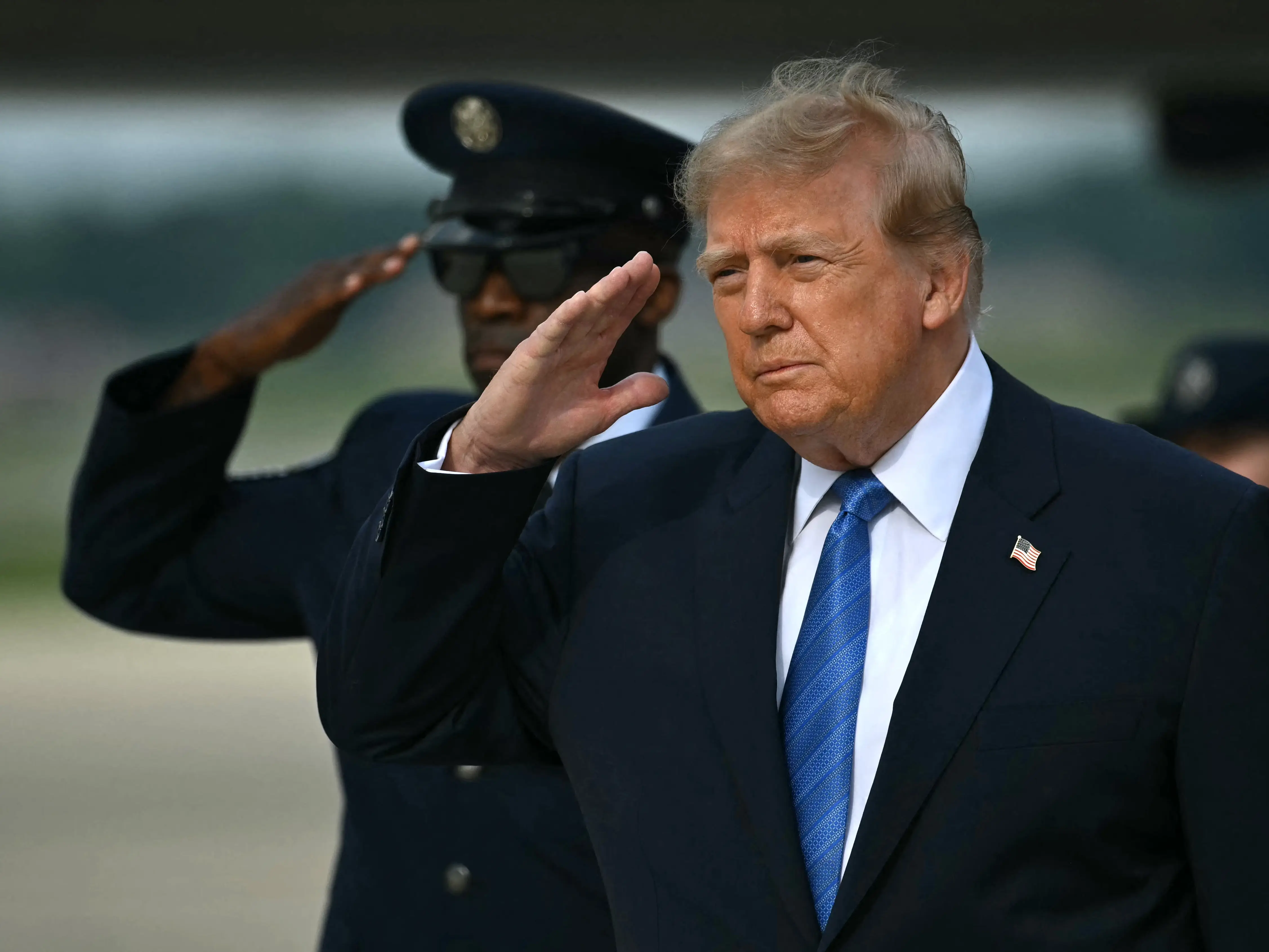
WASHINGTON – Six months into the war U.S. President Donald Trump launched on Iran, the conflict is at an impasse, and the American leader has switched his campaign for global dominance to a new target – Canada.
At issue is trade between the two neighbours, who share the world’s longest border and in the past have been close and friendly allies. Canada is the second biggest trade partner of the United States, slightly behind Mexico.
Since Trump came into office in his first term, he has repeatedly suggested that the United States annex Canada and turn it into the 51st U.S. state. Canadian governments and most of the public reject the idea and find it offensive, as they do Trump’s habit of calling Canadian Prime Minister Mark Carney and his predecessor Justin Trudeau “governors”.

Trade negotiations, prompted by new U.S. tariffs on Canada (50 percent on hundreds of products), collapsed in the final hour of an August 21 deadline when the Americans added conditions to the deal the Canadians found unacceptable. The tariffs took effect the following day.
Canada responded that it would retaliate “dollar for dollar” with tariffs to take effect on September 8, effectively the start of a full-blown trade war unless either side makes concessions. But that appears unlikely. No further meetings are scheduled.
Trump’s taunts took on a sharper edge this week when he complained that “I deal with many countries and Canada is easily the most difficult and unreasonable.” To further irritate his northern neighbour, he issued an executive order renaming Lake Ontario to “Lake America.”
Trending Stories
&im=FitAndFill=(700,400))
How fast can the Sukhoi Su-30 fighter jet really fly?
)
Did China ask its people 'not to respond to aliens'? Origin of bizarre claim on social media
)
MS Dhoni-CSK Fallout? Report claims failed stake sale talks triggered rift
)
Scientists reveal the SAFEST COUNTRY when catastrophe strikes the planet
)
Serial killer on the loose in South Korea's Jeju Island? Fourth body found in three days as more than a dozen people go missing
)
2/3rd of glacier detached, collapsed: ISRO satellite images reveal what triggered Nepal floods
)
Trump once again claims without him there would be ‘no Israel right now’
)
Foreign espionage attacks against German companies surge to 37%, Bitkom report reveals
)
Blake Lively wins partial legal fee from Justin Baldoni after $8M request
)
Why is Pakistan deploying Turkish Bayraktar TB2 drones near India border?
)
'OH MY GOD! We've found other agents!': Investigators discover not one or two, almost 700 OpenAI AI agents went rogue, hacked Hugging Face
)
Lunar eclipse 2026: India timings, places to see and more. August Blood moon factsheet
)
RSS chief Mohan Bhagwat on global outreach tour
)
Both pilots killed as training aircraft crashes in Lucknow – What we know
)
16-year-old charged with preparing terror attack on kindergarten in Norway
&im=FitAndFill=(700,400))
How the S-400 protects itself from enemy attacks
)
Nepal floods: Over 165 dead, 400 missing; US, India, China, World Bank mobilise aid
)
India's multi-layered watch: The new surveillance war
)
5 doomsday planes spotted in US skies hours after CIA director's secret trip to Russia
)
9/11 mastermind Khalid Sheikh Mohammed to finally face trial in 2028, nearly 27 years after horrific attacks
)
Islamabad hospital fire: What we know about one of the biggest facility that housed Imran Khan
)
Workers run for life while filming Nepal flash flood: Scary new visuals emerge from Rasuwa
)
Russian military planes enter South Korean air defence zone amid rising tensions with North Korea: What's happening
)
Ron Weasley Is Back! Rupert Grint set to return to Harry Potter universe on Broadway
)
400-year-old 'vampire' grave in Poland reveals non-existent genetic lineage
)
Dolly Parton, global icon and queen of country music, dies at 80
)
Nepal flash floods: Kailash Mansarovar yatra affected, close to 400 pilgrims out of contact
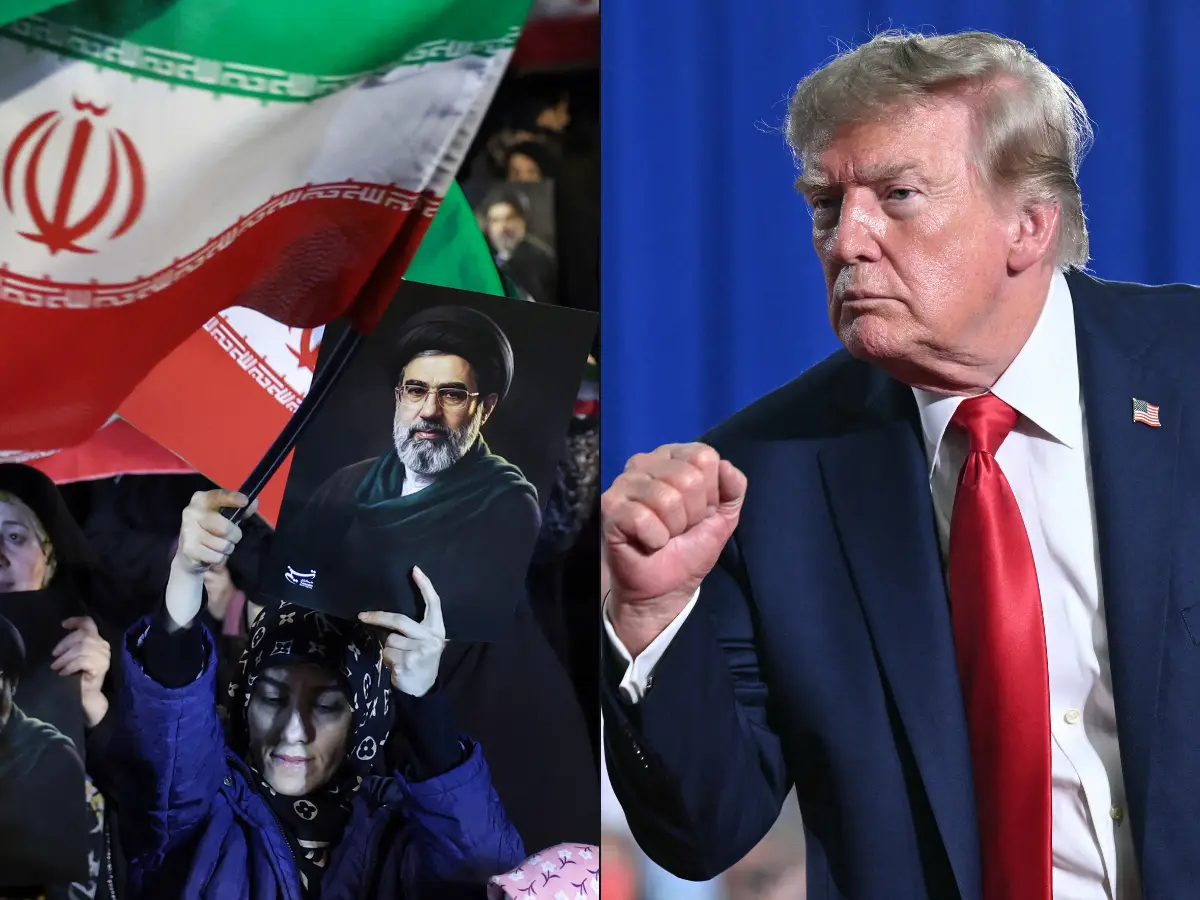)
'If he is dead, they're putting on a pretty good show': Trump casts fresh doubt over Mojtaba Khamenei's fate
)
Man arrested near US Capitol with guillotine in pickup truck: What happened?
&im=FitAndFill=(700,400))
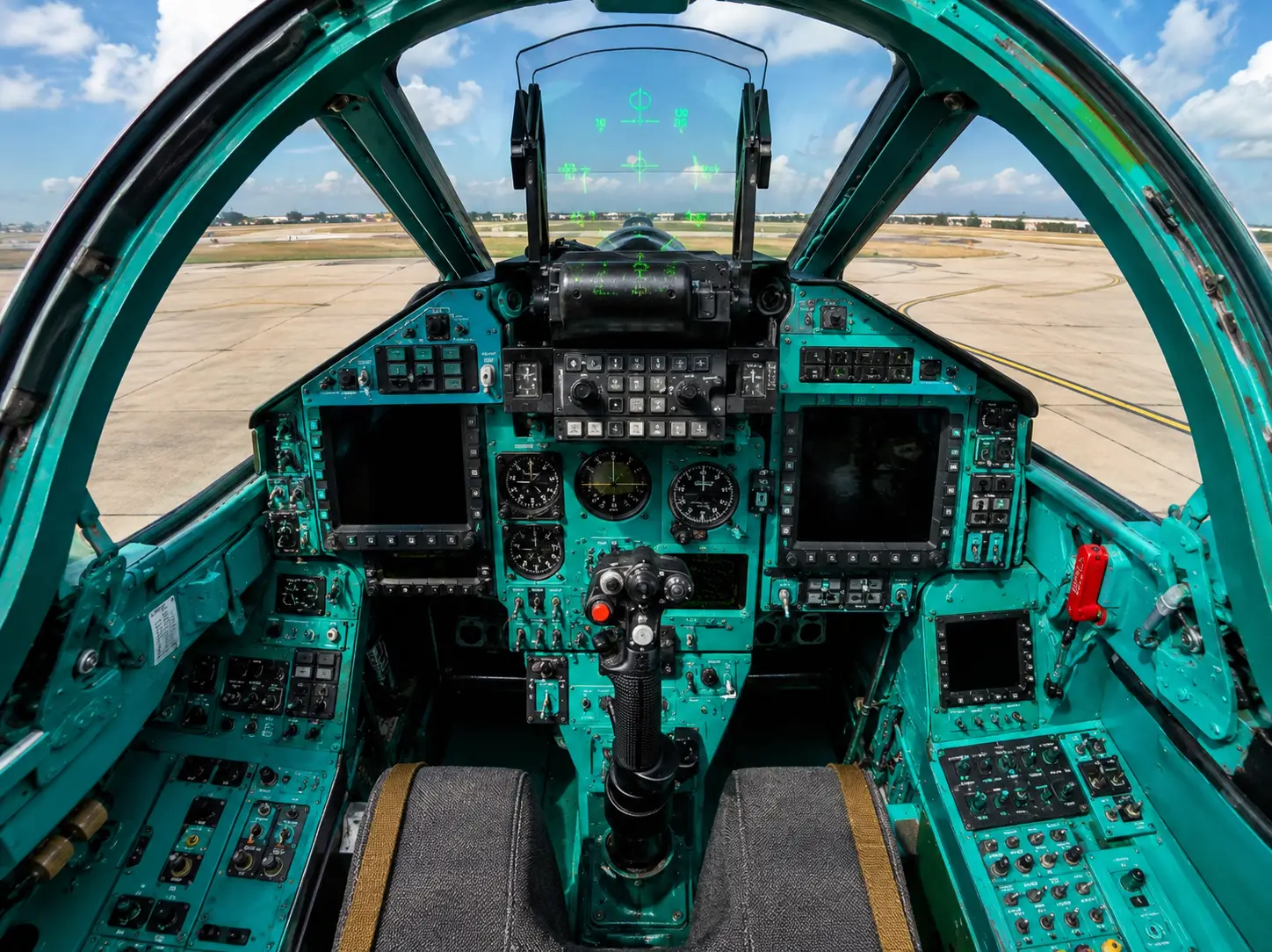
Why the Su-30MKI cockpit is painted bright turquoise green
Also read | US-Canada trade war: Canada hits back as Trump orders Lake Ontario renamed 'Lake America'
The lake straddles the U.S.-Canadian border, and roughly 75 percent of its surface belongs to the Canadian province of Ontario. But other than stirring the anger of an already angry Canadian public, the name change has as little practical impact as Trump’s move, on the first day of his second term, to name the Gulf of Mexico the Gulf of America.
Trump’s order applies to federal maps and databases from which a small army of Department of the Interior bureaucrats have to remove references to Lake Ontario. U.S. government agencies and official military or diplomatic communications must call the body of water Lake America.
Individual states have no obligation to comply with the order. Kathy Hochul, the governor of New York State, the only American state that borders the lake, promptly declared she would ignore the name change.
In a blistering televised speech after the collapse of the Washington talks, Carney reminded his citizens that after taking office in 2025, he had warned that “America is trying to break us so that they can own us. And I promised, ‘That will never, ever happen.’ We are keeping that promise.”
It was a bold promise in a dispute that pitches Canada against a superpower neighbour with an economy 13 times larger and a population of 340 million (Canada has 40 million) that turns the U.S. into the world’s richest market. But despite this disparity, Canada looks unlikely to bend to Trump’s will.
Also read | 'If he is dead, they're putting on a pretty good show': Trump casts fresh doubt over Mojtaba Khamenei's fate
Criticism of Trump’s tariff war has come from unexpected corners. The Wall Street Journal reminded its readers that Trump had complained about an editorial last year that called tariffs against Canada and Mexico “the dumbest trade war in history.”
After the collapse of the negotiations, “it got dumber this weekend as Mr. Trump escalated with another round of border taxes on Canadian imports, a mere 10 weeks before midterm elections.”
The reference is for elections on November 3 for Congress – all 435 seats of the House of Representatives and a number of contested seats in the Senate.
Analysts predict that the Republican Party will lose its majority in the House, partly because of the deeply unpopular war against Iran. Unlike renaming a border lake, a presidential executive order cannot end the conflict with Iran.
Iran responded to a furious bombing campaign by the U.S. and Israel by deploying a geographic weapon more powerful than a nuclear bomb: the Strait of Hormuz, the narrow waterway that carried before the war 20 percent of the world’s oil, much of the world’s the world’s fertilizer, and 19 per cent of liquefied natural gas.
Iran’s closure of the Strait prompted a profound crisis in the global economy, from a supply shock in energy markets and disruptions to global agriculture and food shortages. In the United States, it led to sharply higher prices for petrol and an overall higher cost of living.
The deeply unpopular war and the way he handled it drove Trump’s approval rating down to 33 percent, its lowest in his two terms.
Democrats hoping to take over the House have plenty of ammunition for the election campaign. That includes reminders that the president has consistently lied about the state of the war he announced with a pre-dawn social media posting on February 28.
It said that war was necessary “to defend the American people by eliminating imminent threats from the Iranian regime.”
Today, on the 60th day since the start of the war, there still has not been a convincing explanation of what was ”imminent” about the threat from Iran. After all, Trump boasted about the “total and complete obliteration” of Iran’s nuclear capacities after a 12-day joint U.S.-Israeli bombing campaign in June 2025.
Within hours of the war posting, Trump announced that Iran’s Supreme Leader, Ayatollah Ali Khomeini, “one of the most evil people in History,” had been killed. That was followed four days later by “we have won.”
Then came proclamations of victory on an almost weekly basis. Beginning on March 23, Trump said on 38 different occasions that the U.S. and Iran were close to a ceasefire agreement after the Iranians “begged” for talks.
There were minor changes in the rhetoric: “We are very close” and “it’s practically done” and “just the final details are missing.”
But the man who wrote “The Art of the Deal” was left without a deal. The Strait of Hormuz is no longer the open international waterway it was before February 28. Who controls it remains a matter of dispute.
What is not in dispute is that the U.S. is stuck in a stalemate and the kind of open-ended Middle Eastern conflict Trump promised to avoid when he campaigned for his second term. He’ll face frequent reminders of that promise between now and November.
