

&imwidth=800&imheight=600&format=webp&quality=medium "The Trust Deficit: Why PSLV’s Crisis Could Ground Gaganyaan’s Dreams")
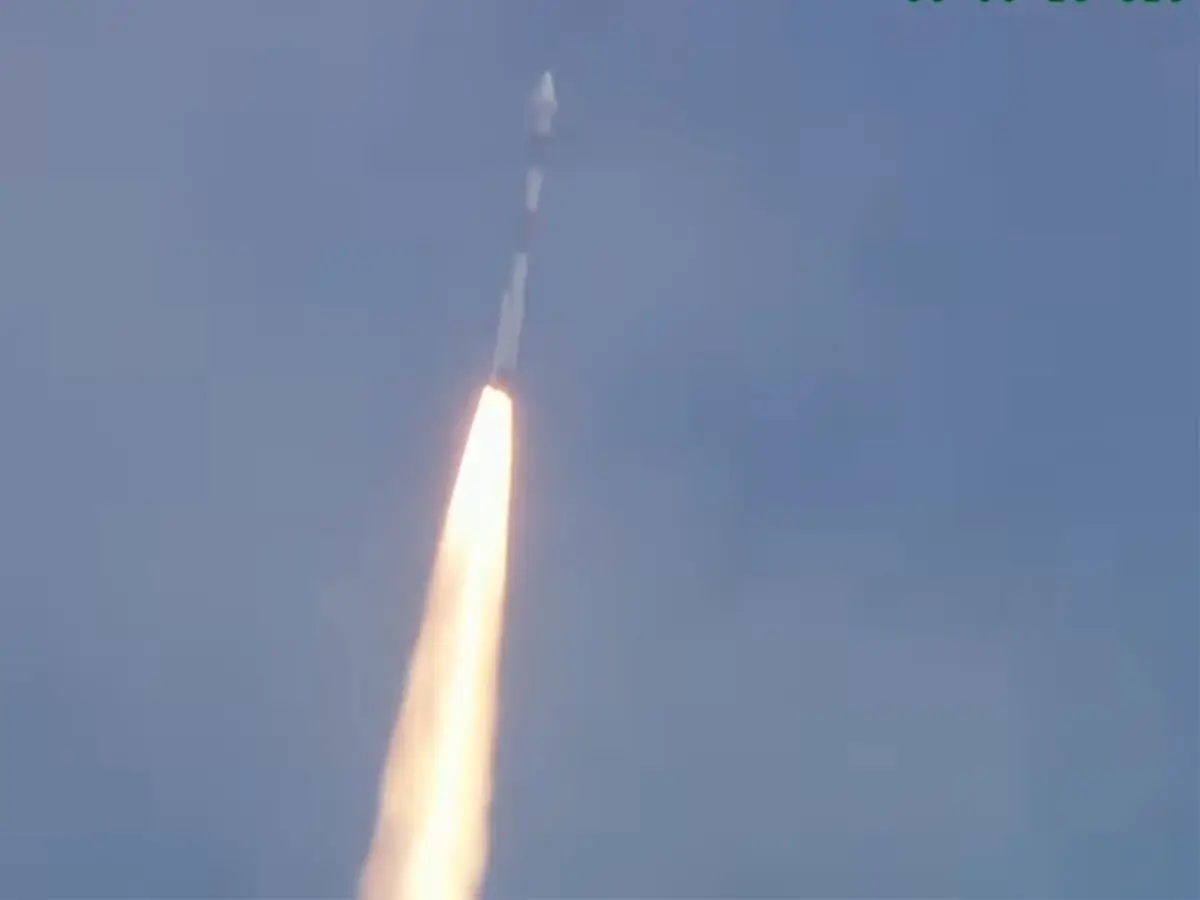
The morning of January 12, 2026, should have been another routine victory lap for India's space program. Instead, at 10:45 AM, the PSLV-C62 rocket carrying our critical EOS-N1 surveillance satellite veered off course and had to be terminated. This wasn't just another technical hiccup. This was the second PSLV failure in eight months, and it should terrify every Indian who cares about our Gaganyaan dream of putting our astronauts in space.
Let me be blunt. The PSLV has been our workhorse for thirty years. Sixty successful flights have made it the Maruti 800 of rockets—reliable, dependable, boring in the best possible way. When a system this proven fails twice in rapid succession, it's not bad luck. It's a symptom of something deeply wrong in how we're building these machines.
The official term thrown around is "disturbance in roll rates during the third stage." For those of us who aren't rocket scientists, imagine you're driving on the highway and your car suddenly starts spinning uncontrollably. That's essentially what happened to our rocket. The third stage, which uses solid fuel, either had a nozzle malfunction or the rocket casing cracked. Either way, once a solid rocket motor is lit, you cannot shut it down. It's a controlled explosion, and when it goes wrong, it goes catastrophically wrong.
Here's what keeps me up at night. The Gaganyaan mission, which will carry Indian astronauts to space for the first time, uses a different rocket called the LVM3. "Different rocket, different problem," the optimists might say. But both rockets share the same fundamental technology—solid propulsion systems. More importantly, they share the same factories, the same quality control teams, the same institutional culture at ISRO's Thiruvananthapuram facility.
After the May 2025 failure, ISRO conducted a high-level investigation. Clearly, whatever fixes were implemented weren't enough. That's the terrifying part. If your best engineers examine a problem, implement solutions, and the same problem happens again, you don't have a technical problem. You have a systemic culture problem.
Think about it from a parent's perspective. Would you put your child on a school bus if it had broken down twice in eight months, even after the mechanic swore it was fixed? That's the question facing Chairman V. Narayanan right now, except the stakes aren't a delayed school day. The first uncrewed Gaganyaan test flight, called G1, is scheduled for March 2026—just two months away.
Trending Stories
&imwidth=180&imheight=135&format=webp&quality=medium)
Pezeshkian says Iranians ‘struggling to put food on the table’ as war with US drags on
&imwidth=180&imheight=135&format=webp&quality=medium)
Can Putin cheat death? All about his daughter’s billion-dollar quest for immortality
&imwidth=180&imheight=135&format=webp&quality=medium)
Telangana unveils AI avatar of IT minister D Sridhar Babu at Hyderabad DevFest 2026
&imwidth=180&imheight=135&format=webp&quality=medium)
Why Europe’s protests are about more than austerity and rising costs
&imwidth=180&imheight=135&format=webp&quality=medium)
Britain is building the world's first AI biosecurity lab, with OpenAI and Anthropic inside
&imwidth=180&imheight=135&format=webp&quality=medium)
'You’re a horrible little reporter, aren’t you?': Trump snaps at NBC reporter questioning his support for Ramaswamy's campaign ad
&im=FitAndFill=(700,400)&imwidth=180&imheight=135&format=webp&quality=medium)
New Friday OTT releases (October 23, 2026): Gajab Raat, Dorothy, Chaar Yaar- Watch these 6 new movies and TV shows on Netflix, Prime Video and more
&imwidth=180&imheight=135&format=webp&quality=medium)
China's dancing robot turns violent bodyguard, lifts cars and fights intruders - Watch
&imwidth=180&imheight=135&format=webp&quality=medium)
‘Modi ka baap bhi jayega,’ Kharge loses cool at party event in Patna; BJP slams him
&imwidth=180&imheight=135&format=webp&quality=medium)
Pakistan airline PIA unveils new crew uniforms, faces online criticism
&imwidth=180&imheight=135&format=webp&quality=medium)
‘Maybe play one more season’: MS Dhoni to decide on his IPL future before December
&imwidth=180&imheight=135&format=webp&quality=medium)
France protests: 135 arrested, weapons seized as fresh demonstrations erupt amid heavy security
&imwidth=180&imheight=135&format=webp&quality=medium)
'If it was up to me, it wouldn't have ended like this': James Anderson opens up on Lancashire exit
&imwidth=180&imheight=135&format=webp&quality=medium)
Shilpa Rao’s performance cut short at Mumbai event, organisers react to backlash
&imwidth=180&imheight=135&format=webp&quality=medium)
Viral video shows cross falling on Colombia priest, no official confirmation | WATCH
&imwidth=180&imheight=135&format=webp&quality=medium)
What was the note found inside bag of Class 12 student, who set herself on fire inside Delhi school?
&imwidth=180&imheight=135&format=webp&quality=medium)
Netanyahu warns Israelis of ‘existential threat’ from Iran, posts AI image of nuclear strike
&imwidth=180&imheight=135&format=webp&quality=medium)
Train crashes into crane on São Paulo monorail line, wreckage falls onto busy road | VIDEO
&imwidth=180&imheight=135&format=webp&quality=medium)
Tu Hai Meri Kiran film review: Sonakshi Sinha and Zaheer Iqbal's thriller gets tangled in its own twists
&imwidth=180&imheight=135&format=webp&quality=medium)
French Open: PV Sindhu storms into final with win over Hina Akechi
&imwidth=180&imheight=135&format=webp&quality=medium)
AI slop or smart strategy? South African author Coral Hart defends Her 370 AI- assisted books in 20 months
&imwidth=180&imheight=135&format=webp&quality=medium)
'Already tired of his 9-to-5': Baby born with a moustache becomes internet sensation, video goes viral | Watch
&imwidth=180&imheight=135&format=webp&quality=medium)
Bodies of 2 missing Japanese climbers recovered from Himalayan peak
&imwidth=180&imheight=135&format=webp&quality=medium)
‘Saddam Hussein opened a cheesecake factory’: Obama mocks Trump’s White House renovations; defends Abdul El-Sayed
&imwidth=180&imheight=135&format=webp&quality=medium)
Saudi says debris fell in Mecca, Medina after missile interceptions; Houthis deny targeting holy cities
&imwidth=180&imheight=135&format=webp&quality=medium)
J-20 designers plan to put radar into aircraft wing; strategy to expand coverage during air combat
&imwidth=180&imheight=135&format=webp&quality=medium)
Frontier AIs keep escaping their test cages! The industry still can't reliably stop them
&imwidth=180&imheight=135&format=webp&quality=medium)
An AI that reads your face can now estimate how long you have to live
&imwidth=180&imheight=135&format=webp&quality=medium)
NEET protests: Panel to hear evidence on pellet gun use, harassment
&imwidth=180&imheight=135&format=webp&quality=medium)
Russia-Ukraine drone attacks kill 6, injure 31 across both countries
&imwidth=180&imheight=135&format=webp&quality=medium)
WATCH: Thousands across Manipur bang plates, beat drums in "noise protest"
&imwidth=180&imheight=135&format=webp&quality=medium)
Chorbagan stampede: A week later, the strangest visarjan Kolkata has seen
&imwidth=180&imheight=135&format=webp&quality=medium)
Nagpur man fails to pay rent, allegedly prints fake Rs 500 notes worth Rs 37 lakh
&imwidth=180&imheight=135&format=webp&quality=medium)
'Killing people never allowed': Elon Musk admits restricting Starlink in Ukraine, explains why
&imwidth=180&imheight=135&format=webp&quality=medium)
AI just found a flaw in software running most of the web! One request hijacks the server
&imwidth=180&imheight=135&format=webp&quality=medium)
Farooq Abdullah says Pakistan’s raising of Kashmir issue keeps pressure on Delhi
The pressure on ISRO is immense, and not just domestic. We have joint missions with Japan's space agency JAXA for the Chandrayaan-5 lunar mission and with NASA for the NISAR Earth observation satellite. These partners didn't just buy Indian rockets; they bought into Indian reliability. In international space cooperation, your reputation is built over decades but can be destroyed in minutes. Japan and NASA are watching these failures and asking hard questions behind closed doors.
There's also the uncomfortable truth about ISRO's rapid expansion. For years, we celebrated our frugal engineering—doing more with less. But recently, through the commercial arm NewSpace India Limited, we've ramped up from three launches a year to ten. We've moved from careful craftsmanship to industrial-scale production. That transition requires not just more workers but an entirely different safety culture. You cannot scale up rocket production the way you scale up making smartphones.
Some will argue I'm being alarmist. "Space is hard," they'll say. "Failures happen." Yes, they do. But the question isn't whether failures happen; it's whether we're learning from them fast enough when human lives are about to enter the equation. The Americans lost two Space Shuttles and fourteen astronauts before they fundamentally reformed their safety culture. We have the chance to learn from their tragedies without repeating them.
What ISRO needs now isn't cheerleading. It needs a hard pause. Not just for PSLV launches, but a complete manufacturing audit of all solid rocket motors currently in production. For the first time in its proud history, ISRO should invite external experts—from private industry like HAL and L&T, and from international agencies—to inspect its facilities and processes. The era of ISRO checking its own homework must end.
Most importantly, the G1 uncrewed Gaganyaan flight must be delayed until we have absolute confidence in our systems. I don't care if it takes until 2027. A delayed launch is a footnote in history books. A tragedy is a permanent scar on the nation's soul.
The silence in Sriharikota's Mission Control Centre this morning was deafening. But let that silence be our wake-up call. Space doesn't care about our ambitions or our deadlines. It only cares about physics and engineering precision. It has now told us twice, in eight months, that something is fundamentally wrong.
The question is simple: Are we listening? Or will we let schedule pressure and national pride push us toward a catastrophe that could set India's space program back by decades? Chairman Narayanan's decision in the coming weeks will define not just his legacy, but the future of Indian spaceflight itself.
Disclaimer: The views of the writer do not represent the views of WION or ZMCL. Nor does WION or ZMCL endorse the views of the writer.
